Tata Aeris CNG vs Maruti Dzire CNG: The Real Family Sedan Reality Check
Most people looking for a compact family sedan in India still hear the same advice from friends: just buy a Maruti Dzire. It has been around forever, barely breaks down, and costs next to nothing to run. Tata wants that exact market though, and the Aeris CNG AMT is their strongest try yet.
On paper, getting an automatic with factory CNG looks spot-on for city life—no heavy clutch in traffic, cheap gas, and a proper three-box boot. If you want to check out the initial styling and variant prices first, read our Tata Aeris Sedan Review. But on tarmac, living with both cars day in and day out reveals some massive differences.
Boot Space: Where Dzire Drops the Ball
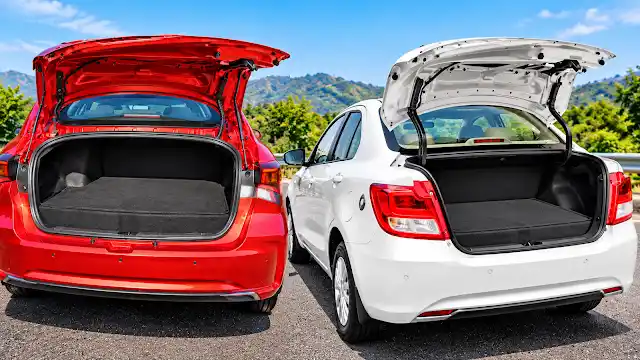
Open the boot on a Dzire CNG and the first thing you see is a huge 55-litre cylinder sitting right across the floor. It eats almost the entire bay. You can shove soft gym bags into awkward gaps, but fitting two hard suitcases for an airport run is practically out of the question.
Tata handled this properly with two smaller 35-litre tanks tucked flat under the boot floor. You get 219 litres of flat, usable luggage space. Two medium trolley bags slide in easily with room for backpacks on top. If family trips or airport runs are part of your weekly routine, the Aeris saves a lot of headaches.
Ground Clearance and Broken Tarmac
Look at the suspension numbers:
- Tata Aeris: 170 mm
- Maruti Dzire: 164 mm
- Honda Amaze: 163 mm
Six millimetres sounds tiny on paper, but load up four healthy adults with luggage, and the Dzire squats low. Over tall, rough monsoon speed breakers, you often have to crawl at an angle so the underbelly guards don’t scrape the tarmac.
The Aeris rides taller and takes broken patches with far more confidence. It handles rough road sections much like what we noted during our Renault Triber vs Maruti Brezza road test, giving you peace of mind over sharp potholes.
The Low-Speed AMT Pause
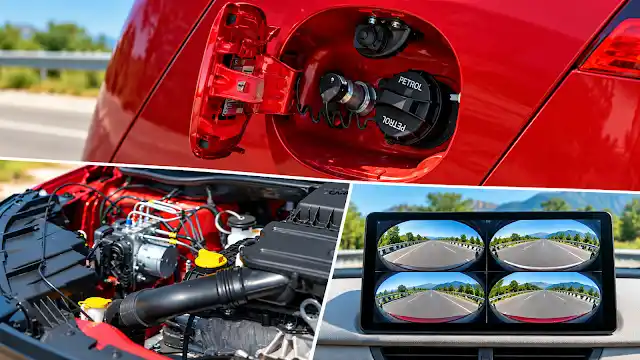
Both cars use 1.2-litre three-cylinder engines tuned for CNG, and both rely on a 5-speed AMT gearbox.
Don’t go in expecting smooth torque-converter shifts.
In the Aeris, moving between 1st, 2nd, and 3rd gear brings that familiar AMT shift pause and a noticeable little head-nod. Once you pick up pace into 4th and 5th gear, the shifts smooth out completely. The Dzire AMT does almost the exact same thing in lower gears. Maruti’s engine feels marginally calmer when crawling off the mark, while the Aeris needs a steadier right foot to avoid jerky take-offs.
Under the fuel lid, Tata also added a clever micro-switch kill switch. If the CNG cap isn’t clicked shut properly, the car simply refuses to start.
Real-World Driving: City Comfort and Highway Reality
Taking the manual Aeris through crowded morning traffic actually reveals a lot about Tata’s setup.
First off, the clutch is very light on your foot. You do not end up tired after crawling for forty minutes in bumper-to-bumper office jams. The gearbox shifts cleanly into slots without throwing tantrums, while the suspension easily absorbs ugly potholes and tall speed breakers. When you are stuck on longer drives, the neat dead pedal on the left gives your foot a comfortable spot to rest.
Head out onto the wider expressway, though, and things feel a bit different.
The low sedan body stays nicely planted at 90 to 100 km/h, giving you plenty of confidence. But the moment you climb towards 120 km/h, you immediately miss having a sixth gear. The 5-speed setup has to rev the little 3-cylinder motor quite hard. That pushes engine thrum into the cabin, and you will feel a mild buzzing sensation around the floorboards.
Tested Fuel Economy
The Highs and Lows: Cabin Tech, Dashcam and Space
Using the car every day highlights some thoughtful engineering alongside a couple of clear compromises.
Trying to park in a narrow basement slot is less of a headache thanks to the 360-degree camera. Better yet, the moment you flick an indicator, the central display instantly pulls up a blind-spot camera feed, keeping you from turning your head around in messy traffic.
Climb into the rear seat, and knee room feels fairly generous for someone who’s 5ft 8in. The seat gives good under-thigh support, though the transmission tunnel means two grown-ups and a kid fit best. Passengers back there get dedicated AC vents, plus a powerful 65W Type-C socket that actually charges laptops. Open the boot, and you will also spot soft fabric wrapped neatly around the hinges, saving your bags from ugly scratches.
Real Mileage: Maruti Still Takes the Crown
Tata has closed the efficiency gap, but Maruti still squeezes more kilometres from every single kilo of gas.
| Driving Condition | Tata Aeris CNG (Tested) | Maruti Dzire CNG (Tested) |
|---|---|---|
| City Traffic (Bumper-to-Bumper) | 22–24 km/kg | 25–27 km/kg |
| Steady 80 km/h Highway Run | 26–28 km/kg | 30–32 km/kg |
| ARAI Claimed Figure | ~27.0 km/kg | 31.12 km/kg |
In heavy town jams, the Aeris delivers around 22 to 24 km/kg. On open bypasses kept near 80 km/h, you can stretch it to 28 km/kg.
The Dzire regularly returns 25 to 27 km/kg in town and comfortably crosses 30 km/kg on long expressway trips. If you drive 2,500 km a month, the Dzire puts cash straight back into your pocket. One clear miss on the Aeris CNG: no cruise control, which gets frustrating on empty expressways.
Cabin Gadgets and the Windshield Glare
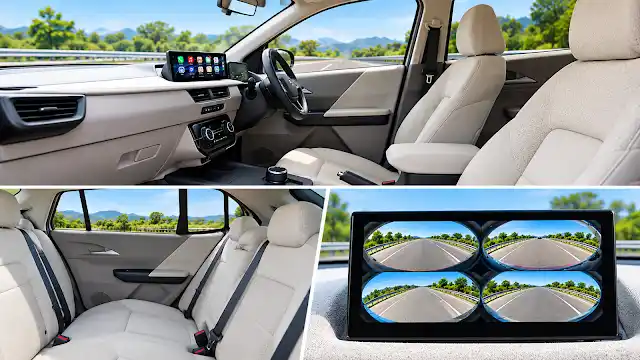
Inside, the Aeris works hard to make the Dzire look dated. You get ventilated front seats that are a lifesaver in brutal summer heat, a sharper 10.25-inch screen with Harman audio, and a built-in 360-degree dashcam that records two minutes before and three minutes after an incident. In the back, you get dedicated AC vents, a 65W fast charger, and a fold-down centre armrest.
The biggest annoyance on the Aeris is the light dashboard top. In bright sunlight or under tree shade, it throws a heavy reflection straight onto the windscreen. If you are 5’8″ or taller, that glare sits right in your driving vision, making a dark aftermarket dash mat practically mandatory. The Dzire’s cabin is plain, but it has zero reflection issues.
Pricing, Discounts, and the Final Verdict
Before putting down a deposit, check showroom deals. With petrol inventories backing up, dealers are offering heavy festive cuts right now. We recently broke down how holding stock affects dealer margins in our Festive Season Car Discounts guide, and pushing for dealer-level savings on outgoing lots makes a huge difference.
If your only priority is absolute fuel economy, lowest running bills, and a proven fuss-free ownership experience, the Maruti Dzire CNG remains the safe, rational pick.
However, if you want a modern family car that doesn’t eat its own boot space with a gas cylinder, clears speed bumps cleanly, and keeps you cool with ventilated seats, the Tata Aeris CNG AMT is straight up the more practical car to live with.