Tata Aeris Sedan Review: Proper Sedan Luxury at Hatchback Money
After looking closely at the car, there are several things that stand out.
A Different Look for Tata’s Small Sedan
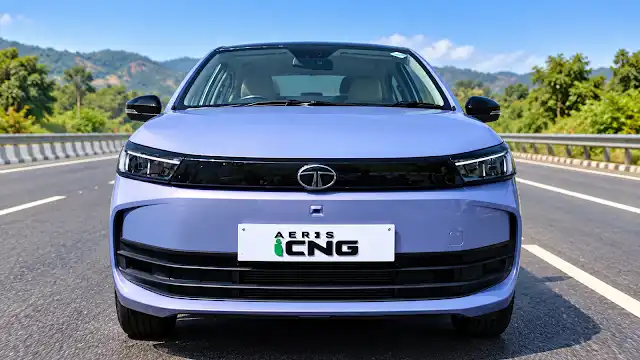
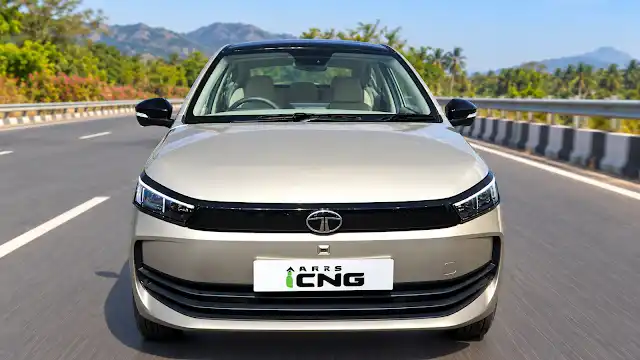
The Aeris doesn’t carry over the slightly unusual look of the Tigor.
The front end is cleaner, with a closed-style grille area, LED headlamps, and slim lighting elements. The 360-degree camera is also built into the design rather than looking like something added later.
From the side, it still has the proportions you would expect from a compact sedan. It isn’t trying to look like a small SUV, and that may actually appeal to buyers who want a traditional three-box car. To stand out from the conventional shape, Tata has given it a gloss piano black roof with a cleverly masked B-pillar. Rather than going with a standard continuous light bar, Tata has fitted connected LED tail-lamps with a segmented design that looks more sophisticated and seamlessly integrated. Underneath, the new X-Alpha platform promises a stronger structure, updated electronic systems, and greater composure on the highway.
It is also a car designed with Indian roads in mind. It rides with a sensible 170 mm of ground clearance—a full 7 mm higher than the Maruti Dzire. Speed breakers, steep ramps and rough patches are part of normal city driving, so having sensible ground clearance is more useful than it sounds on paper. Buyers comparing compact styling cues with modern high-riding family cars can also check out our Tata Sierra Pure L vs Pure Plus L comparison to see how modern homegrown designs differ.
The Boot Has a Nice Little Detail
The boot is one of those areas where you notice that Tata has paid attention to everyday use.
Instead of using conventional large boot hinges that swing into the luggage area, Tata has fitted hydraulic struts. That leaves the loading area cleaner and means there is less chance of the hinges getting in the way of your bags.
The petrol Aeris offers 419 litres of boot space.
That is a useful amount for a compact family sedan. Weekend luggage, shopping bags or a couple of suitcases should not require much planning.
What About the CNG Version?
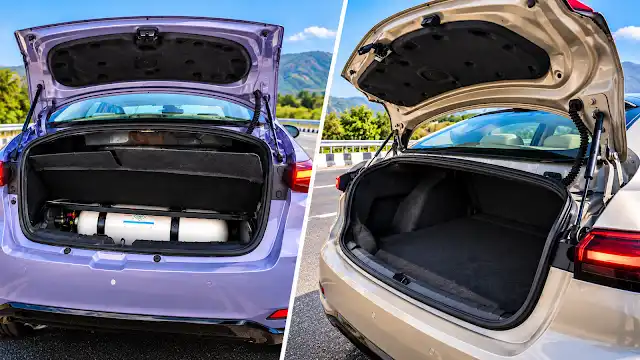
This is where Tata’s dual-cylinder arrangement becomes important.
Rather than putting one large CNG cylinder in the boot, the Aeris uses two smaller cylinders positioned under the floor.
There is still a slight compromise because the cylinders occupy space underneath, leaving around 205 to 215 litres of usable boot space compared to the petrol model’s 419 litres. However, Tata has managed to keep the loading bay flat so you can still easily slide in two medium trolley bags without fighting for space.
For someone buying a CNG car specifically for everyday family use, that is a worthwhile solution.
Inside, It Doesn’t Feel Like a Basic ₹5 Lakh Car
The cabin is probably where the Aeris surprises you most.
At this price, you expect hard plastics, a fairly simple dashboard and only the equipment you absolutely need.
The Aeris takes a slightly different route.
There are lighter interior surfaces, textured sections on the dashboard and leatherette upholstery on better-equipped versions. The cabin is still clearly from a budget car, but it doesn’t feel as bare as you might expect from the starting price.
The equipment list is even more interesting:
- 10.25-Inch Touchscreen: The large touchscreen supports wireless Android Auto and Apple CarPlay, along with Tata’s connected-car functions. For someone using the car every day, this is probably more useful than several of the usual showroom gimmicks.
- Ventilated Front Seats: This is one of the features that caught my attention. Ventilated seats are usually associated with much more expensive cars. On the Aeris, they are available on higher variants. In an Indian summer, this isn’t simply a feature you show off to your friends. After leaving a car parked outside for a while, cooled seats can make the first few minutes behind the wheel considerably more comfortable.
- 360-Degree Camera and DVR: The surround-view camera should be useful in crowded parking areas, especially when you are dealing with narrow spaces. The system also has a DVR function that can record camera footage. It comes with 1 GB of onboard memory saving clips in neat 5-minute loops, and recordings can also be stored on a USB drive. That adds a practical element to the camera system rather than making it just another feature for the brochure.
- Direct CNG Start: CNG buyers also get an interesting convenience feature. The Aeris can start directly in CNG mode, so you don’t necessarily have to go through the usual petrol-first routine. For someone using CNG every day, small details like this can make the ownership experience easier.
- 65W Type-C Charging: The car also gets high-output Type-C charging ports. With compatible devices, the 65W output can be useful for people carrying laptops and other power-hungry gadgets. For office commuters who spend a lot of time travelling between meetings, this is a feature that could genuinely get used.
Safety Equipment
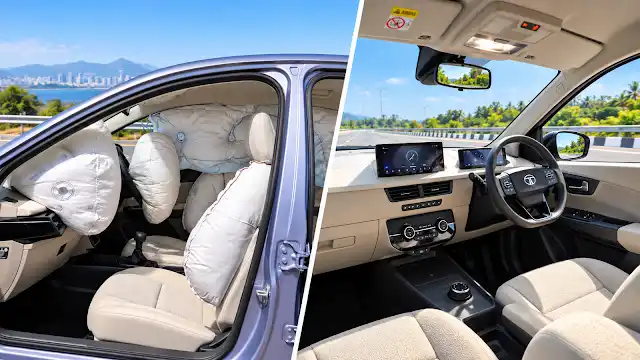
The Aeris gets six airbags, ABS with EBD and electronic stability control.
These are important pieces of equipment for a family car, particularly when the vehicle is being used every day in heavy traffic.
Not every premium feature is available across the range. Things such as a sunroof and an auto-dimming rear-view mirror are missing from some versions.
But for a car aimed at value-conscious buyers, I would rather see money spent on useful safety and everyday equipment than on features that simply look good in a specification sheet.
The 1.2-Litre Petrol Engine
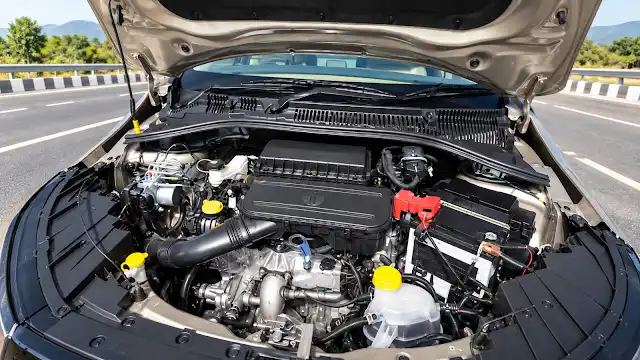
Under the bonnet is Tata’s 1.2-litre, three-cylinder Revotron petrol engine.
The engine has a displacement of 1,199 cc and produces 86 PS at 6,000 rpm, along with 113 Nm of torque at 3,300 rpm.
The CNG version produces 75.5 PS at 6,000 rpm and 96.5 Nm at 3,500 rpm.
These numbers make one thing clear: the Aeris is designed for normal everyday driving rather than outright performance.
That isn’t necessarily a criticism.
For commuting, school runs, shopping trips and family journeys, most buyers are more interested in predictable performance and manageable fuel costs than chasing a quick 0-100 km/h time.
The CNG version should be particularly appealing to people who cover high monthly mileage.
Petrol, CNG and AMT: Plenty of Choice
The Aeris range is fairly flexible.
Buyers can choose from:
- Petrol manual
- Petrol AMT
- CNG manual
- CNG AMT
The base Smart version is available with the petrol manual and CNG manual, while the higher versions open up more transmission and fuel choices.
For example, the Pure variant is available with petrol manual, petrol AMT, CNG manual and CNG AMT. That same choice continues through Pure+, Creative and Accomplished.
It means buyers don’t have to spend money on equipment they don’t need simply to get the fuel type or gearbox they want.
Tata Aeris Price and Variant Range
Here is how the ex-showroom pricing shown in the supplied specification sheet works out:
| Variant | Petrol MT | Petrol AMT | CNG MT | CNG AMT |
|---|---|---|---|---|
| Smart | ₹5,29,990 | — | ₹6,29,990 | — |
| Pure | ₹6,14,990 | ₹6,69,990 | ₹7,14,990 | ₹7,69,990 |
| Pure+ | ₹6,74,990 | ₹7,29,990 | ₹7,74,990 | ₹8,29,990 |
| Creative | ₹7,49,990 | ₹8,04,990 | ₹8,49,990 | ₹9,04,990 |
| Accomplished | ₹8,19,990 | ₹8,74,990 | ₹9,19,990 | ₹9,74,990 |
So the Aeris has a fairly wide price spread.
Someone looking for an affordable petrol sedan can stay close to the ₹5.3 lakh mark, while buyers wanting CNG, AMT and more equipment can move towards the ₹10 lakh mark.
Remember that these are ex-showroom prices. Registration, insurance and other charges will increase the final on-road figure.
Which Version Makes the Most Sense?
What works best depends largely on how you use your car.
A buyer covering relatively low mileage may have little reason to pay extra for CNG.
If long-distance driving is a regular part of your routine, the CNG versions could be more attractive, particularly because of their lower fuel costs. Before making up your mind, run your daily travel numbers on our EV vs Petrol Savings Calculator to compare exact running costs against zero-emission alternatives.
Then there is the AMT.
If your daily route includes Mumbai, Delhi, Bengaluru or any other city where traffic can turn a 20-minute journey into an hour, having two pedals instead of three has obvious appeal. If you’re switching to an EV for city driving, use our EV Charging Stations Near Me directory to find fast chargers along the routes you use most.
The manual remains the simpler choice for buyers who enjoy more control or simply want to keep the purchase price down.
Is the Aeris Practical for a Family?
This is probably where the car makes its strongest case.
It remains compact enough for crowded streets and tight parking spaces, but you still get the boot and cabin layout of a conventional sedan.
The 419-litre petrol boot is useful, and Tata’s dual-cylinder CNG arrangement means CNG buyers don’t have to give up the entire luggage area.
Then there is the equipment.
A ventilated seat, 360-degree camera, large touchscreen, and 65W charging system are not features you normally associate with a budget sedan.
That combination makes the Aeris quite different from the basic small sedans we have become used to.
Tata Aeris Sedan Review: Final Thoughts
The Tata Aeris is interesting because it isn’t trying to reinvent the small sedan. Instead, Tata has taken the familiar formula and added a long list of features.
The ₹5,29,990 starting price is clearly a headline number, but the more interesting story is what you get as you move through the range.
There is a proper 419-litre boot, dual-cylinder CNG technology, petrol and CNG choices, an AMT option, a 360-degree camera and even ventilated front seats on higher versions.
The engine isn’t about speed. The Aeris is much more about getting through everyday driving without making life complicated.
And that may be exactly why the car makes sense.
Not everyone wants an SUV. Not everyone needs a powerful engine. Some buyers simply want a small, comfortable sedan with enough space, useful features, and reasonable running costs.
For those buyers, the Aeris brings the traditional compact sedan back into the conversation.
Tata Aeris FAQs
What is the starting price of the Tata Aeris? The Tata Aeris starts at ₹5,29,990 ex-showroom for the Smart petrol manual.
What is the most expensive Tata Aeris? The Accomplished CNG AMT is listed at ₹9,74,990 ex-showroom.
What engine does the Tata Aeris use? It uses a 1,199cc three-cylinder 1.2-litre Revotron engine.
How much power does the petrol Aeris produce? The petrol version produces 86 PS at 6,000 rpm and 113 Nm at 3,300 rpm.
How much power does the CNG Aeris produce? The CNG version produces 75.5 PS at 6,000 rpm and 96.5 Nm at 3,500 rpm.
Does the Tata Aeris have CNG? Yes. Factory-fitted CNG is available, with both manual and AMT options on selected variants.
Does the Aeris have ventilated seats? Yes. Ventilated front seats are available on higher variants.
How much boot space does the Aeris have? The petrol version has 419 litres of boot space. The CNG model uses Tata’s dual-cylinder layout to retain useful luggage room.
Does the Tata Aeris have an AMT? Yes. Petrol AMT and CNG AMT versions are available on selected variants.
Does it get a 360-degree camera? Yes, the Aeris is available with a 360-degree surround-view camera system.