Festive Season Car Discounts: Why Dealerships Are Desperate to Clear Petrol Stock
Walk into a car showroom right now, and the sales guys will bring out the festival sweets and glossy discount brochures before you even sit down.
On paper, it looks like regular Diwali cheer. Behind the scenes, the story is messy.
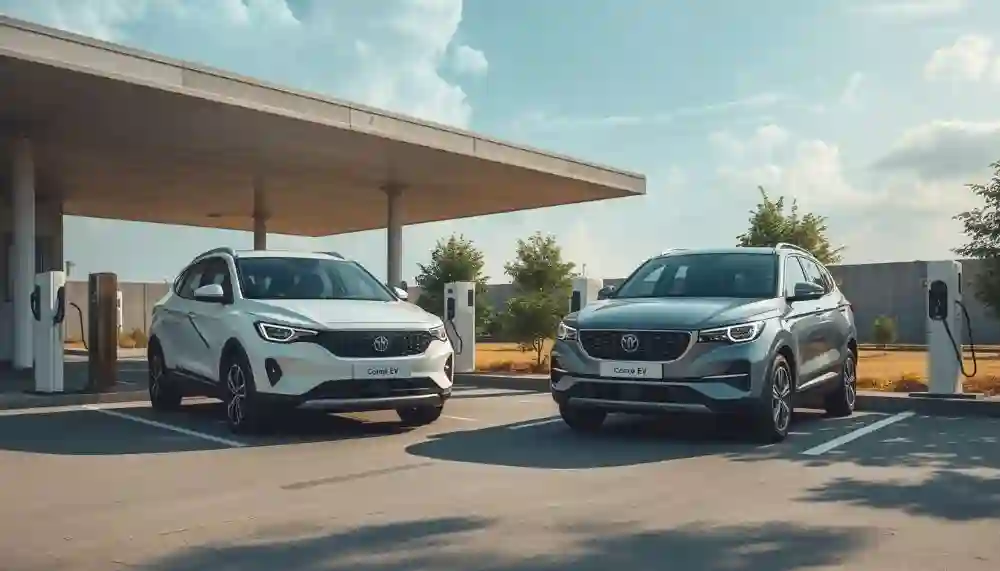
Showroom stockyards across the country are jammed with petrol cars that simply refuse to move. People want CNG for cheap daily running, or they are jumping straight over to electric cars. That leaves dealers stuck with rows of pure petrol machines racking up bank interest every single week.
So yes, the discounts are real this festive season. On some models, you can easily haggle your way to a ₹1.5 lakh or even ₹2 lakh price cut. But before you get swayed by a big cash-off banner, it pays to understand what is actually going on.
The E20 Headache Nobody Mentions in the Brochure
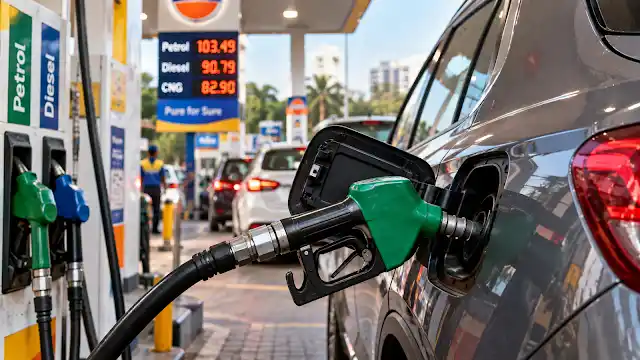
The biggest reason petrol cars are sitting unsold isn’t just inflation. It’s the E20 fuel rollout.
A lot of regular buyers are genuinely confused and worried about 20% ethanol blends. People hear stories about lower mileage, engine wear down the line, and parts corroding. That fear has pushed everyday family buyers straight into the arms of factory CNG kits, while city office-goers are picking up small EVs instead.
That sudden shift left carmakers flat-footed. Petrol variants that used to sell within ten days of arriving from the factory are now sitting in dealer stockyards for two to three months. If holding costs keep piling up, the dealer has to swallow their pride and cut the price.
If fuel compatibility and future resale worry you, our practical breakdown on E20 petrol impact and EV alternatives explains what this transition actually means for your wallet.
Where the Big Savings Actually Are
Don’t expect discounts on hot cakes. If a car has a two-month waiting queue, the dealer won’t even give you free floor mats. The fat discounts are strictly on slow-moving petrol trims and cars due for a styling nip-and-tuck.
Entry-level models such as the Alto usually have limited scope for big discounts, while the Celerio and S-Presso may offer more room for negotiation, with savings of around ₹40,000–₹50,000 possible. Swift petrol has solid festive schemes going on. On the Nexa side, Jimny inventory is still stubbornly high, meaning heavy dealer-level push. The Grand Vitara AWD and strong hybrids carry hefty cuts touching ₹1.5 lakh, though CNG versions get almost nothing. Invicto also has room for serious haggling if a showroom has units standing in the yard.
Hyundai and Kia: The Grand i10 Nios petrol is one of the easiest cars to get a deal on right now, with total benefits pushing past ₹45,000. Sedans have fallen out of fashion, so the Verna petrol and i20 carry heavy price drops between ₹50,000 and ₹1 lakh depending on the variant. Over at Kia, the Sonet and Seltos petrol trims see good dealer movement, while diesels hold their price.
Tata and Mahindra: Tata has outgoing inventory of the Tiago and Tigor petrol floating around with savings between ₹40,000 and ₹80,000. Top-spec petrol Safari and Harrier trims carry aggressive dealer promotions to keep metal moving. Mahindra is a mixed bag: 3XO petrol gets a small festive push, and older petrol lots of the XUV700 can fetch cuts up to ₹1.5 lakh. But on a Thar or Scorpio-N diesel? Don’t hold your breath.
Honda, Renault and Nissan: Honda’s Elevate has noticeable cash-off schemes running up to ₹1 lakh, while the Amaze manual has better deals than the CVT automatic. Renault dealers are pushing the Kiger hard with festival schemes, while the Triber sees modest cuts around ₹20,000 to ₹35,000. Nissan’s Magnite also has decent room to haggle on non-turbo variants.
The Facelift Trap
Here is where a lot of buyers slip up.
Saving a lakh on the invoice feels great on delivery day. But if the carmaker brings out a facelift three months later with six airbags as standard, better screens, and a cleaner front end, your “brand new” car instantly looks like the old model.
Worse still, outgoing models take an immediate hit on resale value. If you plan to sell the car in four or five years, that initial ₹1 lakh discount often vanishes into market depreciation.
Check our updated tracker on upcoming cars in India to see if the model you are eyeing is getting replaced anytime soon.
Ground Rules Before You Sign Anything
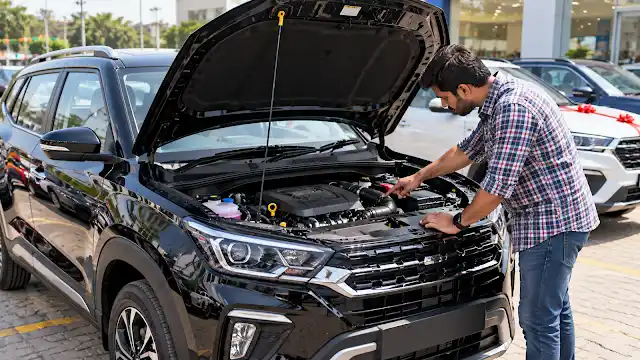
If you do decide to grab an old stock petrol car for cheap, protect yourself with three simple checks:
- Decode the VIN: Check the stamped chassis number to see the actual manufacturing month. A car built eight months ago should come with a much bigger discount than one made three weeks back.
- Do a proper daytime PDI: Stockyard cars sit through blazing heat and monsoon muck. Check for dry wiper rubbers, faded plastic trims, and test the battery health before clearing the registration payment.
- Do the math on your running: If your daily commute touches 50 km, that ₹80,000 petrol discount will get wiped out by fuel pumps within eighteen months. Put your real numbers into our EV vs Petrol Savings Calculator before deciding petrol is truly cheaper.
Quick FAQs
Why are CNG cars getting almost no discounts? Because people are queuing up for them. With petrol running expensive, CNG waiting lists are healthy, so dealerships don’t need to cut prices to find buyers.
Can you negotiate beyond the advertised newspaper offers? Always. The newspaper ad shows the company offer. The dealer’s own margin is separate. If a specific color or trim has been sitting parked in their yard for 60 days, you can push for extra corporate discounts, cheaper insurance, or free accessories.
Is buying year-old stock a bad idea? Not if the price is right. Mechanically, engines don’t spoil standing still, provided you do a strict pre-delivery check to make sure rodents haven’t chewed any wiring harnesses while it was parked up.