Let’s be real for a minute: walking into an Indian car dealership these days feels like stepping into a minefield of glossy brochures and half-baked internet gossip. Every salesperson has a pitch, every forum thread has an armchair expert, and buyers end up utterly baffled about what actually holds up on tarmac. If you are sorting through options right now, this car buying guide India cuts straight through the noise. We are looking at why certain hatchbacks dominate sales charts, which viral launch rumours you need to bin right away, and how standard dealership accessory deals can quietly wreck your insurance coverage.
Baleno vs i20: The Practical Math Behind Hatchback Dominance
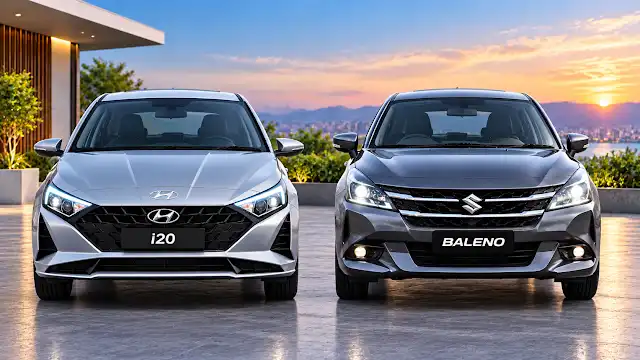
Car enthusiasts often argue all day about interior plastics and European styling, but showroom registration data tells an entirely different story across the country:
While the Hyundai i20 brings a noticeably posher cabin and sharper ergonomics, Maruti Suzuki’s Baleno leaves it far behind simply on per-kilometre running math. Middle-class households look at pump prices first, and Maruti’s petrol engines sip fuel in heavy stop-and-go jams where rivals get thirsty.
Hyundai has done serious groundwork building out a network of over 2,000 service centres, yet unseating Maruti’s forty-year reputation for cheap, over-the-counter spare parts remains an uphill battle.
Resale value acts as a massive safety net. Most Indian families keep an eye on what their car will fetch four years down the road, and Baleno buyers know local second-hand dealers snap those cars up within hours.
It is not that Baleno owners lack taste; they simply refuse to bleed extra cash every time they pull up to a petrol pump just to have a soft-touch dashboard.
Upcoming Car Myths: Separating Ground Truth From Internet Hype
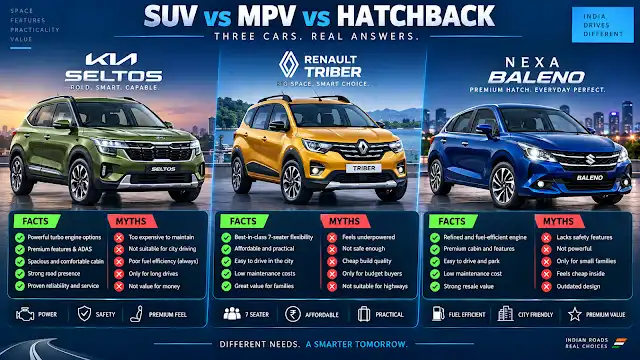
Social media automotive channels love floating speculative release dates to rack up quick clicks, leaving buyers sitting on the fence for cars that are nowhere close to showroom floors:
Take the endless chatter around a Kia Seltos Hybrid. The company hasn’t put out a single official roadmap, nor has a single camouflage test mule been spotted testing on Indian highways. Holding off your car purchase for a non-existent hybrid badge is pure folly.
The whole underbody factory CNG layout for the Renault Triber is another persistent rumour. Engineers cannot magically squeeze high-pressure tanks beneath the existing floor pan without compromising chassis safety; that packaging shift won’t surface until the next-gen architecture arrives around 2027 or 2028.
People putting off purchases waiting for a factory Baleno CNG paired with an automated manual transmission are chasing shadows until official factory dispatches actually roll out.
If your family genuinely needs a three-row mover right this second, sitting around for unannounced variants like a Kia Carens CNG makes little sense when dependable petrol and diesel trims are sitting on dealer lots today.
Engine Matching: Spending Money Based on Your Odometer, Not Fantasy
The quickest way to burn hard-earned cash is buying an engine completely out of sync with your daily routine:
Commuters chewing through 2,000 kilometres a month on long highway stretches make a grave mistake picking sub-four-metre crossovers. A proper mid-sized platform like the Grand Vitara offers the high-speed road manners and long-distance fuel economy that smaller cars simply cannot match.
On the flip side, running under 800 kilometres monthly in city limits means an electric vehicle makes zero financial sense. You will never recoup that ₹3–4 lakh battery price gap through fuel savings; stick to a dependable petrol manual like the Tata Nexon instead.
Working with a strict ₹7 lakh budget for routine city runs? Look straight at factory CNG hatchbacks like the Maruti Celerio or Tata Tiago. The Celerio squeezes every drop of gas for outright mileage, whereas the Tiago offers a noticeably sturdier, planted ride.
For those who do have genuine high-mileage urban runs and ₹11–12 lakh in hand, an electric hatch like the Tata Punch EV—particularly with the 40 kWh battery pack—is easily the most sensible city runabout on sale right now.
Accessories Warning: How Base-Model Modifications Wreck Insurance Claims

Buying a base trim with the grand plan of turning it into a “top model” through local accessory shops is a classic trap that backfires during road mishaps:
Dealership salespeople love claiming their accessory fitments are “100% genuine and coupler-to-coupler,” but tapping into factory harnesses for aftermarket touchscreens, amplifiers, or fog lamps routinely voids your car’s electrical warranty.
Insurance surveyors are not naive. In the unfortunate event of an engine bay fire or major frontal impact, adjusters examine harness lines thoroughly; any spliced wires give them immediate legal grounds to throw out your claim.
Upgrading lower trims with third-party components does not change your vehicle’s factory classification in insurance databases, meaning those expensive add-ons are rarely compensated when trouble hits. Before taking delivery of any modified or stock car, running through a detailed pre-delivery inspection checklist ensures all electrical connectors, battery pins, and body panels meet factory standards.
If your tyres are bald before reaching 55,000 kilometres, stop blaming the rubber compound. Aggressive standing starts, harsh panic braking, and high-speed runs on harsh concrete motorways chew through tread far quicker than regular asphalt.
Frequently Asked Questions
Why does Maruti Suzuki Baleno consistently outsell Hyundai i20?
The Baleno wins on practical numbers: significantly higher real-world fuel economy, cheaper routine servicing, and an unmatched resale market that typical Indian households depend on.
Should I wait for a Kia Seltos Hybrid launch in India?
No, because Kia has announced no launch schedule and no prototypes are undergoing road testing. If you need a vehicle now, look at currently available powertrains.
Can dealership-fitted electronics void my car warranty?
Yes. Splicing into original wiring harnesses for touchscreens, subwoofers, or auxiliary lights can void electrical warranties and lead to rejected insurance claims following accidents.
Which CNG hatchback provides best efficiency under ₹7 lakh?
The Maruti Celerio CNG is the efficiency champion for city errands, while the Tata Tiago CNG offers superior body stability on highway stretches.
Why is buying an EV unwise for low monthly driving?
If your running stays under 800 kilometres monthly, fuel savings will never offset the steep upfront purchase premium required for the battery pack.