MG Windsor EV BaaS: Cheap EV Deal or a Long-Term Cost?
Buying an electric car becomes a lot easier when the upfront price comes down. That is exactly where MG’s Battery as a Service, or BaaS, model tries to make a difference.
The MG Windsor EV Excite currently starts at ₹14.69 lakh ex-showroom when purchased with the battery. Under the BaaS option, the vehicle price starts at ₹9.99 lakh, while battery usage is charged separately at ₹3.99 per kilometre.
On paper, the difference looks attractive. Instead of arranging almost ₹14.7 lakh for the complete car, you can buy the vehicle portion for ₹9.99 lakh and pay separately for battery usage.
But there’s one important thing buyers need to know.
BaaS doesn’t mean the battery is free. It simply separates the cost of the car from the cost of using the battery.
And once you look at the finance arrangement, monthly running, battery tenure, and resale conditions together, the calculation becomes much more interesting. For buyers already weighing these trade offs across fuel types, reading our breakdown on car ownership dilemmas Indian drivers face provides helpful context on long-term running patterns.
How Does BaaS Actually Work?
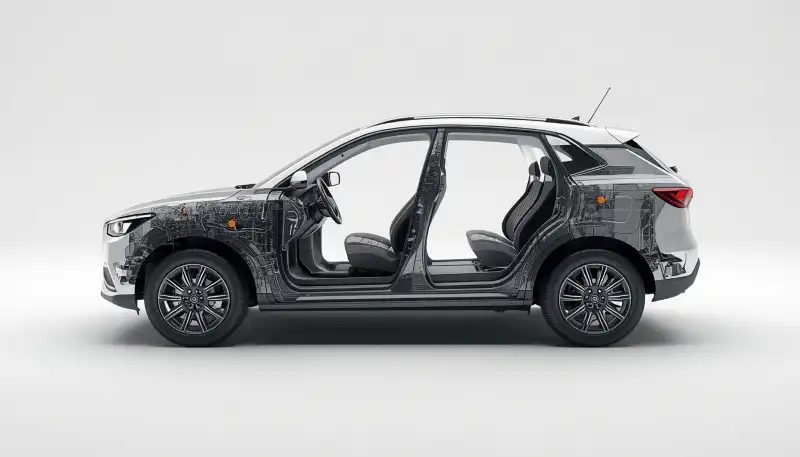
With a conventional EV purchase, the battery is included in the vehicle price. You finance the complete car, pay your monthly EMI, and eventually clear the entire loan.
The BaaS structure works differently.
You purchase the vehicle without paying the full battery cost upfront. The battery is then covered under a separate battery-rental or financing arrangement through the programme’s finance partners.
So, in practical terms, the buyer needs to consider two different payments:
- Vehicle finance: The loan taken for purchasing the car.
- Battery payment: A separate per-kilometre charge under the BaaS agreement.
MG itself describes BaaS as a pay-per-usage model designed to reduce the initial cost of buying an EV. The actual terms can vary depending on the financier and the selected plan.
That distinction is important because the ₹9.99 lakh figure is not the complete cost of the Windsor EV. It is the starting price of the vehicle under the BaaS structure.
The ₹3.99 Per-Km Battery Charge
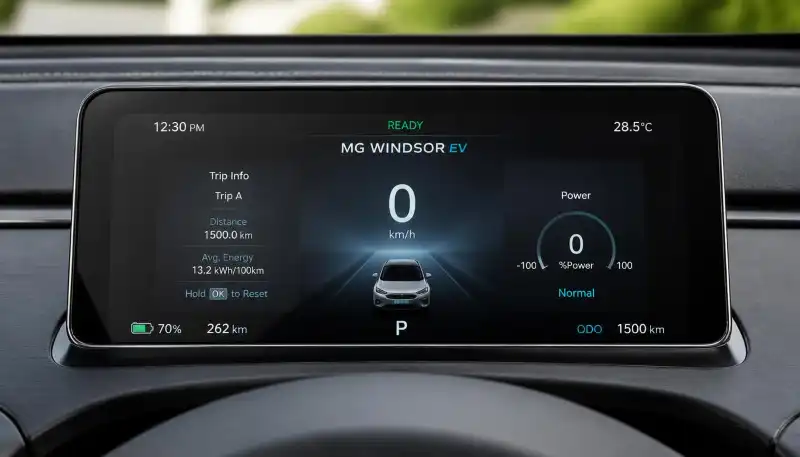
The current official BaaS rate for the Windsor Excite is ₹3.99 per kilometre.
So, if you drive 1,500 km in a month, the simple calculation looks like this:
- 1,500 × ₹3.99 = ₹5,985 per month
Over one year, that comes to:
- ₹5,985 × 12 = ₹71,820
This is where buyers need to be a little careful.
The battery agreement is not necessarily identical across every finance partner. Some BaaS plans have a minimum monthly running requirement, while others are based on actual kilometres driven. MG’s BaaS documentation also states that battery rental can vary according to the offers provided by different finance partners.
For example, the Windsor’s earlier BaaS finance options included plans with a 1,500-km monthly minimum, while Vidyut Tech offered an actual-usage structure without the same minimum.
Therefore, a buyer should never assume that every BaaS customer will have exactly the same monthly battery bill.
The financier’s terms matter just as much as the advertised per-kilometre rate.
What Happens If You Drive Very Little?
Imagine that you normally drive around 1,500 km every month.
At ₹3.99 per kilometre, your battery payment would be about ₹5,985 per month.
Now imagine that you barely use the car for an entire month and drive only 300 km.
Whether you pay only for those 300 km or remain subject to a minimum running requirement depends on the BaaS plan you selected.
That is why checking the agreement before signing is essential.
The available finance plans can differ in terms of:
- Minimum monthly kilometres
- Per-kilometre battery charge
- Charges for additional kilometres
- Battery rental tenure
- Financing conditions
- Exit or foreclosure terms
In other words, ₹3.99/km should not be treated as the entire BaaS story.
BaaS vs Full Purchase: Let’s Do the Maths
To understand the difference, let’s use the current Windsor Excite prices and a simple financing assumption.
The full-battery Windsor Excite is currently listed at ₹14,69,800 ex-showroom, while the BaaS version is ₹9,99,000 plus battery rental.
For this illustration, assume:
- 20% down payment
- 5-year car loan
- 8.5% annual interest
- 1,500 km monthly driving
- ₹3.99/km battery charge
- 96-month battery payment period for the BaaS example
| Parameter | Full Purchase | BaaS |
|---|---|---|
| Ex-showroom Price | ₹14,69,800 | ₹9,99,000 |
| 20% Down Payment | ₹2,93,960 | ₹1,99,800 |
| Vehicle Loan | ₹11,75,840 | ₹7,99,200 |
| Approx. 5-Year EMI @ 8.5% | ₹24,124 | ₹16,397 |
| Battery Payment @ 1,500 km/month | ₹0 | ₹5,985 |
| Approx. Monthly Outflow | ₹24,124 | ₹22,382 |
| Total Vehicle EMIs over 5 Years | ₹14,47,449 | ₹9,83,809 |
| Battery Cost over 8 Years* | ₹0 | ₹5,74,560 |
*Calculated using ₹3.99/km × 1,500 km × 96 months. Actual BaaS cost depends on the finance partner’s agreement and applicable terms.
This calculation shows why BaaS looks attractive initially.
The estimated monthly outflow in this example comes to around ₹22,382, compared with approximately ₹24,124 for the conventional purchase.
So, during the five-year loan period, the BaaS route can appear cheaper every month.
But there is another side to the calculation.
With the conventional purchase, your vehicle loan finishes after five years.
With BaaS, the battery payment can continue according to the battery agreement.
That means the buyer needs to look beyond the first five years rather than comparing only the monthly EMI.
The Long-Term Cost Is Where BaaS Gets Interesting
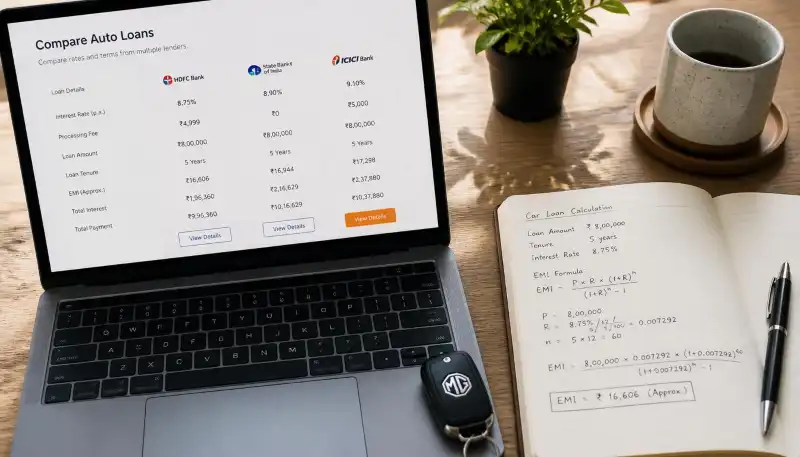
Suppose the battery payment continues for 96 months and the car is driven 1,500 km every month.
At ₹3.99/km, the battery component alone works out to:
- ₹3.99 × 1,500 × 96 = ₹5,74,560
That is a substantial amount of money.
That doesn’t necessarily make BaaS more expensive. The buyer has already avoided paying the complete battery cost upfront and has borrowed less money for the vehicle.
But it does mean that the ₹9.99 lakh showroom price should never be mistaken for the final ownership cost.
The correct comparison is: Full vehicle purchase cost + loan interest versus BaaS vehicle cost + vehicle loan interest + battery payments + applicable charges
That is the calculation that actually matters. If you want a wider framework covering total ownership expenses across segments, our detailed buying a car in India guide breaks down registration, maintenance, and lifetime depreciation.
What About Resale?
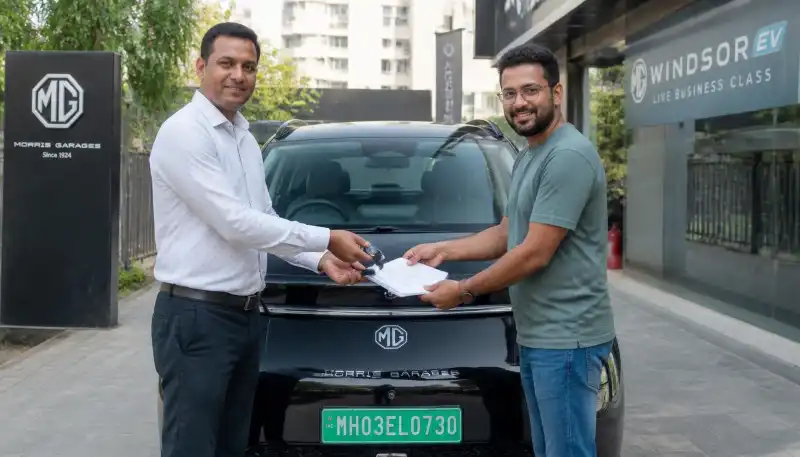
Resale is another area where BaaS buyers need to read the agreement carefully.
When you finance a conventional car, the process is relatively straightforward. You settle the outstanding vehicle loan, obtain the required clearance, and complete the ownership transfer.
With BaaS, there is a separate battery arrangement attached to the vehicle.
MG’s BaaS documentation states that the vehicle can remain under the hypothecation of the respective financier and that the exact finance terms are subject to the financier’s credit policy and conditions.
So, if you decide to sell the Windsor after three or four years, you should first check:
- Whether the battery agreement can be transferred to the new owner
- Whether the new buyer needs to meet the financier’s eligibility requirements
- Whether the battery agreement has to be closed before the sale
- Whether any foreclosure or settlement amount applies
- What documents are required for the transfer
Do not assume that the BaaS arrangement will automatically disappear when you sell the car.
The exact exit procedure depends on the agreement you have signed.
Who Should Consider BaaS?
BaaS can make sense for buyers who want to reduce the initial amount they need to arrange for an EV.
It can also be useful for someone who has a predictable driving pattern and selects a battery plan that matches their usage.
For example, a buyer who wants the Windsor but does not want to finance the entire ₹14.69 lakh vehicle price may find the lower BaaS entry price easier to manage.
However, low-mileage users need to be particularly careful.
If your selected plan has a minimum monthly kilometre requirement, driving less does not necessarily mean your battery bill falls by the same amount.
That can make BaaS less attractive for someone who uses the car only occasionally.
The Bottom Line
The biggest advantage of BaaS is simple: it reduces the amount you need to pay for the car upfront.
But it does not remove the cost of the battery.
Instead, that cost is converted into a separate usage-based payment.
For the current MG Windsor Excite, the official BaaS starting price is ₹9.99 lakh plus ₹3.99 per kilometre, while the full-battery version starts at ₹14.69 lakh ex-showroom.
So don’t make the decision by looking only at ₹9.99 lakh versus ₹14.69 lakh.
Before signing the agreement, check the battery rental rate, minimum monthly kilometres, additional-kilometre charges, tenure, financing terms, and resale or foreclosure conditions.
BaaS can make an EV easier to buy today, but the real question is how much the complete arrangement will cost you over the years you plan to keep the car.
That is the number worth comparing—not just the price printed on the showroom board.
Frequently Asked Questions (FAQ)
1. Is Battery as a Service (BaaS) completely interest-free?
No. BaaS is not a zero-cost EMI. The battery is financed through NBFC partners who include their financing and interest costs within the per-kilometre rate or monthly rental schedule.
2. What happens to the BaaS agreement if I want to sell my MG Windsor EV?
You cannot simply transfer the car without clearing the financier’s conditions. The new buyer must either qualify and take over the NBFC battery agreement, or you must foreclose and pay off the remaining battery amount before obtaining a clean NOC.
3. Do I have to pay if the car is parked and not driven for a month?
It depends on the financing partner. Plans with a minimum monthly running clause (e.g., 1,500 km floor) will still charge the minimum monthly fee regardless of whether you drive the car.
4. Is BaaS cheaper than buying the EV with a full upfront payment?
Initially, BaaS reduces the upfront purchase cost, but over a 5- to 8-year ownership cycle, the combined cost of the vehicle loan and ongoing battery rentals typically exceeds the cost of a single upfront car loan.