MG Hector Tomahawk PHEV: A Brilliant ₹25 Lakh Buy or an Expensive Headache? Buying a family SUV in India has become a little more complicated.
Diesel still works well for some buyers, but cities such as Delhi-NCR come with long-term restrictions to consider. EVs are excellent for daily driving, although a lack of charging options can make a long trip less convenient.
Then there are petrol SUVs. They are simple to live with: fill the tank and carry on. The downside becomes obvious in heavy traffic, where fuel consumption can climb quickly.
Strong hybrids offer a middle ground. Toyota has already shown that with the Innova Hycross, while options like the upcoming Kia Sorento Hybrid aim to catch the luxury crowd. However, a well-equipped Hycross hybrid can cost close to ₹40 lakh on the road, which puts it out of reach for many families.
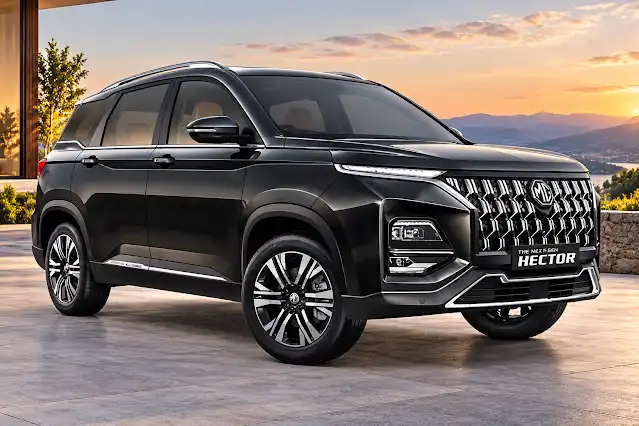
This is where MG’s Hector Tomahawk PHEV gets interesting.
The plug-in hybrid is expected to cost between ₹25.70 lakh and ₹27.80 lakh ex-showroom. That puts it in the same broad price territory as SUVs such as the Creta, Scorpio-N and XUV700.
On paper, that sounds quite appealing.
There is just one thing you need to sort out first: where are you going to charge it?
First Things First: Can You Charge It at Home?

This is probably the biggest question to ask before buying the Tomahawk PHEV.
A plug-in hybrid makes the most sense when you can charge it regularly at home. Park the SUV in the evening, plug it into a 15A socket or wall box, and leave it charging overnight. The next morning, you can start your day with a charged battery.
If your daily driving is around 60 to 80 km, a large part of that distance could potentially be covered using electric power.
That changes the ownership experience quite a bit. The petrol engine can remain unused for much of your normal city driving, which helps keep fuel consumption down.
Things are different if you live in an apartment or a high-rise building without a reliable charging point. If installing a charger is difficult, you lose one of the main advantages of buying a PHEV.
There is another thing to remember.
The Tomahawk has a fairly large 20.5 kWh battery and an electric motor. Even when the battery is low, all that hardware still adds weight. The petrol engine then has to move a roughly 1,800 kg SUV through traffic.
That can have a noticeable effect on fuel economy.
So the rule is fairly simple: if home charging is not dependable, think carefully before choosing a PHEV.
What Is Under the Bonnet?
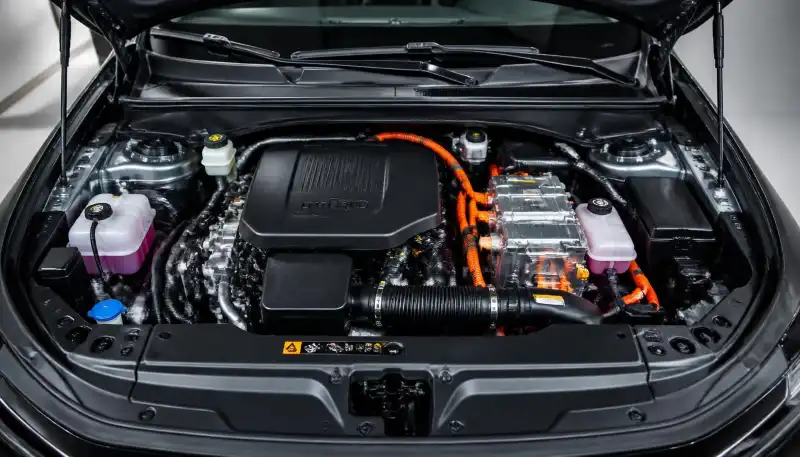
The Tomahawk combines a 1.5-litre naturally aspirated Atkinson-cycle four-cylinder petrol engine with a 20.5 kWh battery and an electric motor.
The combined system produces 198 hp and 285 Nm of torque.
MG says the seven-seat SUV can accelerate from 0 to 100 km/h in around nine seconds. The electric motor should also provide instant response, which could make the SUV feel lively when pulling away from traffic lights.
Power is handled by a Dedicated Hybrid Transmission, or DHT. Rather than asking the driver to constantly choose how the powertrain should work, the system manages the petrol engine and electric motor according to the driving conditions.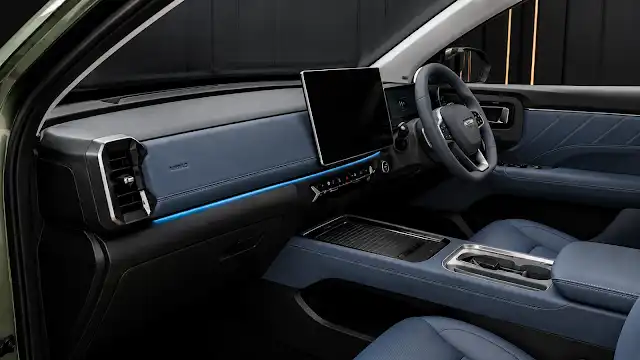
EV Mode
This is likely to be the mode that matters most to people using the Tomahawk around town.
The petrol engine stays switched off while the battery powers the wheels. According to MG, it can cover up to 115 km using electric power alone.
With a home charger and a routine office commute, most weekday journeys could be covered with very little petrol use. Series Hybrid Mode
When the battery charge drops, the petrol engine can take over as a generator.
Instead of driving the wheels directly, it produces electricity for the hybrid system while the electric motor continues to drive the SUV.
Parallel Hybrid Mode
Need more power?
The petrol engine and electric motor can work together when stronger acceleration is required. This could be particularly useful while overtaking on a motorway or when you need a quick burst of power.
Direct Engine Drive
At higher cruising speeds, such as above 90 km/h, the system can connect the petrol engine directly to the front wheels.
That avoids some unnecessary energy conversion and should help the system work more efficiently during steady motorway driving.
Don’t Take the 50 km/l Figure at Face Value.
This is where things need a little context.
MG quotes a combined driving range of around 1,100 km and fuel economy of up to 50 km/l.
Those numbers certainly look impressive, but they will not represent every type of journey.
A PHEV can use very little petrol when it is charged regularly. Imagine driving 70 to 90 km every day and plugging the SUV in each night. A large part of your weekly driving could then be done using battery power.
Petrol consumption could be extremely low in that situation.
Take the same SUV on a long motorway journey, though, and the picture changes. Once the battery has been used up, the petrol engine has to do much more of the work.
For long-distance driving after the battery is depleted, a figure around 20 to 24 km/l would be a more useful number to keep in mind.
That would still be impressive for a large seven-seat SUV.
What would be unrealistic is expecting 50 km/l every time you fill the tank.
The real fuel-saving advantage of a PHEV comes from charging it regularly.
What About Maintenance?
One of the biggest attractions of a plug-in hybrid is that it combines two different ways of driving.
You get the low running cost of electric power for everyday trips, while the petrol engine remains available when you need to travel further.
The compromise is that there is also more technology to maintain.
Petrol Engine Maintenance
The petrol engine still needs normal servicing.
Engine oil, filters, spark plugs, coolant, and other components will continue to require attention. The exhaust system is also still part of the vehicle.
Hybrid System
Alongside the engine, the Tomahawk has a high-voltage battery, inverter, charging equipment, battery cooling system and high-voltage wiring.
That makes the powertrain more complicated than a conventional petrol SUV.
If you are buying one, the pre-delivery inspection becomes particularly important. Pull up this Electric Car PDI Checklist to check the charging system, look for battery-related warnings, and make sure the electrical functions, connectors, and body panels are all in proper condition before completing the paperwork.
Two Variants and the BaaS Option
MG is expected to offer the Hector Tomahawk PHEV in two variants, with deliveries starting around November 2026.
Exclusive — ₹25.70 Lakh Ex-Showroom
The lower-priced Exclusive is not exactly a basic version.
It includes:
- LED projector headlights
- 18-inch alloy wheels
- 15.6-inch touchscreen
- Panoramic glass roof
- Six airbags
- 360-degree camera
- Ventilated front seats
For many buyers, this could be the version worth considering.
Essence — ₹27.80 Lakh Ex-Showroom
Spend more on the Essence, and you get a few additional features, including:
- Level 2 ADAS
- Auto-dimming mirrors
- Rear window sunshades
MG is also expected to offer the Exclusive through its Battery-as-a-Service, or BaaS, scheme.
With BaaS, the upfront price drops to ₹21.79 lakh. The buyer then pays ₹3.20 per kilometre as a battery rental charge.
Saving ₹3.91 lakh at the time of purchase sounds attractive, but there is a catch.
The more you drive, the more the per-kilometre battery charge adds up. At more than 1.22 lakh km during the ownership period, BaaS could become more expensive than purchasing the car and battery outright.
So if you are a high-mileage driver, do the maths before signing up.
How Does It Compare With Its Rivals?
Tomahawk vs Innova Hycross
The Innova Hycross has a few obvious advantages. It has an established reputation, strong resale value, and does not need to be plugged in.
The Tomahawk’s main arguments are its price and the ability to drive on electric power.
If you have reliable home charging, the MG could handle much of your daily city commute with very little petrol. That is something a conventional hybrid cannot offer in quite the same way.
Tomahawk vs Scorpio-N and XUV700
The Scorpio-N and XUV700 are more traditional SUV choices. Their turbo-petrol engines provide strong performance, and selected versions are available with AWD.
But heavy city traffic is not where large turbo-petrol SUVs are at their best.
Fuel consumption can become expensive when much of your morning is spent crawling through traffic.
The Tomahawk takes a different approach. Use electric power for the daily grind and save the petrol engine for longer journeys.
Tomahawk vs Tata Safari Diesel
The Tomahawk could also appeal to buyers who are becoming less comfortable with owning a diesel SUV as regulations in major cities become stricter.
For someone in Delhi-NCR, avoiding diesel-related restrictions could become an important part of the buying decision.
So, Is the Hector Tomahawk PHEV Worth Buying?
For the right buyer, it could be.
For everyone else, not necessarily.
Imagine you have your own parking space, a proper charging point, and a daily commute of about 50-80 km. You come home every evening, plug in the SUV, and start the next morning with a charged battery.
That is exactly the kind of situation where a PHEV makes sense.
Most of your regular driving can be done using electric power, while the petrol engine remains available for longer journeys.
But remove the home charger from the equation, and the argument becomes much weaker.
You would still be carrying around a large battery and additional hybrid hardware, but you would not be making full use of the biggest advantage of the PHEV.
Have reliable home charging and a regular city commute? It deserves a serious look.
No home charging? A self-charging hybrid may make more sense.
Real-World PHEV Ownership: Fuel Economy, BaaS Realities & Long-Term Costs
Beyond promotional figures and showroom brochures, living with an imported plug-in hybrid architecture in Indian conditions brings a few practical operational realities:
- The 50 km/l Fuel Economy Calculation: Many early claims suggest astonishing fuel figures near 50 km/l, but that counts initial pure electric travel combined with the first tank of fuel. Once the 69–70 kWh equivalent hybrid battery depletes to reserve state, the internal combustion engine works as both a power source and generator. On a dry run over a standard 50-to-52 litre fuel tank, real-world petrol-only fuel efficiency hovers realistically around 16 to 19 km/l under mixed cruising conditions.
- The Reality of the BaaS (Battery-as-a-Service) Option: While a headline introductory price under ₹14 lakh attracts immediate showroom footfall, widespread buyer adoption of monthly battery subscriptions remains under 5%. The obligation of tracking fixed daily mileage allowances (often restricted between 50 km and 60 km per day) pushes nearly all private buyers towards full upfront purchase or standard vehicular financing to avoid usage stress.
- PHEV vs Strong Hybrids (The Daily Commute Math): Conventional full hybrids (like the Innova Hy Cross or Grand Vitara) rely on smaller battery banks that constantly cycle the petrol motor. In contrast, a plug-in hybrid setup covers typical intra-city daily runs (40 to 80 km) entirely on electric power when charged overnight from a regular 16-amp socket, completely eliminating weekday petrol expenditure.
- 40% vs 5% GST Price Disparity: Buyers often question why plug-in hybrid variants carry a premium over pure electric crossovers. Under current Indian taxation structures, electric cars enjoy a preferential 5% GST bracket, whereas plug-in hybrids fall under the standard passenger car and SUV slab of roughly 40%, including compensation cess.
- Battery Replacement & Warranty Coverage: Factory warranty coverage on modern hybrid battery modules generally extends up to 8 years or lifetime tenure for initial registered owners. Additionally, current battery pack architectures allow modular cell replacement rather than full battery pack replacements, keeping accidental out-of-warranty repair costs far lower than early-generation hybrids.
MG Hector Tomahawk PHEV: Common Questions Cleared Up
What is the showroom damage for the Hector Tomahawk PHEV?
You are looking at ₹25.70 lakh to bring home the Exclusive spec, while the loaded Essence sits at ₹27.80 lakh. Prefer splitting battery costs? MG lets you pick the car up for ₹21.79 lakh upfront, followed by a ₹3.20 charge on each kilometre your tyres roll.
How many kilometres will the battery pull before petrol kicks in?
MG rates that 20.5 kWh pack for up to 115 km on paper. Realistic city crawling with the AC blowing will get you somewhere near 80 to 95 km of pure silent driving before the 1.5-litre petrol engine wakes up.
Is that 50 km/l figure actual reality or pure brochure talk?
It works out only when you plug into your garage socket overnight and your day wraps up within 75-80 km. Hit an empty battery on a 400 km highway stretch, and you settle into typical hybrid territory—returning roughly 20 to 24 km/l.
Does buying this make any sense without a private charger?
Not really. Lugging a dead 20.5 kWh pack around makes that 1.5-litre motor pull 1,800 kg of metal alone through traffic jams. Your fuel bills climb fast, meaning a regular self-charging hybrid makes far more sense.
What hardware drives the wheels?
A 1.5-litre four-cylinder petrol unit teams up with an electric drive and a 20.5 kWh pack. Output peaks at 198 hp and 285 Nm of torque, channeled through a smart Dedicated Hybrid Transmission that swaps drive modes on its own.
Is the BaaS battery subscription a clever save?
Dropping ₹3.91 lakh off day-one paperwork sounds great, but keep an eye on your usage. Clock beyond 1,22,000 km, and paying ₹3.20 on every kilometre costs more than buying the entire car and battery upfront.