E20, Diesel, or EV? What Indian Car Buyers Need to Know Before Choosing Their Next Car
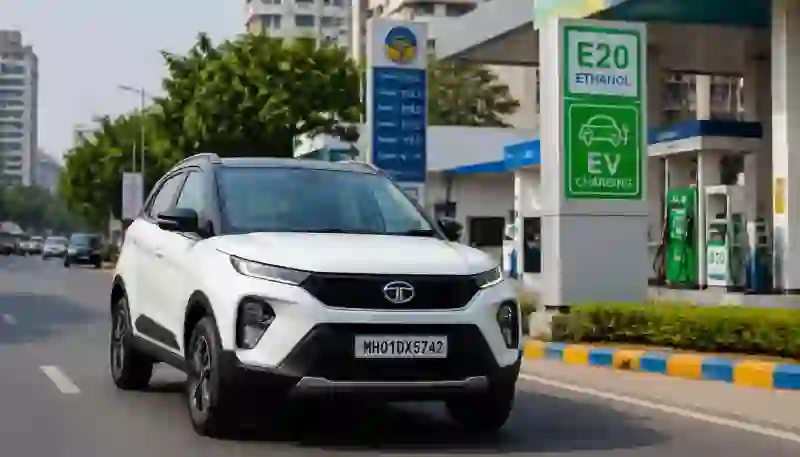
Look, I was sitting with a coffee the other day, properly thinking about the whole E20 petrol diesel EV India debate and how completely backwards the car market has gone lately.
The whole point of pushing E20 petrol was to cut tailpipe emissions and get India closer to energy self-reliance. What’s actually happened? The exact opposite. Concerns over E20’s potential impact on engines, fuel economy, and maintenance costs led many buyers to ditch petrol cars altogether.
And where did they run? Straight back to diesel. Classic jump from the frying pan into the fire.
The Great Showroom Inventory Crisis
That sudden shift in buyer mood has left the market in a weird place. FADA data shows dealers sitting on 60–80 days of unsold petrol inventory across the country. Meanwhile, diesel models are flying out so fast that manufacturers can’t keep up.
Tata, Mahindra, Hyundai, and Kia (the ones still making diesel engines) are seeing diesel demand climb back toward 50% on popular SUVs like the Creta and Seltos.
On the other side, Maruti killed diesel years ago, so buyers skipping petrol are either going factory-fitted CNG or jumping to electric. That’s exactly why something like the Tata Punch EV now has waiting periods of up to 7 months, while the Nexon EV has much shorter queues.
Why Buying a BS6.2 Diesel Today Is a High-Maintenance Trap
If you’re rushing to buy a diesel right now, you’re probably still living in 2011 nostalgia. Back then diesel was cheap, and engines were simple mechanical things. Modern BS6.2 diesels are a completely different animal.
Here’s what you’re actually signing up for:
1. The soot problem and DPF clogging
Old BS4 diesels used to belch thick black smoke. Modern ones don’t show the smoke, but the soot doesn’t disappear. It gets trapped in the Diesel Particulate Filter (DPF).
2. Short drives will ruin it
If your daily life is short city runs and traffic, the engine never gets hot enough to burn that soot off. The DPF chokes, warning lights come on, and you end up in limp mode.
3. The repair bills
Clearing or replacing a choked DPF eats extra fuel, needs high-RPM regeneration runs, and costs a fortune if it fails. You’ll easily spend more on maintenance than you ever saved on fuel.
Simple rule: unless you’re regularly doing 30–40 km of open highway driving where the engine can properly heat up, a modern diesel for city use is financial suicide.
What About EVs? The Manufacturing Reality Check
With petrol scaring people and diesel turning into a maintenance headache, EVs look like the clean escape. But is the Indian EV market actually ready? Not really.
Putting up 45,000 public charging stations is the easy part. The hard part is manufacturing:
India still doesn’t make advanced lithium-ion battery cells at scale. Most brands import cells from China or Indonesia, assemble packs here, and pay heavy duties and taxes. Until cell manufacturing happens locally in a big way, a proper full-sized long-range EV under ₹8–10 lakh is basically impossible right now — no matter what the social media videos claim.
If you want to explore new models arriving soon, check out the upcoming cars in India before deciding.
Practical Buyer Guide (No Hype)
Pick the car that fits your real-world driving habits:
1. Punch EV vs Nexon EV / Tiago EV
If the budget allows, the Punch EV on Tata’s newer Acti. ev platform is the more modern long-term choice over the older Tiago EV. The Nexon EV LR has good tech, but the Punch EV gives almost the same real-world range for noticeably less money — which is why people are waiting months for it.
2. E20 Petrol vs CNG
Don’t buy CNG purely out of E20 panic. Drivers who travel less than 1,000 km a month may find that the higher purchase price and reduced boot space simply aren’t worth the trade-off. If you go for an E20-compliant petrol car, just stick to decent fuel stations and follow normal service intervals.
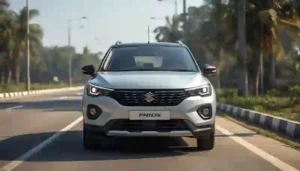
If 80% of your driving is highway and you want better stability, something like a Nexon or Fronx feels far more planted than a basic hatchback. If pure city smoothness is the priority, a good CVT or torque-converter automatic will always feel better than a jerky AMT.
The Final Verdict
There is no single “best car.” There’s only the car that fits how you actually drive every day.
– Buy diesel only if you’re doing heavy open-highway running (1,500+ km a month) so the DPF can regenerate properly.
– Buy an EV if you have dedicated home parking for overnight charging and mainly want a smooth, cheap city runabout.
– Stick with petrol or CNG if most of your driving is short city trips and traffic.
Ignore showroom hype and E20 rumour videos. Take a proper long test drive on the exact roads you use daily. That one experience will clear up more confusion than any article or YouTube video.
FAQ: E20 Petrol, Diesel or EV: What Indian Car Buyers Really Need to Know
Q1. Why are more buyers choosing to avoid petrol cars?
Simple. They’re scared of E20. Rumours about engine damage, poor mileage and higher maintenance have spread fast. A lot of buyers just decided it’s safer to switch to diesel, CNG or electric instead of taking the risk.
Q2. Is E20 really bad for engines?
Not if the car is properly E20-compliant. Most of the problem is panic and half-baked information floating around. Stick to decent petrol pumps and get the car serviced on time — modern petrol engines handle it fine. Jumping to CNG just because of E20 fear usually doesn’t make sense if you drive less than 1,000 km a month.
Q3. Why is diesel suddenly popular again?
Because a lot of people see it as the safer option right now. The shift is clear: diesel demand is rising sharply, with models like the Creta and Seltos nearing a 50% diesel mix. Dealers are running short of diesel stock as petrol inventory lingers for 60–80 days.
Q4. Should I buy a new BS6.2 diesel if I mostly drive in the city?
I’d say no. These engines trap soot in the DPF. Short trips and traffic never get the engine hot enough to clear that soot. Warning lights, limp mode, and costly repairs can follow, leaving some owners spending more on maintenance than they ever saved on fuel.
Q5. When does a diesel actually make sense?
Only if you do proper highway running — ideally 1,500 km or more every month. The engine needs those long, hot runs so the DPF can clean itself. Pure city use? It’s usually a money pit.
Q6. Are EVs the perfect solution then?
Not really. Charging stations are increasing, but the bigger issue is batteries. We still import most of the advanced cells. Until India starts making those cells at scale, getting a proper long-range EV under 8–10 lakh remains very tough.
Q7. Punch EV, Nexon EV or Tiago EV — which one?
– Punch EV: Newer platform (Acti.ev). Feels more modern and gives almost the same real-world range as the Nexon EV LR for less money. Waiting times are currently extended.
– Nexon EV: More space and features, but you pay for it.
– Tiago EV: Older platform. Okay if the budget is really tight, but the Punch is the better long-term pick if you can manage the extra amount.
Q8. Should I take CNG just to avoid E20?
Only if your monthly running is high enough to recover the extra cost and the lost boot space. For people driving under 1,000 km a month, plain petrol is usually simpler and cheaper in the long run.
Q9. Hatchback or compact SUV?
If most of your driving is highway and you want better stability, go for a compact SUV like the Nexon or Fronx. If you’re stuck in city traffic every day and want a smooth drive, a hatchback with a proper CVT or torque-converter automatic feels better. Try to avoid AMTs if you can — they’re jerky.
Q10. What’s the one thing I should do before buying?
Forget the showroom talk and YouTube panic videos. Go for a long test drive on your usual daily routes. Nothing will give you a clearer answer than experiencing the car in your own driving conditions.
Quick takeaway
– Heavy highway use → Diesel can work
– Home charging + city driving → EV
– Short city trips → Petrol or CNG
Choose based on how you really use your car. Everything else is noise.