4 New 7-Seater EVs in India Compared: Real Range, True Costs, and Family Comfort
Finding a practical 7 seater EV India families can actually live with has always been a proper headache. If you had parents, kids, and bags to haul around, dealers basically pointed you towards heavy diesel MPVs. Petrol engines burned through fuel, but buyers who couldn’t justify spending almost a crore on an imported German brand had very few realistic alternatives to choose from.
That changed almost overnight.
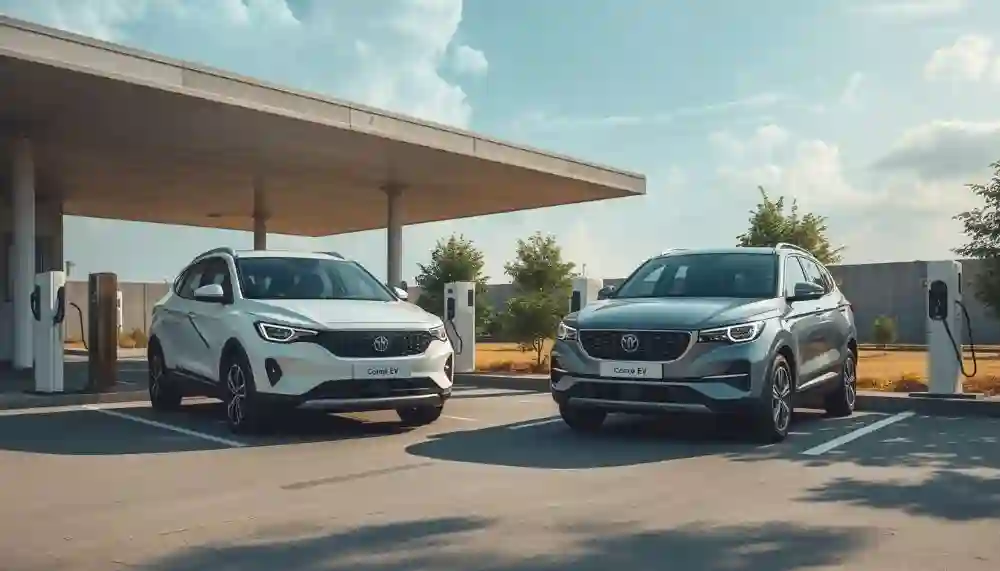
Right now, four made-in-India three-row EVs are sitting in showrooms fighting for your cash: the Mahindra XUV 9S (Pack 3), the VinFast VF MPV 7, the Kia Carens Clavis EV (XL 7 ER), and the newly launched MG Tomahawk EV (Essence).
Brochures will tell you everything is rosy. Huge ranges, super-fast charging times, cheap running. But on messy Indian roads with five family members and luggage piled in, things play out quite differently. Let us look at what actually happens once you take these cars out of the showroom.
7 Seater EV India: Price Tags and That Tricky BaaS Pitch
Money talks first. If you buy these outright—car and battery together on a standard invoice—the starting picture looks like this:
- MG Tomahawk EV (Essence): ₹23.49 lakh
- VinFast VF MPV 7: ₹24.90 lakh
- Kia Carens Clavis EV XL 7 ER: ₹24.99 Lakh Price Tag
- Mahindra XUV 9S (Pack 3): ₹30.49 lakh
MG clearly threw a punch here by keeping the ex-showroom tag at ₹23.49 lakh. But almost immediately, salesmen at Mahindra, MG, and Kia start talking about BaaS (Battery-as-a-Service).
They make it sound like a massive discount: “Sir, take the car home for just 16 or 17 lakh!”
Do not get confused by the slick pitch. BaaS is simply a split finance deal. The dealer divides the vehicle into two separate loans—one for the metal shell, and another monthly contract for the battery pack.
Here is the math on that battery rent. MG asks about ₹4.90 for every km on the odometer. With Kia, you shell out around ₹3.00 to ₹3.20 per km. Mahindra sits in the middle near ₹3.75 per km once you lock in their regular monthly mileage bracket. Add it up, and you get stuck paying two separate loan debits every thirty days.
VinFast simply said no to BaaS for their family hauler. You pay for the whole car, and you own it. Straight up, that honest approach saves a mountain of paperwork. Before signing any split-loan form, punch your daily commute numbers into our EV vs Petrol savings calculator to see your real monthly outflow.
Real Highway Range Under the Indian Sun
Forget ARAI numbers. Testing cars on flat indoor rollers with the AC switched off means nothing when you are heading towards Jaipur or Goa in mid-May with six people on board.
Here is how each battery actually behaves on our tarmac:

1. Mahindra XUV 9S (79 kWh LFP)
- ARAI claim: 679 km
- Real-world distance: You get roughly 450 km when traveling light, but that number slides towards 400 km once luggage bags and family members fill the seats.
Mahindra fitted a massive 79 kWh pack into the floorpan. What I really rate is their hidden safety cushion. Hit dead 0% on the instrument cluster, and the system still keeps roughly five percent in reserve. Cabin cooling stays alive, giving you enough juice to reach a working plug without rolling to a dead halt.
2. VinFast VF MPV 7 (60.13 kWh LFP)

- ARAI claim: 517 km
- Tested real-world tarmac range: You can count on roughly 410 km on an easy cruise, and closer to 380 km with the entire house packed in.
As detailed in our hands-on VinFast VF MPV 7 review, the Vietnamese crossover is remarkably slippery through the air. Even though the pack is roughly 60 kWh, it sips energy gently. Squeezing 380 km on a family trip is very doable without hypermiling.
3. Kia Carens Clavis EV (51.4 kWh NMC)

- ARAI claim: 490 km
- Real-world distance: 390 to 400 km in cool weather, drops closer to 330–350 km in peak summer.
Kia picked an NMC chemistry pack instead of LFP. It packs energy tightly into a smaller, lighter frame. But NMC units are sensitive to extreme afternoon heat, especially if you feed them multiple rapid DC top-ups in a single day.
4. MG Tomahawk EV (69.2 kWh LFP)

- ARAI claim: 517 km
- Tested real-world tarmac range: Roughly 390 km light, around 340 km with seven passengers.
The tall stance on the MG Tomahawk 7-seater EV looks imposing, but pushing that upright front grille through highway crosswinds burns extra juice. With all three rows occupied and rear vents running full blast, plan on finding a fast-charger around the 340-km mark.
Third-Row Comfort and Everyday Boot Space
A car can look brilliant on paper, but none of that matters if adults can barely sit comfortably in the third row.
Sitting on a long 2,840 mm platform, grown-up passengers can actually stretch their legs back in row three without needing row two to push forward. The floor stays relatively low, giving your thighs decent support.
Rather than following the usual approach, Mahindra made the XUV 9S 1,900 mm wide to provide a more spacious cabin. Three people can sit across the middle bench without fighting for shoulder room. Open the front bonnet, and you’ll find a spacious 150-litre storage compartment, giving the Mahindra extra practicality. That easily takes two rolling overnight bags plus all your charging cables, leaving the boot clear.
The MG Tomahawk stands tall with a substantial 230 mm of ground clearance, making it better suited to challenging road conditions. Speed humps and broken rural patches will never bother it. The compromise is inside: no front trunk, and the third-row floor is raised slightly because of the thick battery underneath.
Kia’s Carens feels like a well-sorted urban van. Easy to climb into, very familiar controls, and decent headroom, though shoulder space is tighter across row two compared to the Mahindra. If you are picking up your first big crossover, spend five minutes reading our first-time car buyer guide in India to sort out parking and cabin sizing checks.
Power Delivery and Daily Overtakes
Moving heavy three-row cars usually feels like hard work, but EV drivetrains sort that out immediately.
Hit the accelerator in the XUV 9S, and its 210 kW motor dumps 380 Nm onto the road. When overtaking big trucks at highway speeds, the power comes on instantly, letting the car move ahead without a struggle.
MG tuned the Tomahawk with 150 kW and 310 Nm of torque. It feels light on its feet from a dead stop, which takes the sting out of bumper-to-bumper office crawls.
Like its rival, the VinFast MPV 7 produces 150 kW, while its 280 Nm of torque helps it gather speed in a steady, measured way. That steady throttle response stops kids in the back from feeling sick on winding roads.
Kia keeps things modest on the Carens with 126 kW and 255 Nm. It performs well on local roads, but with all seven seats occupied, climbing steep hills puts its capabilities to the test.
Realities of Home and Highway Charging
Do yourself a favour at the dealership: say no to those pricey 11 kW wall boxes. Car brands don’t manufacture charging hardware anyway—they just rebadge off-the-shelf units and slap on a fat retail markup.
Your domestic home supply works best with an ordinary 7.4 kW wall charger.
Plug in overnight, and the Kia is ready in 7.5 hours. The Vin Fast takes around 9 hours, and Mahindra’s massive pack needs roughly 11 hours while the house sleeps.
On long highway drives, the Mahindra pulls well ahead by taking 180 kW DC fast-charging. Hooked to a high-output gun, 10% to 80% takes only 35 minutes. Kia caps out around 100 kW, while the Vin Fast and MG level out near 90 kW.
So, Which One Should You Buy?
Your actual road use makes the final call straightforward:
Buy the MG Tomahawk EV if you want butch SUV ground clearance and low entry pricing without stretching past ₹24 lakh.
If you want comfortable space for adults across three rows and hassle-free ownership without juggling separate costs, the Vin Fast VF MPV 7 is worth considering.
Pick the Kia Carens EV if your driving never leaves city limits and you need an easy car for daily school and market runs.
Stretch your budget for the Mahindra XUV 9S if road trips are a regular weekend habit. With its 79 kWh battery, honest 400 km loaded range, massive front boot, and punchy 210 kW drive, it stands as the most complete long-haul electric people-mover on sale.
Common Questions from Indian Buyers
Can the Mahindra XUV 9S actually cover 400 km on the highway?
Yes, easily. That 79 kWh battery does well on open roads. Even with luggage and kids in the car, you should get around 400–450 km before you need to look for a charger.
Is paying battery rent through BaaS worth it?
Not really. You’re basically paying for two loans at once. After five years of monthly battery fees, the total cost usually ends up about the same as buying the car outright at the showroom price.
Which Three-Row Car Is Best for Taller Adults?
The Vin Fast VF MPV 7, without question. Its 2,840 mm wheelbase leaves proper legroom, so your knees don’t press straight into the seat in front.
Can Your Home’s Electrical System Handle a 7.4 kW EV Charger?
I haven’t faced that problem. It draws power slowly overnight—about 7.5 hours for a Carens and roughly 11 hours for the Mahindra—while everyone’s asleep.