Ultraviolette X47 Venom Review: Real-World Range, 100V VX Platform, and Price Guide
I take bikes out most Sunday mornings. Open highway stretches outside town, mostly. One persistent headache with modern fast electrics is sheer bulk in sluggish traffic. Punchy acceleration? Sure, the old Mach 2 had heaps of that. But hauling 207 kilos around evening market jams felt like hard labour. Even on big petrol cruisers like the Harley-Davidson X440, you at least had clutch slip to balance things out. The new Ultraviolette X47 Venom tries tackling that exact dead-weight issue.
They literally stripped the old chassis setup and moved everything over to a 100-volt circuit. Chopped off lots of ballast. Now, look, glossy launch reels always sound amazing on a phone screen. What they skip is how quickly your battery percentage vanishes when a stiff crosswind hits you on an open toll bypass. So, straight up, here is what this bike actually delivers on our patchy tarmac, how fast it drinks current at highway speeds, and whether dropping ₹2.65 lakh makes practical sense.
What Actually Changed Under the Fairings?
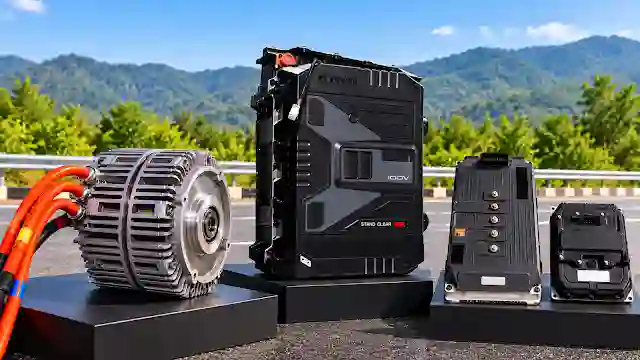
The biggest shift sits behind the fairings where nobody looks. The earlier F77 relied on a 50-volt system, whereas this Venom runs on Ultraviolette own 100-volt VX platform. Basic school physics explains it best: double the voltage and the motor pulls merely half the current to put down that same 40 horsepower kick. Sounds like dry dyno chatter, yet out on melting asphalt, it completely changes heat management.
Those fat orange power cables running underneath the belly pan are gone. The wiring harness is noticeably thinner today. The controller shrank right down as well, tipping the scales at just 2.7 kg. The old unit felt like a 6 kg cast-iron block strapped right into the front frame.
Then you notice the updated motor, which they label the Light Fury. It has raw cooling fins machined directly into the metal casing. That dumps warmth into passing air quickly, saving roughly 5 kg on its own. The battery casing got redesigned too. Front vents force cool air straight across the cells once you pick up road speed. That ducting work stripped another 10 kg from the spine. Chucking the heavy lead starter battery for a tiny lithium unit under the tail unit finished the job.
All up, the bike sheds a massive 20 kg. It sits near 180 kg now, and you genuinely feel that diet the moment you lift the side stand with your boot.
Real Motorway Distance: Test Figures vs Ground Reality
Brochures always love putting up massive laboratory figures. On the older F77 Recon with its 10.3 kWh battery, the official sheet promised 323 km. Actual seat time across town told a very different story. Pot-tering through the city under 45 km/h in Glide mode, you saw roughly 250 km. Regular commuting through mixed suburban traffic in Combat mode, the pack ran out around 205 km. And pinned flat out on the four-lane highway above 110 km/h, distance crashed well below 180 km.
The X47 Venom carries a 12 kWh total battery pack under the floorboards. But because running at 100 volts produces less internal heat resistance, usable energy climbs up to 11 kWh. The official test lab stamp claims 343 km.
Because the bike is 20 kg lighter and runs noticeably cooler under load, here is what you will actually see on the dash. Crawling through dense traffic with plenty of off-throttle rolling, you can easily bank on 280 km to 295 km before hunting for a plug. It delivers genuine big-pack endurance, much like what we observed while analyzing urban efficiency in our Simple Wave Electric Scooter review.
Hit 85 km/h out past the toll plaza and stay there with a tail bag strapped on? You get an easy 240 km. Push hard on twisty mountain corners with the throttle pinned and you burn through juice faster, but 200 km is still dead simple before the reserve glow pops up.
How the New Regen Operates
Regen works right away now too. The old model cut out until your battery dropped past 90 percent, which always felt odd. This one bites the second you leave home at 99 percent. Hit a speed bump, shut the throttle, and you get natural deceleration drag right off the bat while dumping small sips back into the cells.
Charging Speeds on Indian Highways
Nobody likes cooling their heels at a dusty dhaba while a bike trickles in power. The Mach 2 took ages on public plugs because 6 kW was the absolute ceiling. That meant killing over an hour just to reach 80 percent.
Venom swallows up to 12 kW DC. Find an open highway fast charger, hook the gun up, and that 10 to 80 hop is done in 35-odd minutes. Grab chai, splash water on your face, and the dash is good for another big stretch. Plugging in at home with a 3.3 kW box tops it off in four hours flat overnight. If you still wonder whether charger stops beat petrol queues, our breakdown of Electric Scooter vs Petrol Bike walks through that daily balance.
Safety Tech and That Clever Pyro-Fuse
They borrowed proper car safety bits too. Inside the battery sits a little explosive pyro-fuse. Big crash or bad short? It detonates in a microsecond, breaking the high-voltage lines clean before cells can bake each other. If it fails, don’t expect to sort it out yourself with a few spanners in the garage. The flatbed takes it straight to an authorised bay for a factory replacement.
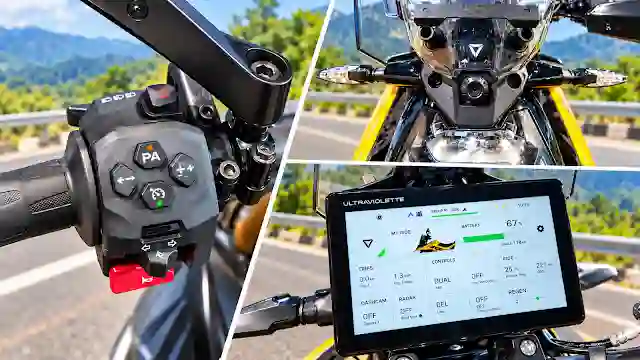
The 7-inch TFT screen feels slick and easy to use, even through a pair of leather riding gloves. No annoying stutter. Built-in front and rear cams log video directly to internal flash drives. Small radar boxes in the rear cowls blink warning lights in the mirrors when a bumper creeps into your blind spot. There is a simple cruise button on the right bar too, which saves your wrist on endless dead-straight tarmac.
What 50 Days on the X-47 Chassis Actually Teaches You
While the Venom pushes performance further on the new 100V platform, early real-world endurance on the X-47 chassis (over 2,000+ km of daily highway and city commutes) gives clear hints about daily usability:
- Headlight Throw: The stock LED beam struggles against oncoming high-beam traffic on dark unlit roads. Regular night riders will still want auxiliary touring lights.
- Seat Cushioning: Saddle firmness becomes noticeable after 60 to 75 minutes of continuous riding, making short tea breaks necessary on long stretches.
- Rear Spray: The tall rear cowl styling tends to throw road spray and mud onto the pillion and rear monoshock during monsoon commutes, requiring an aftermarket hugger.
- Idle Battery Drain: Telematics and cloud syncing consume about 2% to 3% battery overnight when parked.
| Specification | Ultraviolette X47 Venom (2026) | Older F77 Mach 2 Recon |
|---|---|---|
| Platform Architecture | 100-Volt (VX-100) | 50-Volt Platform |
| Battery Pack (Usable) | 11.0 kWh (SR1 Pack) | 10.3 kWh |
| Claimed Range (IDC) | 343 km | 323 km |
| Real Highway Range | 235 km – 250 km | 200 km – 215 km |
| Kerb Weight | ~180 kg (20 kg lighter) | 207 kg |
| Fast Charging Intake | 12 kW DC Fast Charge | 6 kW DC Fast Charge |
| 10% to 80% Time | ~35 to 40 mins | ~65 to 75 mins |
| Starting Price (Ex-showroom) | ₹2.65 Lakh | ₹2.99 Lakh |
Pricing Details and Can You Upgrade an Older F77?
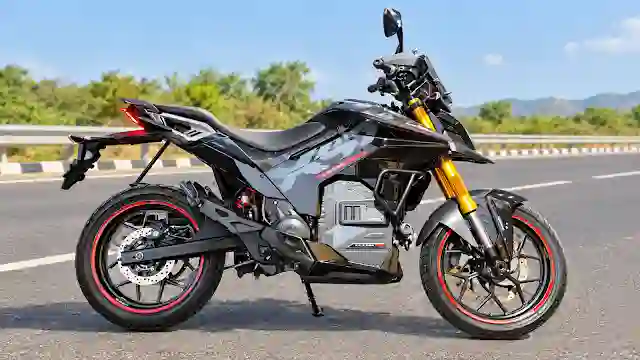
Introductory bookings sit at ₹2.65 lakh for the first 5,000 slots. Pick the top-shelf trim with radar gear and crash cages, and you knock on the ₹4 lakh door. Deliveries begin this November.
Own an older F77 and hoping for a bolt-on upgrade? Forget it. The 100V jump means wiring, harness plugs, motor windings, and battery mounts do not align at all. Ultraviolette shelved the old 50V line for good to back this VX frame completely.
Quick Answers (FAQ)
Realistic range?
Official figure is 343 km. In normal use, you’re looking at around 285 km in the city and about 240 km on steady open-road riding.
How much lighter?
About 20 kg. Final weight is roughly 180 kg.
Can it use public DC car chargers?
Yes, if the charger is compatible. It will pull up to 12 kW, so 10–80 % takes around 35 minutes.
Can you reset the pyro-fuse yourself?
No. Once it fires, the bike has to go to an authorised workshop for a new fuse.
Does the X47 battery drain when parked overnight?
Yes, you can expect a minor 2% to 3% drop overnight. The bike’s internal telematics continuously sync ride telemetry and GPS data with the cloud servers, drawing a tiny standby current while parked.
How comfortable is the seat for continuous touring?
The saddle compound feels fine for daily city rides under 45 minutes, but gets stiff after roughly an hour of continuous saddle time. Plan on taking a 5 to 10 minute tea break every 60 to 75 km on long stretches.
Do you need to install an aftermarket tyre hugger?
Yes, especially if you ride in monsoon conditions. The minimalist rear tail leaves a wide gap, which lets road grime and muddy spray splash directly onto the pillion seat and the rear monoshock without an extended hugger.