Maruti YMC 7-Seater Electric MPV: Range, Battery and Space
Driving a large petrol seven-seater around crowded city streets burns through fuel and money fast. Maruti Suzuki is targeting big Indian families with a three-row electric people mover currently known inside the company as the Maruti YMC.
This is not an Ertiga with batteries stuffed under the floor. The platform has nothing in common with Maruti’s existing petrol models, especially when compared against the running costs of petrol vs electric family cars.
A proper EV floor, not a converted petrol car
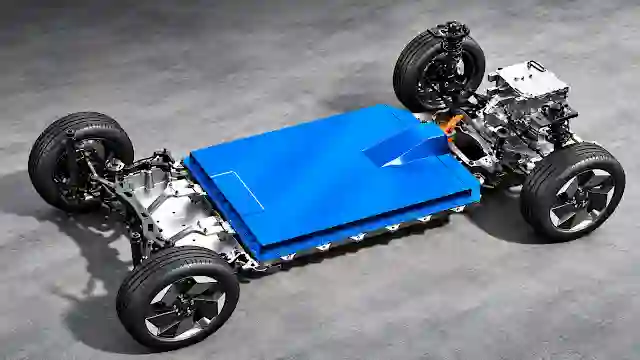
Dropping heavy battery packs into an old petrol chassis usually raises the cabin floor. Passengers end up sitting with their knees bent on long drives. The YMC avoids that problem by using a dedicated electric platform developed with Toyota.
The whole shell measures roughly four and a half metres front to back. Since there is no combustion engine block sitting under the bonnet, engineers pushed the wheels right out to the bumpers. That creates genuine foot room across all three rows. Access to the third row is also straightforward — the middle seats tumble forward in one motion, opening a clear path to the back.
Seven people leave little space for luggage behind the last row. Maruti’s solution is factory-fitted roof rails so families can add an external luggage box for holidays without hassles at police checkpoints.
Two battery options and real-world range
| Specification | Standard Pack | Long Range Pack |
|---|---|---|
| Battery Capacity | 49 kWh | 61 kWh |
| Claimed Test Range | ~400 km | ~500 km |
| Real-World Highway Range | ~300 km | ~380–400 km |
| Platform & Drivetrain | Dedicated Skateboard / FWD | Dedicated Skateboard / FWD |
| DC Fast Charging (10-80%) | Under 50 mins | Under 55 mins |
The YMC uses powertrain components borrowed straight from the Maruti Suzuki eVitara.
The smaller 49 kWh battery is rated around 400 km on the official test cycle. Daily office commutes with bumper-to-bumper crawling and AC should yield roughly 290 to 300 km.
The bigger 61 kWh battery claims near 500 km on test sheets. Out on dual carriageways holding 80 km/h, the bigger battery reliably gives roughly 380 km. Even packed with seven people and weekend bags pulling extra juice, a dependable 340 km between fast chargers keeps highway drives stress-free.
Interior and everyday features
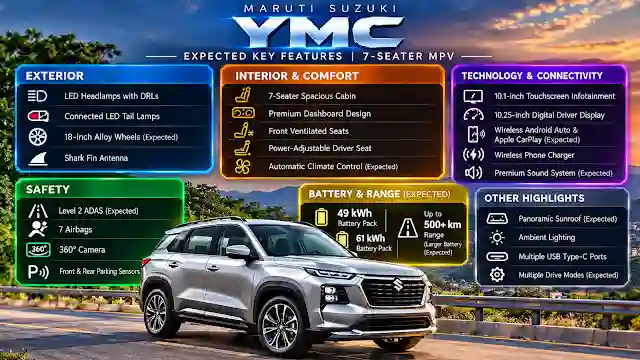
The cabin moves away from the hard plastic look of older people carriers. The dashboard gets a clean 12-inch screen paired with digital dials showing live battery drain. Up front, you get power seats with built-in blowers to keep your back dry during sticky July traffic.
For daily road safety, Maruti added six airbags all around, electronic skid controls, a surround parking monitor, and radar-linked emergency braking. Unlike the setup on the new Renault Duster hybrid, which keeps its cabin layout more conventional, this EV maximizes flat floor area.
Instead of cutting open a massive glass roof, Maruti stuck to a solid insulated metal top. That keeps harsh summer heat out and stops the rear AC vents from struggling.
Rivals and expected timing
The YMC will compete directly with the Kia Carens EV and the upcoming three-row electric models from Hyundai. Showroom arrivals are expected in late 2026 or early 2027 around major auto shows. Pricing in the ₹20–24 lakh range should appeal to families looking for lower running costs.
Maruti YMC 7-Seater Electric MPV – FAQ
What exactly is the Maruti YMC?
It’s Maruti’s upcoming three-row electric MPV meant for big Indian families. Seven seats, fully electric, and built as a proper EV rather than a petrol model with batteries added later. It’s not related to the Ertiga at all.
Is this just an Ertiga with an electric motor?
No. The car sits on a brand-new electric platform that Maruti developed with Toyota. The whole floor is designed around the battery pack from the start. Length is around 4.5 metres.
How is the space inside?
Because there’s no engine or radiator up front, the wheels sit further out toward the corners. That gives proper legroom in all three rows. Getting into the last row is also easier — the middle seats fold forward in one go and open a clear path.
What happens to luggage space when all seven seats are used?
It’s tight behind the third row. Maruti is fitting roof rails as standard, so you can put a luggage box on top for longer trips. That way you don’t have to fight with traffic police about temporary racks.
Which batteries will it offer?
Two options are planned:
– 49 kWh battery (official range around 400 km)
– 61 kWh battery (official range close to 500 km)
What range should we actually expect on the road?
In city traffic with the AC running, the smaller battery will probably give you about 300 km. On the highway at a steady 80–85 km/h, the bigger one should return 380–400 km. With a full family and luggage, a practical 350 km or so between charges is realistic for most intercity runs.
What features are expected inside?
A 12-inch touchscreen, digital instrument cluster that shows live power use, electrically adjustable and ventilated front seats, six airbags, stability control, 360-degree camera, and Level-2 driving assists.
Will it get a sunroof?
Looks like Maruti is going with a solid insulated roof instead. It keeps the rear seats cooler under the harsh Indian sun and makes more sense for a family car than a big glass panel.
Who will it compete against?
Main rivals will be the Kia Carens EV and whatever three-row electric models Hyundai brings out around the same time.
When is it coming and how much will it cost?
Expected in showrooms by late 2026 or early 2027. The price range is likely to sit between ₹20 lakh and ₹24 lakh.