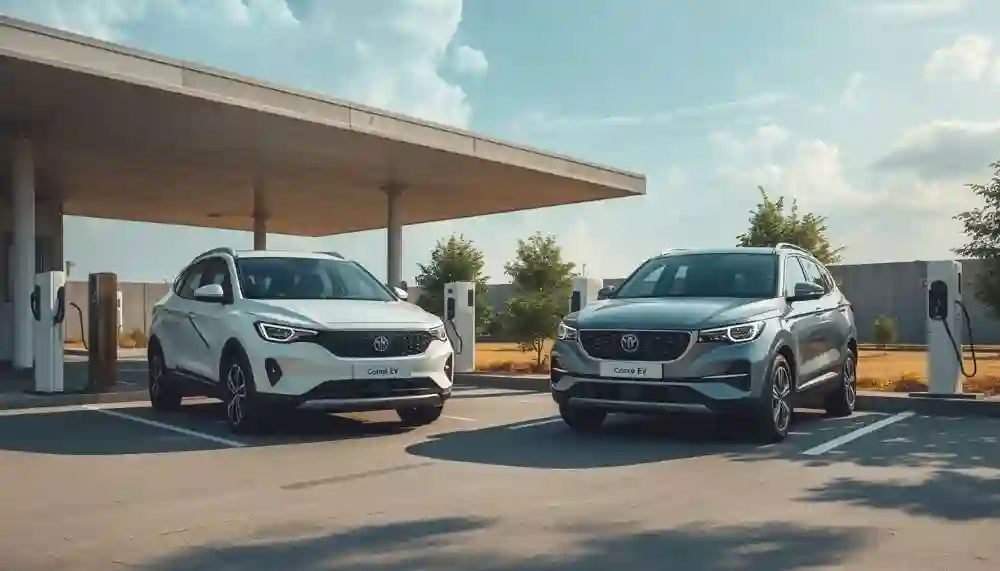
Car Ownership Dilemmas India: Things Indian Buyers Should Think About
Buying a car looks simple until you actually start shopping for one. When tackling common car ownership dilemmas India drivers face daily, the real truth becomes obvious the moment you step into a showroom. There are dozens of things to consider. One variant has a sunroof, another gets more airbags, a third has better infotainment, and the salesperson always has a reason why you should move up to the next trim. After a while, it becomes difficult to tell what you really need and what is simply nice to have.
The difference becomes obvious after you take the car home.
That is when fuel expenses, service bills, boot space, ride comfort and reliability start mattering every week. So before picking petrol, diesel, CNG or electric, think about your own driving pattern first. The cheapest car to buy isn’t necessarily the cheapest one to live with.
Before picking petrol, diesel, CNG or electric, reading our car buying guide for India helps you understand long-term ownership costs and true maintenance realities.
Driving only 500–1,000 km a month? Don’t rush into CNG
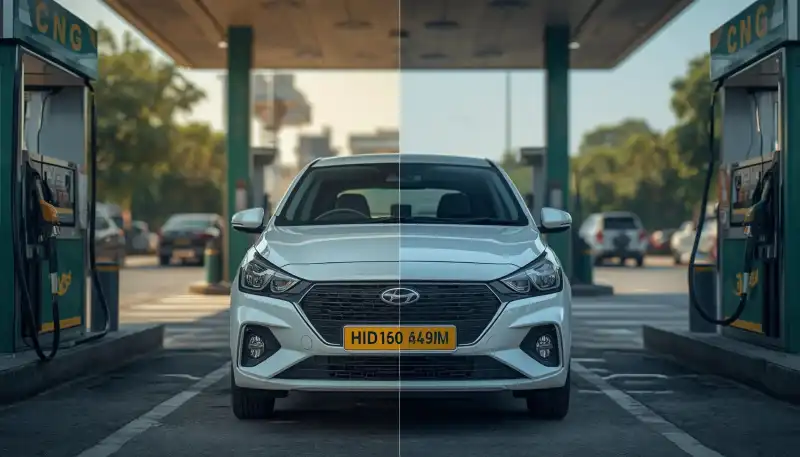
CNG is cheaper at the fuel pump, so the attraction is obvious. But low fuel prices alone don’t make a CNG car financially sensible.
Let’s say you drive only 500 to 1,000 km in a typical month. At that level, I would lean towards petrol.
A factory CNG car normally carries a noticeable price premium over its petrol equivalent. The cylinder also takes up space that could otherwise be used for luggage. And depending on where you live, finding a CNG station and waiting there can become part of your regular routine.
For someone doing less than around 1,500 km a month, the savings may take quite a while to recover that additional purchase cost.
A petrol car is therefore the easier choice for many low-mileage owners. You get a more useful boot and can refuel quickly when needed. There is also no reason to pay extra for a fuel system that you may not use enough to justify the cost.
Your commute is 100–200 km a day? That’s a different story
High mileage changes the calculation completely.
If you are driving 100 to 200 km every day, a petrol car can put a serious dent in the monthly budget. CNG will bring the running cost down, but with that kind of usage, fuel stops can become a very regular affair.
An EV starts looking much more attractive here.
If you can charge at home, the routine is straightforward. Park the car in the evening, plug it in and leave it overnight. By morning, you have enough charge for another day’s driving.
For somebody who keeps doing 100–200 km a day over several years, the difference in running expenses can be substantial. Over three or four years, those savings can recover a significant part of what you paid extra for the electric car in the first place.
Innova Hycross or Scorpio-N: Which one is better for a family?

This comparison comes up often because both have become popular family choices. But they aren’t really trying to do the same job.
This is the more rugged machine. It uses a body-on-frame construction and has the high seating position and tough character that many SUV buyers want. If your regular routes include rough village roads, broken surfaces, or difficult terrain, those qualities can be useful.
It takes a much more comfort-oriented approach.
It has a monocoque platform and feels closer to a large car than a traditional rugged SUV. For family travel, especially on highways, the comfortable cabin and easy-going driving manners are major advantages. The strong-hybrid version also makes sense for buyers who put a lot of importance on fuel efficiency.
So if the family spends most of its time travelling between cities on paved roads, I would choose the Hycross.
If bad roads are a regular part of your life and you specifically want an SUV with a tougher character, the Scorpio-N is the more suitable option.
Why does the black plastic cladding on cars turn grey?
Look at an older crossover, and you will often notice the same thing: the black plastic around the wheel arches doesn’t look as black anymore.
New cars usually have deep, dark-looking cladding. Leave that plastic outside in the Indian sun for a couple of years, and it can gradually become dull and grey.
There are plenty of trim-restoration products available, and some can make the plastic look considerably better. The catch is that the effect is generally temporary. A few washes, strong sunlight, and a couple of heavy monsoon showers can take that fresh-looking finish away again.
There isn’t a miracle product that permanently stops the fading.
Parking in a covered area is probably the most effective thing you can do. When washing the car, use a proper car shampoo with a mild, pH-neutral formulation. Strong household detergents aren’t meant for automotive exterior surfaces and can make matters worse over time.
Is Level 2 ADAS worth an extra ₹1.5 lakh?
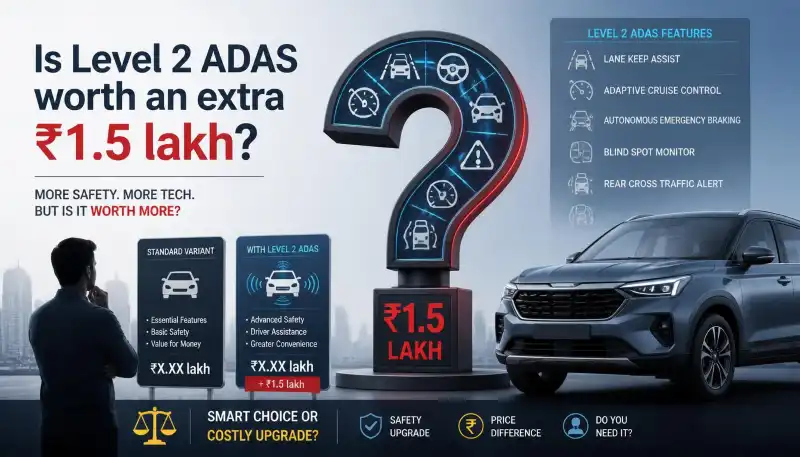
This is one area where I would rather spend money on safety than appearance.
If Level 2 ADAS costs roughly ₹1.5 lakh more, some buyers may hesitate. After all, that money could get you a sunroof, larger wheels, or a few other premium features.
But ADAS serves a different purpose.
Systems such as autonomous emergency braking and adaptive cruise control are designed to assist the driver. In the right situation, an emergency braking system can react to an obstacle before the driver does and potentially reduce the severity of a crash.
That doesn’t mean you can switch off your attention and let the car drive itself. ADAS has limitations, and poor visibility, unusual road situations, or unclear lane markings can affect how well some systems work.
Still, if your choice is between active safety equipment and cosmetic features, I would put the safety equipment first.
A panoramic roof looks good. Ambient lighting can make the cabin feel more expensive. Neither of them can help you avoid an accident.
To see which active safety features and modern powertrains are arriving next, take a look at our tracker on upcoming electric and hybrid cars in India.
Aftermarket CNG kits: Worth the saving?
Converting a petrol hatchback to CNG can look like an easy way to bring down running costs. In practice, the result depends heavily on the kit, installation, and calibration.
A factory CNG car is developed around that fuel from the beginning. The manufacturer can account for the engine’s requirements, fuel system, and other related components.
An aftermarket conversion doesn’t always feel the same.
Some cars lose a bit of their low-speed response after conversion. You may notice it most when trying to overtake on a highway or climb a steep section with passengers on board.
Then there is the warranty question. Third-party wiring, plumbing, and other components can create arguments later if something goes wrong.
If you know from the beginning that you will be doing high mileage and want CNG, a factory-fitted CNG model is generally the less complicated route.
Do you actually need an engine flush?
This is another service upsell that car owners hear quite regularly.
You take the car in for an oil change, and someone tells you that the engine needs a chemical flush to remove deposits. It sounds sensible, but a regularly serviced modern engine normally doesn’t need this treatment every time the oil is changed.
Good engine oil already contains detergents and additives that help keep deposits under control.
There is a difference when we are talking about an old engine that has been neglected for years and has developed serious sludge. In that situation, cleaning may be worth considering, but it should be done carefully rather than treated as routine maintenance.
If your engine has been serviced on time and is running properly, regular oil changes using the correct specification are much more important.
There is little reason to keep pouring strong flushing chemicals into a healthy engine simply because a workshop has offered the service.
Used luxury SUVs: Audi Q7 or Range Rover Velar?
A five- to seven-year-old luxury SUV for less than ₹40 lakh can look like a brilliant deal.
This is where buyers need to slow down.
It has plenty of visual appeal, but an older luxury vehicle can bring expensive problems. Electrical faults, sensors, gearbox issues, and other age-related repairs can quickly change the ownership calculation.
A used BMW X5 may provide a more predictable experience in some cases. Still, keep in mind that this isn’t a guaranteed range. The condition of the particular vehicle and its service history matter enormously.
The purchase price is only the beginning.
Before buying an old luxury SUV, keep some money aside for unexpected repairs. Air suspension, electronic components, specialist servicing and premium tyres aren’t cheap.
If you can afford the purchase but cannot comfortably handle a major repair bill, that particular luxury SUV probably isn’t the right used-car choice for you.
Common Questions About Buying a Car
Is a low odometer reading enough when buying a used car?
No. Mileage is useful, but it shouldn’t be the deciding factor.
A car showing 25,000 km on the odometer may have spent those kilometres on rough roads, with hard driving and missed services. Another car with 60,000 km could have been maintained properly and used mostly for highway travel.
I’d rather buy the second car after a proper inspection than blindly trust the lower number.
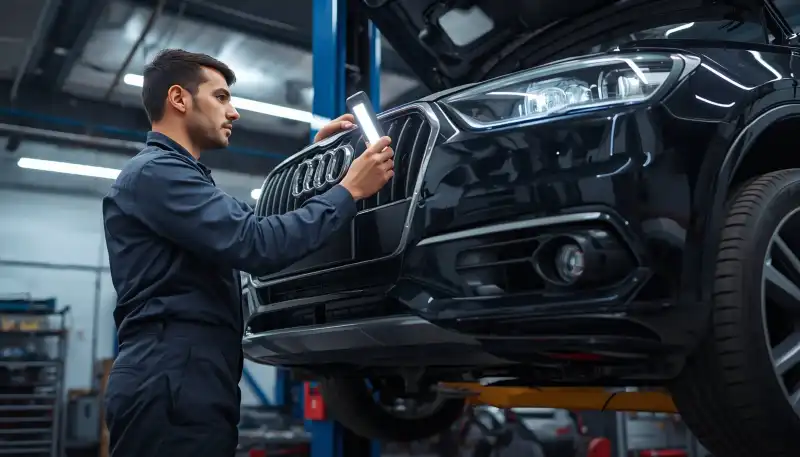
Get the suspension checked. Look at the clutch and steering components. Put the car on a lift if necessary and have an independent mechanic inspect it. Service records are also important because they give you an idea of how the vehicle was actually looked after.
The odometer tells you how far the car travelled. It doesn’t tell you how carefully those kilometres were covered.
Can a naturally aspirated 1.0-litre petrol engine manage highway trips?
Yes, but don’t expect it to behave like a larger or turbocharged engine.
For city driving, a naturally aspirated 1.0-litre three-cylinder petrol engine can be perfectly adequate. Problems become more noticeable when the car is full of passengers and luggage, particularly on an uphill highway section with the air-conditioner running.
You may have to drop a gear more often. Overtaking also needs a little more planning.
For occasional highway trips, that is hardly a reason to reject the car. If most of your driving is in town, the small petrol engine can do the job quite comfortably.
Regular inter-city travel is different. If the car is usually loaded with people and luggage, a turbo-petrol engine will generally give you stronger mid-range performance. A good CVT can also make the journey more relaxed, although its driving feel isn’t to everyone’s taste.
So, how should you actually choose a car?
Start with your routine, not the brochure.
Work out how many kilometres you drive each month. Think about where you park the car, whether you have access to home charging, how often you carry luggage, and what sort of roads you normally use.
Then look at the running cost.
A person driving 700 km a month has very different needs from someone doing 150 km every day. Someone living in a city with easy home charging has a different EV case from someone who cannot charge at home. And a buyer who regularly travels on rough roads may value an SUV’s toughness more than a soft ride.
The right car isn’t necessarily the one with the longest feature list.
It is the one that fits your everyday life without making you regret the ownership costs later.