MG Hector Tomahawk EV vs PHEV – What’s Actually Worth Knowing
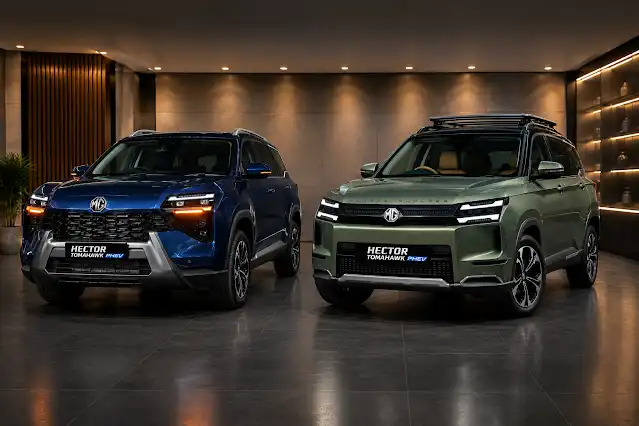
MG basically stuck both a pure electric and a plug-in hybrid under the Hector badge and called it Tomahawk. Pretty bold move. One version runs on a 69.2 kWh battery, the other pairs a 1.5-litre petrol engine with a smaller 20.5 kWh pack. Both come in 5- and 7-seater forms.
If you are tracking where new multi-energy platforms are heading, keeping an eye on upcoming electric and hybrid cars in India helps put these high-voltage launches into perspective.
The pure EV
Battery is 69.2 kWh NMC. Power comes in at 204 PS and 310 Nm. Official range is 527 km, but once you switch on the AC and drive like a normal person, you’re looking at something closer to 380-430 km on real roads.
Fast charging (up to 90 kW) takes the battery from 30 to 80% in about 35 minutes. At home with a 7.2 kW wall box, you’re looking at roughly 9.5 hours for a full charge. It also has vehicle-to-load, so you can run small appliances off the car if you want.
The PHEV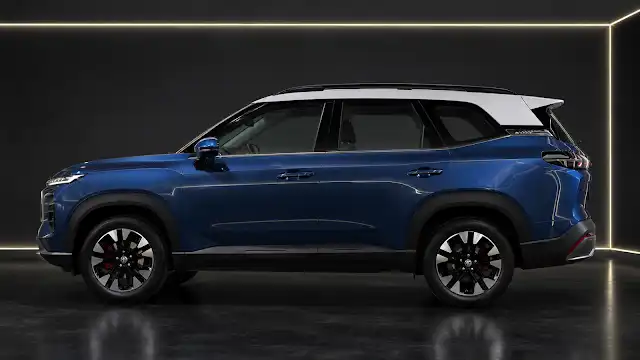
This one’s more interesting for a lot of people. 1.5-litre petrol + electric motor + 20.5 kWh battery, roughly 200 PS combined.
On pure electric, you get around 115 km. That’s enough for most daily city runs without touching petrol at all. Once the battery runs out, it starts acting like a regular hybrid and gives you somewhere in the 20- 25 km/L range in mixed driving. Full tank + full charge and you’re looking at over 1,100 km total.
The system is pretty smart – it switches between pure EV, series hybrid, parallel hybrid, and pure petrol on its own depending on how hard you’re pushing the throttle. If your daily run is around 100 km, you can stay in EV mode most of the time and just plug it in at home once a day.
For drivers working out whether large hybrid battery packs beat high-end petrol cars on running costs, our car buying guide for India breaks down the real-world ownership maths.
Price reality
EV starts at ₹19.49 lakh for the 7-seater Excite and goes up to ₹23.49 lakh for the top 7-seater Essence. 5-seater Essence sits around ₹22.99 lakh.
There’s also a Battery-as-a-Service option – buy the car without the battery from ₹13.99 lakh and pay ₹4.9 per km. Minimum running brackets apply, so check that carefully.
PHEV is expected to be around ₹27 lakh. The big reason it’s more expensive is the tax – it gets hit with the full 40% GST instead of the 5% that pure EVs enjoy. That hurts.
Both get a lifetime battery warranty for the first owner, 3 years vehicle warranty, and 3 years of roadside assistance.
Space and practicality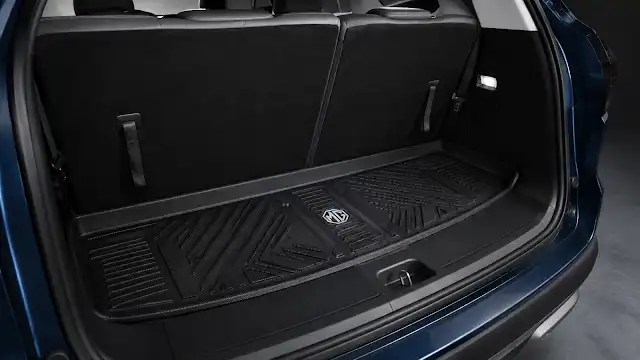
Length is 4,745 mm, a bit longer than the XUV700. The body has 74.9% high-strength steel plus some aerospace-grade reinforcements.
Second-row seats slide and recline. If you push them forward, the third row becomes usable for kids or pets. Adults can sit there for shorter trips if the people in the middle row are willing to compromise on legroom, but long journeys in the last row won’t be comfortable.
Boot is 610 litres in the 5-seater. 7-seater with the third row folded is around 528 litres. Power tailgate is available.
If you want to see how large dedicated electric SUVs manage highway range and luggage loads across India, our Tata Harrier EV review and real-world range analysis offers a solid point of comparison.
Inside and features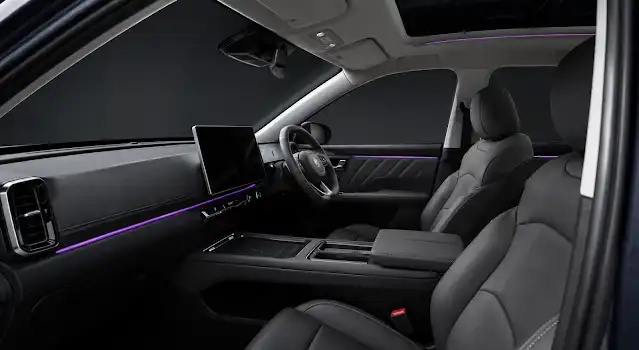
The cabin feels quite premium. Big 15.6-inch portrait screen, digital cluster around 8.5-8.8 inches, 10-speaker Infinity system, ventilated and powered front seats (driver gets memory on higher variants), dual-pane panoramic sunroof, and multi-colour ambient lighting that even runs on the doors and roof.
They kept actual physical buttons for lights and wipers – thankfully. There’s a cooled 50W wireless charger, Type-A and Type-C ports, rear AC vents, and voice commands that understand more natural speech.
Safety kit includes Level 2 ADAS, six airbags, ESP, 360-degree camera, and parking sensors on the higher trims.
Quick Comparison
| Feature | MG Hector Tomahawk EV | MG Hector Tomahawk PHEV |
|---|---|---|
| Battery / Engine | 69.2 kWh Battery | 1.5L Petrol + 20.5 kWh Battery |
| Power Output | 204 PS / 310 Nm | ~200 PS Combined |
| Pure EV Range | 527 km (Claimed) | ~115 km (Claimed) |
| Total Range | 380–430 km (Real-World) | Over 1,100 km (Combined) |
| Boot Space | 610L (5-Seat) / 528L (7-Seat) | 610L (5-Seat) / 528L (7-Seat) |
| Starting Price | ₹19.49 Lakh (Ex-Showroom) | Expected ~₹27 Lakh |
So which one makes sense?
If most of your driving is city-based and you can charge at home, the pure EV is the cleaner and cheaper option on paper.
If you do a lot of highway runs and want that 1,100+ km total range without constantly looking for chargers, the PHEV makes more sense – especially if your daily commute is under 100-115 km.
The third row is fine for kids. Adults will manage for moderate distances if the second row is slid forward, but don’t expect luxury back there.
Real-world range and mileage numbers will become clearer once people start driving them (deliveries expected from November). On-road prices also vary a lot depending on your city, so check with the dealer.
Overall it’s a practical multi-energy package under a name people already know. Whether the price (especially on the PHEV) feels justified depends on how much you value the flexibility.
Here’s a much looser, chatty version:
Real-world range of the Hector Tomahawk EV?
The company says 527 km on paper. In actual mixed driving with AC running, you’ll probably see something like 380-430 km. That’s the realistic number most people are getting.
How does the PHEV do over 1100 km?
The battery alone gives you around 115 km pure electric. Once that runs out, the 1.5-litre engine takes over — sometimes charging the battery, sometimes driving the wheels. Together they easily push past 1100 km.
Third row comfortable for adults in the 7-seater?
Not really for long trips. Kids and teenagers are fine. Adults can sit for short city runs if you push the middle row forward, but on the highway it gets tight pretty fast.