BMW X1 LWB Review: Does the stretched version finally fix the rear-seat problem?
Most entry-level luxury crossovers leave you with the same annoying compromise. You get the badge and a decent cabin up front, but the people sitting behind often end up with their knees jammed against the front seats. It’s a common complaint in this segment, especially in India where rear-seat comfort matters a lot. BMW has finally stretched the X1 into a proper long-wheelbase model for the Indian market to deal with exactly that issue.
I spent some time with the new sDrive18Li to see if the extra length, the updated cabin tech and the three-cylinder turbo-petrol engine actually make it the most practical luxury crossover in this price range. If you are also tracking the broader market shift towards electrified luxury and hybrid alternatives, keeping an eye on upcoming electric and hybrid cars in India gives useful context on where long-distance cruising tech is headed
Outside
From the front, the X1 LWB looks a touch more upright and mature than the regular one. The kidney grille still sits right in the middle, with the Level-2 ADAS radar tucked behind the badge along with a 360-degree camera and the usual parking sensors. It doesn’t look stretched awkwardly – the proportions still feel balanced.
Here’s what stands out:
– Adaptive LED headlamps with sharp daytime running lights that give it a clean, modern face
– 18-inch alloys on 225/55 R18 high-speed tyres that fill the squared arches nicely
– Wheelbase stretched by 118 mm to 2,800 mm (the longest in the class), overall length up 116 mm while height and width stay the same
– 183 mm ground clearance unladen – enough to clear most city speed breakers and rough patches without scraping the underbody
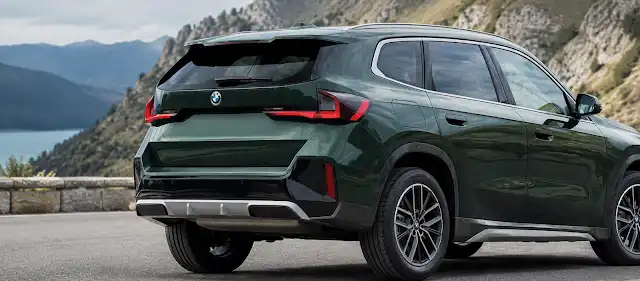
Matt aluminium window surrounds run along the sides and make the extra length more obvious without looking forced. At the back you get the sculpted L-shaped LED lights, an sDrive18Li badge, a small roof spoiler and a gesture-controlled powered tailgate that opens onto a 540-litre boot. It’s also officially E25 fuel-ready, which is useful given the current fuel norms.
Inside
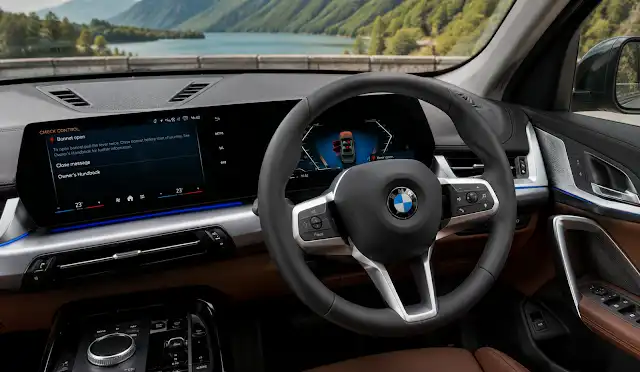
Open the door, and the cabin feels clean and uncluttered straight away. The thick three-spoke leather steering wheel has proper physical buttons for the media system and adaptive cruise – no need to dig through menus for basic functions. In front of you is BMW’s curved screen setup – a 10.25-inch digital cluster next to a 12.3-inch touchscreen running OS9. One handy feature is the 50-metre reverse memory that can reverse the car out of a tight driveway along the same path it came in on. It’s the kind of small tech that actually makes daily use easier.
Other bits worth mentioning:
– 12-speaker Harman Kardon system, still uncommon at this price, and it sounds properly rich
– Floating centre console with the drive-by-wire selector, two cup holders, twin USB-C ports and a vertical wireless charger that actually grips the phone so it doesn’t slide around
– Front seats with electric adjustment and dual memory. Support and contouring are decent for long drives, though there’s no ventilation – a small miss in Indian summers
The back seat is where the extra length really pays off. You get proper legroom, better knee clearance and improved under-thigh support. Even with the front seats pushed back, rear passengers can stretch out comfortably. They also get AC vents, USB-C ports, a centre armrest with cup holders and a large panoramic sunroof that makes the cabin feel airy. Manual rear window blinds are still missing, which is a bit surprising at this level.
The digital key lets you share access with up to 18 people on their phones, including temporary single-use codes. Handy if you have family or drivers who need occasional access.
Engines and how it drives
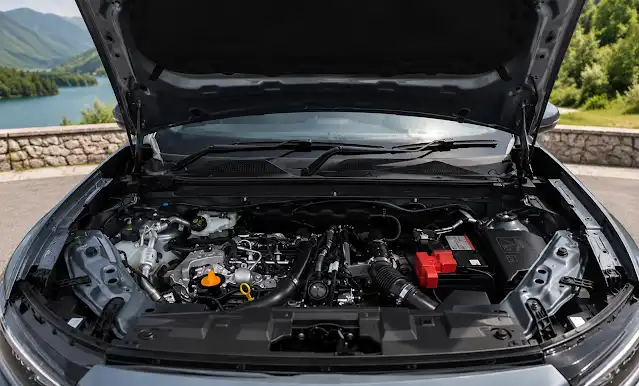
Under the bonnet is a 1.5-litre three-cylinder turbo-petrol paired with a 7-speed dual-clutch Steptronic gearbox that sends power to the front wheels.
– 159 PS
– 230 Nm
– 7-speed DCT
– Front-wheel drive (sDrive)
Don’t write it off just because it’s a three-cylinder. On the road, the engine stays quiet and smooth, with almost no vibration coming through into the cabin. Power builds in a linear fashion, so it never feels strained in city traffic. The gearbox shifts cleanly in normal driving and only gets snappy when you put it in Sport and floor the throttle.
The suspension setup does a good job of keeping body roll in check through corners while still feeling planted and stable at higher speeds on the highway. For drivers who frequently weigh up long-distance running costs between high-output turbo-patrols and modern battery crossovers, checking our Tata Harrier EV review and real-world range analysis offers a solid point of comparison for highway usability. The suspension setup does a good job of keeping body roll in check through corners while still feeling planted and stable at higher speeds on the highway. It’s not the sportiest BMW, but it rides well for Indian roads.
Real-world fuel numbers
On mixed routes, the 1.5-litre turbo DCT returned these figures:
– Heavy traffic: 7–8 km/l
– Normal city running: 9–10 km/l
– Highway at 90–100 km/h: 13–15 km/l
– Easy highway cruise around 80 km/h: up to 17 km/l
These numbers are realistic for a turbo-petrol in this segment, especially if you drive with a light foot on the highway.
Final thoughts
The long-wheelbase X1 finally sorts the biggest complaint people had with compact luxury crossovers – tight rear seats. You get the 2,800 mm wheelbase, a 540-litre boot, the Harman Kardon system as standard, and the kind of mechanical refinement you’d expect from BMW. It feels more like a proper family luxury SUV than the standard X1 ever did.
If you are shopping around festive periods or looking for showroom incentives across family crossovers, checking available pre-festive car and EV discounts across India can help negotiate better value.
If it lands somewhere between ₹53 and ₹59 lakh ex-showroom, it should be one of the most practical and well-rounded luxury family SUVs in the segment. The extra space makes a real difference, and the overall package feels thoughtfully put together for Indian conditions.
Quick FAQs
Wheelbase and boot space?
2,800 mm wheelbase (118 mm longer than the standard car) and 540 litres with a gesture-controlled powered tailgate.
What engine does the sDrive18Li use?
1.5-litre three-cylinder turbo-petrol making 159 PS and 230 Nm, linked to a 7-speed Steptronic dual-clutch gearbox.
Front seat cooling?
No. Electric adjustment and driver memory are there, but no ventilation.
Real-world fuel economy?
Around 9–10 km/l in city traffic and 14–17 km/l on open highways.
Level-2 ADAS?
Yes – adaptive cruise, front collision warning, blind-spot monitoring, and the 50-metre reverse memory assist.