Tata Sierra EV Review: Real Range, AWD Punch, and Highway Usability
The Sierra badge is back on Indian roads, but this time without any diesel rumble. Months of anticipation have led to this moment. Prices start at ₹18.79 lakh and climb past ₹26 lakh for the top versions, so it is not cheap money. Tata is pitching it as a proper family electric crossover that can do long highway runs without leaving you stuck or constantly checking battery percentages halfway through a trip.
I did not just read press releases. I went through actual owner feedback, charging logs from highway stations, and how the car behaves over rough patches and open tarmac.
If you are following the bigger shift towards cleaner power, keeping track of upcoming electric and hybrid cars in India helps put these big battery vehicles in context.
Exterior, ground clearance and space
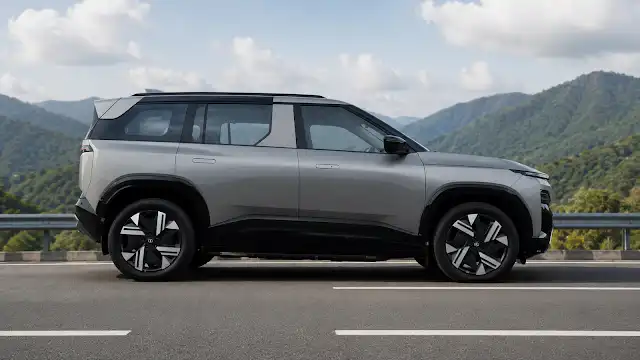
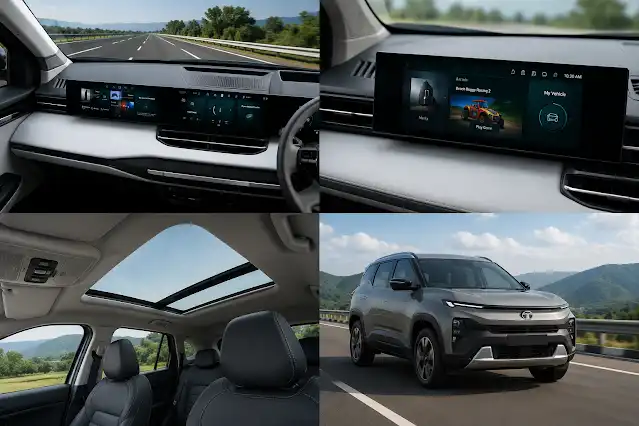
In the metal, the Sierra EV looks tall, wide, and properly boxy. You notice it in traffic straight away. The design even picked up a Red Dot award recently. Up front, you get connected daytime running lights, automatic LEDs, and a radar unit sitting low in the bumper for the driver aids.
It sits on 19-inch alloys with 235/55 MRF tyres that fill out the squared wheel arches nicely. Ground clearance is 205 mm unladen, so tall speed breakers and rough village stretches get cleared without worrying about scraping the battery casing underneath. Flush door handles pop out cleanly, and there is an NFC card reader right on the pillar for keyless entry.
At the back, the powered tailgate opens to a 622-litre boot with split rear seats. You also get a front trunk under the bonnet. That frunk is handy for tossing in charging cables and a tyre pump so they do not clutter up luggage space.
Dual motors, acceleration and ride
Two battery packs are on offer: a 63 kWh entry setup and the bigger 75 kWh unit. The range-topping model uses dual motors—one on each axle—which Tata calls QWD.
That setup makes 250 PS and 504 Nm of instant torque. Even with a heavy battery low down in the chassis, 0 to 100 km/h takes just 5.8 seconds. Overtakes on the highway feel completely effortless, with no waiting around for power to build.
The suspension has Frequency Selective Damping. Because the battery weight sits low down, body roll stays controlled in corners, and it soaks up sharp pothole edges without throwing passengers around.
If you want to see how Tata tunes the ride across its bigger electric models, our Tata Harrier EV review and real-world range analysis make a solid direct comparison.
Real highway range and charging
Lab test figures are always optimistic. Real numbers change once you hit open toll expressways in summer heat.
At a steady 90 km/h with the climate control working hard the whole time, the 75 kWh AWD version typically returns around 460 km. In slower city traffic with regenerative braking turned on, it can stretch closer to 500 km. Drop the front motor and go for the single-motor RWD version, and mixed routes often deliver about 515 km.
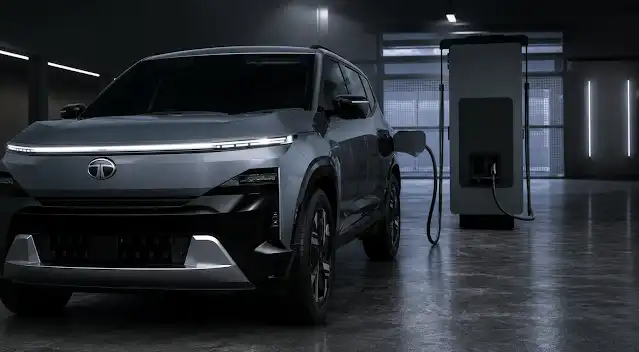
It supports 120 kW DC fast charging. On a proper commercial charger, 20% to 80% takes roughly 31 minutes. A short 15 to 19-minute tea stop can add around 250 km of driving range, which makes long-distance trip planning very straightforward.
High-Altitude Hill Climbs: Real Energy Drain & 504 Nm Torque
Putting an electric SUV through steep hill climbs and mountain switchbacks reveals how battery thermal management and gradient loads truly behave:
- Instant Mountain Pull: The dual-motor QWD setup pushes out 504 Nm of instant peak torque. On sharp uphill hairpins, tapping the throttle launches the SUV without the gear kickdown delays typical of heavy automatic gearboxes. In Boost Mode (active above 50% state of charge), it achieves a claimed 0 to 100 km/h sprint in 5.8 seconds.
- Steep Uphill Consumption: Under continuous uphill gradient stress, energy consumption spikes to nearly 300 Wh/km, which cuts immediate climbing range down to roughly 250–270 km if pushed aggressively.
- Downhill Energy Harvest: Descending down winding passes via regenerative braking paddles (toggling through L0 to L3) allows strong motor retardation. This drops the average energy consumption down near 200 Wh/km, feeding usable percentage back into the 75 kWh battery without wearing down the brake pads.
- Balanced Real Range: Once returned to flat highway corridors cruising at 80–90 km/h, the 75 kWh pack settles into an honest real-world range of 510 km to 530 km.
Cabin, audio and comfort
Inside, it feels wide, modern, and uncluttered. There is a full glass multi-screen layout where the front passenger gets their own touchscreen for watching videos without blocking the driver’s navigation maps.
Sound comes from a 12-speaker JBL audio setup with Dolby Atmos, a dashboard soundbar, and a punchy rear subwoofer. Front seats have electric adjustment, memory settings, cooling ventilation, and extendable under-thigh support.
In the back, there is generous knee room, adjustable headrests, a fold-down centre armrest with cup holders, 65W fast USB-C ports, integrated window blinds, and a big panoramic glass roof.
If you are looking at family cars that hold their build quality and practicality across different segments, our look at underrated cars in India offers helpful perspective on dependable alternatives.
Real-World Ergonomic Flaws & Suspension Quirks
Living with the electric SUV over broken surfaces highlights a few clear functional compromises:
- Stiff Rear Damping: Despite featuring a multi-link rear suspension with Frequency Dependent Damping (FDD), the chassis setup feels on the firmer side. While front occupants enjoy good stability, rear passengers feel sharp expansion joints and broken road patches quite prominently.
- Excessive Touch Controls: The lower center stack replaces tactile mechanical switches with flat capacitive touch panels. Adjusting the air conditioning blower speed or activating the 360-degree parking cameras forces the driver to take their eyes off the road, which can be frustrating on narrow, winding roads.
- Passenger Screen Glare: The secondary dashboard screen for the front passenger misses out on a polarized privacy filter, meaning moving visuals and menus can catch the driver’s peripheral vision.
- Tyre Noise on Coarse Tarmac: The 19-inch wheels wrapped in low-profile tyres look sharp, but they transmit a faint thrum into the cabin on rough road surfaces.
Should you buy the Tata Sierra EV?
In the sub-₹30 lakh electric SUV space, the Sierra EV makes a very solid case for itself. You get strong road presence, plenty of kit, a realistic 460 to 500 km range, and quick dual-motor performance.
Buy it if you want a distinctive electric SUV with 5.8-second acceleration, 120 kW charging, and proper AWD grip for long highway trips.
Skip the AWD if you rarely see steep hills or loose trails. The single-motor RWD version costs less and gives you a bit more battery range.
Quick FAQs
What is the real-world range? 75 kWh AWD: around 460 km on expressways, closer to 500 km in city traffic. Single-motor RWD: about 515 km on mixed routes.
Power and 0 to 100 time? Dual-motor AWD makes 250 PS and 504 Nm, hitting 0 to 100 km/h in 5.8 seconds.
Boot space? 622 litres at the rear with split seats, plus a front trunk under the bonnet.
DC fast charging speed? On a 120 kW charger, the 75 kWh pack goes from 20% to 80% in about 31 minutes and can add roughly 250 km in 15 to 19 minutes.