Renault Triber Turbo Review: 100 PS Power, Real Mileage and 7-Seater Space
Finding a decent family set of wheels in India always brings a bit of a headache, especially when you need proper seats without draining your bank account dry. Honestly, the Renault Triber looked like a clever little trick for the longest time. You got folding seats, bags of boot flexibility, and dodged the nasty big-car tax bracket.
Still, pretty much every owner ran into the exact same wall.
The minute you loaded six or seven people alongside holiday bags, that old standard engine ran completely out of puff on steep bypass climbs. Renault knew they had to sort it, so they have finally stuck a turbocharger under the bonnet.
Does that extra punch make it the ultimate family runabout, or are you still putting up with cheap compromises? Look, let us see how it actually behaves out on open tarmac.
What Changes Under the Bonnet: 100 PS Punch
Straight up, the big talking point sits purely under the metal skin. Renault borrowed the 1.0-litre three-pot turbo petrol lump from the Kiger.
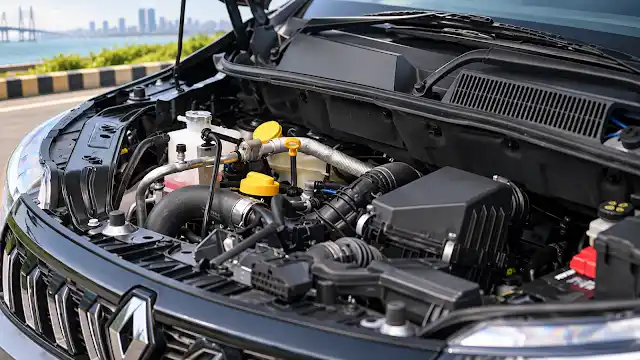
It kicks out roughly a hundred horses and nearly 180 Nm of pulling power, and the good bit is you feel that pull early on. That extra mid-range muscle completely flips how the car handles fast highway stretches.
In the old motor, overtaking meant dropping down a couple of gears and working the engine hard. Here, you press your foot down and slip past slower lorries without getting sweaty palms. It is never going to win drag races, but at least you can overtake on single-lane state roads without panic.
To be fair, Renault is only selling this with a five-speed manual stick right now. The clutch pedal feels light enough through city jams, though anyone stuck in rush-hour traffic will surely miss an automatic box until the CVT shows up.
Before dropping hard token money with a dealer, have a quick read of our first-time car buyer guide India to calculate your true running costs and ownership math.
Ride Quality, Suspension Retuning and Handling
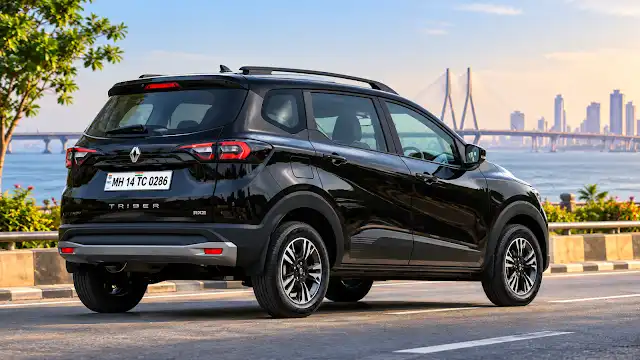
Dropping in a heavier turbo lump with all the extra cooling pipes meant the front suspension had to be stiffened up properly.
Renault sorted out the front shock absorbers and added an anti-roll bar at the back to stop the car swaying around. Over broken backroads and nasty tarmac joints, it settles down remarkably well. Sitting at eighty or ninety on the motorway, the car feels nicely tied down instead of bouncing all over the place.
You get roughly 182 mm of clearance under the belly, so clearing steep speed bumps and monsoon puddles happens without nasty scraping noises. The light steering makes tight parking spots a doddle, even if you do not get heaps of feel through the wheel at speed.
When you head over to inspect the car allocated to you at the yard, keep our electric car PDI checklist open to verify panel gaps, glass markings, and electrical switches.
Cabin Flexibility: How Usable Are the Seven Seats?
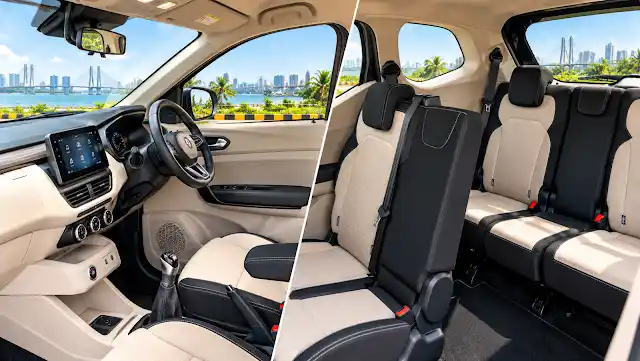
Step inside, and the interior looks identical to the standard model. You get brilliant space packaging right alongside some very obvious budget materials.
There is an eight-inch screen running wireless phone mirroring without annoying cut outs, a digital dash, a wireless charging tray, and handy auto-locking keys. Look around, though, and the hard dashboard plastics and flimsy door catches remind you where Renault saved their pennies.
Where this machine really earns its keep is seating tricks. The middle row slides and reclines so tall mates get decent leg room, backed by vents built into the door pillars. In the third row, regular adults can travel without their knees touching their chins, aided by dedicated roof vents during hot afternoons.
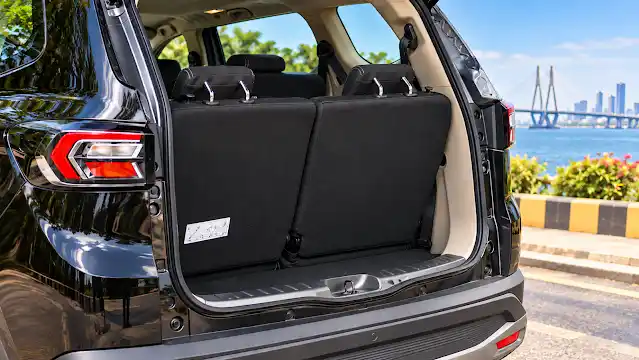
Keep every seat upright, and you get barely eighty-odd litres of boot room—just enough for a couple of slim laptop bags. Take those lightweight rearmost chairs out completely, and you open up a massive 625-litre flat cargo bay.
Real-World Fuel Economy
Small turbo petrol engines drink fuel quickly if you drive with a heavy foot, so practical numbers vary.
In sluggish city queues with both cooling blowers working hard, expect around 10 to 11.5 km/l. Pack all seven seats in peak traffic, and that figure can slide closer to 9.5 km/l.
Get onto an open four-lane motorway at a steady 80 km/h pace, and fuel economy easily settles between 16 and 18 km/l.
If your daily round trip crosses 50 km and fuel costs worry you, test your distance with our EV vs Petrol Savings Calculator to see if an electric motor makes better financial sense.
Expected Pricing and Final Verdict
Renault is lining up three primary variants for the turbo range, with prices falling between 7.80 and 9.00 lakh rupees before taxes.
At that price point, the Triber Turbo sits in a spot of its own. It fixes the old model’s biggest headache without demanding fifteen lakh for an Ertiga. If you want true family flexibility, decent crash test credentials, and usable overtaking power under ten lakh rupees, this setup hits the mark.
Frequently Asked Questions: Renault Triber Turbo
Is an automatic gearbox available on the Triber Turbo?
The car launches with a 5-speed manual transmission only. A CVT automatic option is planned for a later release.
What mileage does the Triber Turbo deliver in everyday use?
City traffic typically sees 10 to 11.5 km/l with the air conditioner running. Open highway cruising returns roughly 16 to 18 km/l.
Can regular adults sit comfortably in the third row?
Yes, for daily and mid-distance journeys. Thanks to the stepped roofline and roof-mounted air vents, average-sized adults fit comfortably back there.