Triumph Tracker Review: Street Scrambler Looks or Real Off-Road Capability?
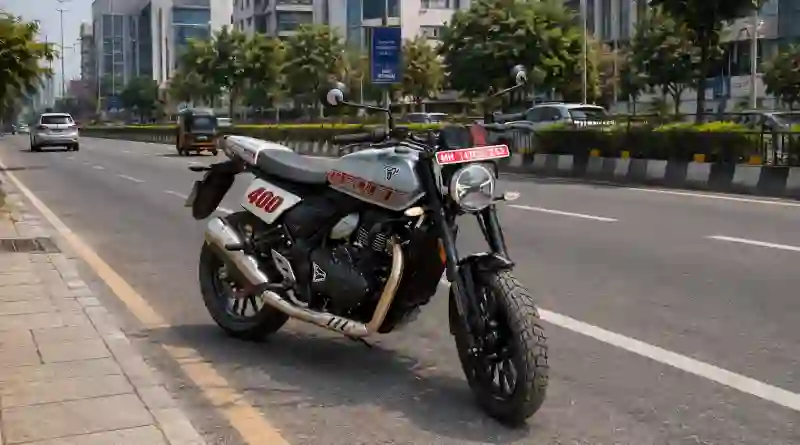
Spent a fair bit of time on the new Triumph Tracker lately, and this bike really messes with your head. First time you see it, it looks proper. Flat-track racing attitude mixed with that classic retro scrambler style. Sharp, different, stands out from most other bikes at this price. Then you take it off the highway. Loose gravel, broken trails, tight city bends… and you start wondering what it’s actually for. Real dual-purpose bike or just stuck in the middle?
I wanted the honest picture. How the seat feels after a while, what the engine does in normal riding, how the suspension behaves when the road gets ugly, and whether ₹2.39 lakh ex-showroom is money well spent. If you are also considering four-wheeler options before making a final decision, check out our guide on upcoming cars in India August September
Looks and how it sits
Triumph went hard on the styling. It’s based on the Thruxton but has its own bodywork. Upswept exhaust, round LED headlight with a small flyscreen, chunky block-pattern tyres front and back. The rear has that flat-track cowl with bold side badges. Park it next to a Speed 400 or Scrambler 400X, and it looks nothing like them. The stance is aggressive without looking forced.
Seat height is 805 mm. Most people can get both feet flat on the ground, which is handy in traffic. Weight is 181 kg. Feels solid but not heavy when you’re filtering or doing tight turns. Riding position is sportier. Lower bars and slightly rear-set pegs put you in a forward lean. Fine for shorter rides, but you do feel more weight on the wrists than you would on a pure upright scrambler.
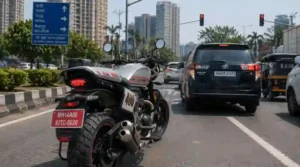
The wheelbase is the shortest in Triumph’s entry range. That short gap between the wheels makes the bike feel quick and light when you tip it into corners. In city traffic and on twisty roads it changes direction easily. You notice it after a few days. It just feels sharper than expected.
Engine and highway manners
Under the bodywork is the same 398cc liquid-cooled single Triumph uses across this range. 40 PS and 32 Nm. On paper it doesn’t look wild, but the way it delivers power is what counts. Throttle response feels strong right from the bottom end. No waiting. It pulls clean through the mid-range up to about 8,000 rpm, then the power starts to flatten. Doesn’t feel strained in normal use.
Gearing is sorted. At a steady 100–105 km/h, the engine sits at around 6,000 rpm and remains there comfortably over long distances. Vibration stays under control. Clutch is light. Shifts are clean. For city and highway work, the refinement is genuinely good. You don’t find yourself making excuses for it.
Where it starts to struggle
Those chunky tyres look the part, and they’re fine on light trails. Once you get onto proper off-road or rougher stuff, the limits show up.
The biggest weakness is the electronic intervention. Switching off traction control lets the rear wheels spin more freely on loose surfaces. That’s useful. What you can’t do is turn off the dual-channel ABS. It stays on both wheels the whole time. Gravel, muddy slopes and soft dirt expose a limitation: you can’t lock or slide the rear in the way many off-road riders prefer. You end up feeling restricted instead of free.
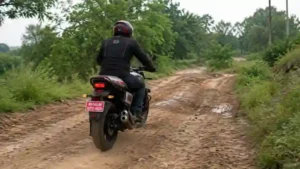
Suspension is another clear sign of what the bike is prioritising. Front upside-down forks give 140 mm of travel. The rear Mon shock gives 130 mm. On paved roads and winding mountain sections, the firm setup helps the bike stay composed and planted. Feels confident. The second the surface gets broken or full of potholes, the rear gets harsh. Sharp bumps and successive hits come straight through to your back. Fine for short stretches. On longer rough sections you feel it.
Brakes, sound and build
Brakes are one of the best bits on this bike. ByBre calliper’s, 300 mm front disc, 230 mm rear. Stopping power is sharp and progressive. You get real confidence when you need to scrub speed quickly, whether it’s in traffic or on a fast downhill. Lever feel is good, and the bite isn’t grabby.
Quality feels like proper Triumph. Paint is neat, switchgear has a solid click, welds look clean, and the exhaust has that deep, premium note. Nothing feels cheap.
Questions people keep asking
What’s the real on-road price?
Ex-showroom is about ₹2.39 lakh. Depending on your state tax and insurance, you’ll usually pay between ₹2.75 lakh and ₹2.85 lakh on the road.
Can you switch off ABS for off-road?
No. Traction control can be turned off, but ABS stays active on both wheels. That limits how much you can slide or lock the rear on dirt.
Okay for shorter riders?
Yes. 805 mm seat height and a fairly narrow front section mean riders around 5’6″ can manage it fine in daily traffic.
How does it stack up against the Scrambler 400X?
The Scrambler 400X has more suspension travel, higher ground clearance, and a more upright position meant for proper trails. The Tracker has a shorter wheelbase, stiffer suspension, and a sportier seating position. It’s clearly more about street agility and that flat-track look.
Good for long highway runs?
It holds 100-105 km/h easily without the engine working hard. Because of the firm rear and the sportier bars, most people will want a short break every couple of hours to stretch.
Bottom line
At around ₹2.8 lakh on the road, the Tracker gives you a stylish way into a Triumph. It looks different, sounds good, and feels sharp in the kind of riding most people actually do — city work, weekend runs, and the odd smooth dirt path.
Buy it if you want something aggressive-looking that carves tight city corners, sounds the part, and can handle light off-road without drama.
Skip it if you need a proper off-road scrambler that soaks up bad roads, has soft suspension, and lets you fully control the rear wheel on loose gravel and mud. The Tracker does what it sets out to do well, but it’s not trying to be a pure dual-sport bike.