Most car reviews in India only look at spec sheets, battery sizes, and 0-100 sprint times. But when you talk about the real Tata vs MG vs Hyundai EV service reality, the conversation completely changes after the first 20,000 kilometres. The shiny cabin lights and massive displays take a back seat, and everyday garage support becomes your biggest priority.

Tata Motors sells the most electric cars in the country right now. Straight up, their suspension setup eats cracked monsoon tarmac better than almost anyone else. But walk into their workshops, and it is pure madness. Tata services electric cars right alongside yellow-board commercial taxis and diesel workhorses in the same packed bays. If the screen stops responding or the 12-volt battery develops a fault, be prepared for your car to remain off the road for five or six days. They just do not have enough trained technicians. We previously broke down the exact parts pricing in our detailed guide on electric car service maintenance costs, but technician delays remain the real hurdle on the ground.
MG Motor handles things on a completely different playbook. Servicing is generally hassle-free, with regular inspections often completed the very same day. The actual headache? Spare parts. If a suspension arm wears out or a simple front wiper snaps, you might wait two or three months for parts to ship in. Service advisors also love loading extra interior cleaning or wheel balancing onto your job sheet. You have to firmly cross those off and tell them to stick strictly to the manual.
Hyundai takes the quiet win here. Their replacement parts cost a bit more, properly speaking. But their workshop floor moves like clockwork. When a software bug pops up, technicians sort it out within hours instead of holding the keys over the weekend.
Battery Chemistries: The Habit You Cannot Ignore
For most buyers, battery capacity in kilowatt-hours is the first thing they look at. Honestly, that is a shortcut that bites back hard.
Tata and MG mostly use Lithium Iron Phosphate (LFP) chemistry on cars like the Nexon EV and Windsor EV. LFP packs handle brutal summer heat brilliantly. But there is one golden rule: you need to charge them right up to 100% on a regular basis to balance internal cell voltages properly.
Hyundai follows a different battery strategy, fitting models like the Creta EV with Nickel Manganese Cobalt (NMC) packs. NMC packs squeeze way more energy density into a smaller, lighter package. However, they need totally different daily care. If you are just doing normal office runs, it’s best to stop charging at 80% or 90%. Only go all the way to 100% on mornings when you actually have a long highway trip ahead.
Plugging an NMC pack to 100% on a fast charger every night will drop cell health noticeably early.
Real Highway Distance: Spec Sheets vs Indian Heatwaves
Official range numbers look grand on paper, but Indian highways always demand a proper reality check.
To keep things simple, let’s take a 30 kWh battery as our starting point. If you’re driving on a pleasant, cool winter morning with the AC completely off, getting 140 to 150 km is quite doable. However, on a fast-moving bypass in 40°C heat, running the air conditioning could bring the same car’s range down to around 110–120 km. The cabin AC compressor just eats up massive amounts of power when it’s working overtime.
Step up into a 50 to 52 kWh long-range battery, and highway travel stops being stressful. Keep speeds around 85 to 95 km/h, leave mild regenerative braking on, and you can pull 420 to 460 genuine kilometres on a single charge without hypermiling behind slow lorries.
If you have to do regular intercity trips for work or family, going for a car that offers less than 350 km of real-world range will get tiresome really fast, as you’ll spend way too much time searching for public fast chargers.
1,00,000 Kilometres on the Clock: Real Money Saved
Despite dealer delays and hot-weather range dips, the financial maths behind an EV remains unbeatable.
If you put a lakh kilometres on a regular petrol crossover that gets maybe 11 or 12 km/l in city traffic, your total fuel bill over three to four years will easily cross ₹9,00,000 based on current prices. We ran the side-by-side math in our 100 km daily running EV vs petrol maths breakdown, and the cash contrast is eye-opening.
An overnight home charge using a standard 16-amp socket can keep your EV’s running costs at roughly ₹1.10–₹1.25 per kilometre. For that same lakh kilometres, your domestic electricity bill will be somewhere around ₹1,20,000 to ₹1,30,000 max.
That leaves you with about ₹8 lakh still sitting in your bank account instead of giving it away to petrol pumps.
Common Questions
Do I really need to get one of those expensive wall-mounted fast chargers?
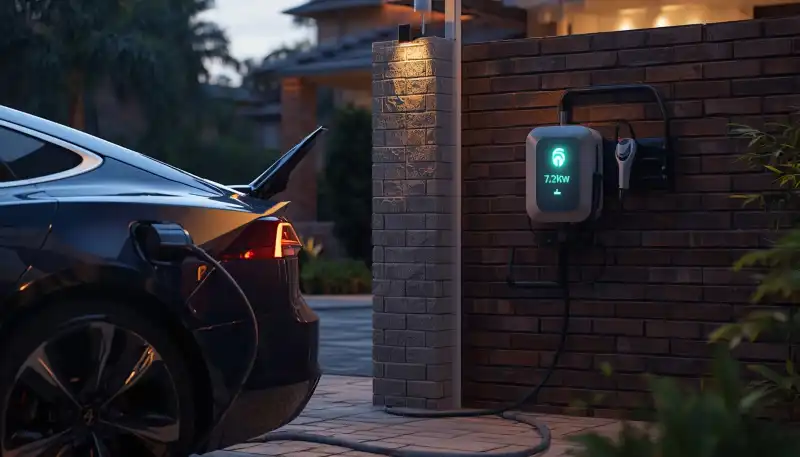
Honestly, no. If you’re driving less than 70 or 80 km a day, a standard 16-amp household plug running overnight will easily give you enough juice for the next couple of days.
Which EV handles bad roads and potholes the best?
Tata easily takes the trophy when it comes to a plush ride and dealing with broken roads. Bouncier or overly stiff setups, like on the Windsor, tend to thud and make the cabin feel a bit unsettled over sharp flyover joints. Before taking delivery of any brand, always run a comprehensive electric vehicle pre-delivery inspection checklist to inspect wheel alignment and underbody battery casing protection.
What is the minimum safe range I should look for?
Go for something that gives you at least 380 to 450 honest kilometres in mixed everyday driving. When weighing the overall Tata vs MG vs Hyundai EV service reality, an EV that can barely manage 150–200 km per charge may prove inconvenient for highway driving and lose considerable value on the used-car market.