Renault Duster Hybrid vs Toyota Hyryder: Real Difference Nobody Mentions
Try asking around for a fuel-efficient petrol SUV these days. Showroom staff will point you straight to Toyota or Maruti without blinking. Cars like the Grand Vitara and Hyryder made everybody think you must live with a tiny three-cylinder engine if you want big mileage without plugging into a home charger.
Renault clearly wanted to challenge that monopoly. Reinstating the Duster badge was sensible, but adding a proper full hybrid under the bonnet makes Dacia appear genuinely cautious. On paper, the specs sound massive. But buying a car in the real world comes down to more than just reading colourful sales brochures.
Engine Size and How Power Delivers
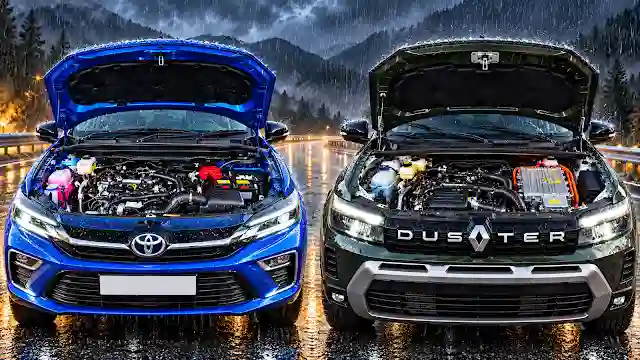
Pop the bonnet and the hardware difference hits immediately.
Toyota runs a 1.5-litre three-cylinder motor tied to an electric setup. It works fine at city speeds. But when you need to pass a fast truck on an open highway, you have to push the pedal hard, and that three-pot engine starts shouting. You hear it working overtime, revving high because the small engine has to pull all that weight.
Renault went the other way entirely. That larger 1.8-litre engine gives the SUV a totally different feel on the move.
You do not need to rev the life out of it during quick overtakes. It builds speed calmly with solid mid-range pull, meaning the cabin stays peaceful even when driving fast, much like what buyers look for in a Renault Duster review.
Battery Capacity and What That Means for Mileage
Here is where the two setups split apart on paper:
Toyota fits a tiny 0.7 kWh battery pack. Because that small battery drains quickly, the petrol engine has to fire up constantly to recharge it. Spend five minutes stuck at a summer traffic signal with the AC running cold, and the engine fires up almost right away.
Hyryder owners generally get roughly 21–24 kmpl in daily city driving and about 26 kmpl on the open highway.
The Duster hybrid packs a 1.4 kWh battery. That is double the physical size of Toyota’s battery.
Renault claims this allows the SUV to run on battery power for up to eighty percent of everyday city driving. Instead of cutting in and out abruptly, the 1.8L petrol engine mainly spins quietly as a generator. While Renault claims numbers up to 29 kmpl, we still need a full week of real-world road testing across Indian traffic to see what it drinks when the car is packed with five adults and luggage. Buyers exploring the broader electric vehicles guide will easily spot how battery sizing dictates daily efficiency.
The Gearbox Setup and Ride Comfort
The way power reaches the front tyres also feels quite distinct.
Toyota uses an e-CVT setup. It glides through bumper-to-bumper traffic easily, but stomp the right pedal suddenly and the revs shoot up long before the speedometer catches up.
Renault fitted a dedicated multi-mode dog gearbox with four engine gears and two dedicated electric gears. Power shifts feel direct and punchy without that annoying slipping-clutch drone.
Then you have ride quality. The old Duster was legendary for flattening rough village roads and broken city flyovers. This new platform keeps that same heavy-duty suspension feel. It handles potholes with far more composure than the slightly firm, unsettled rear setup found on the Hyryder, proving why it remains a strong contender in our SUV buying guide.
The Big Dealer Problem
Now for the sobering reality behind the glossy car-launch sheen.
Building a superior car does not guarantee success in India. Toyota and Maruti have thousands of service centres, massive spare parts networks, and showrooms in almost every small district. You can buy a Hyryder with your eyes closed knowing someone will service it five years down the line without headache.
Renault does not have that army of dealerships. Their network is thin, and that has always been their biggest struggle. A car buyer might love the 1.8-litre engine and the double-sized battery, but if the nearest authorized workshop is eighty kilometres away, they will simply walk over to Toyota and buy the three-cylinder alternative.
Final Thoughts
Make no mistake, Renault engineered a genuinely superior hybrid machine here. The bigger 1.8-litre engine, the massive 1.4 kWh battery, and that composed suspension give the new Duster a massive technical edge over the Hyryder.
If you live in a city with solid Renault service backing and want a strong hybrid that actually feels refined on the highway, the Duster makes Toyota’s setup feel outdated. But until Renault expands its dealer footprint and wins buyer trust back, Toyota’s smaller hybrid will keep sleeping peacefully at night.
Questions People Keep Asking
Which one drinks less fuel between Duster hybrid and Hyryder?
Hyryder owners already know what to expect: anywhere from 21 to 24 kmpl in packed city jams, and close to 26 on a steady bypass run. Renault talks about hitting 29 kmpl with the Duster, mainly due to that giant battery pack. Still, until we take it through proper monsoon traffic with the air conditioning running cold, take that 29 figure with a pinch of salt.
Why care about Duster’s 1.8-litre motor over Toyota’s 1.5?
Toyota went with a tiny 3-cylinder engine that gets buzzy fast. Try overtaking a long truck on a dual carriageway, and you hear it screaming at high revs. Renault’s bigger 1.8-litre engine does not need to sweat like that. It pulls cleanly in the mid-range, so your ears get a rest at highway speeds.
Does that 1.4 kWh battery actually make any difference?
Massive difference in city jams. Hyryder’s battery is tiny at 0.7 kWh, so the petrol motor wakes up every two minutes to recharge it. Duster carries double that capacity. You spend way more time gliding on pure battery power without the petrol motor constantly kicking your shins.
Is Duster using a normal CVT gearbox?
Not at all. Toyota sticks with an e-CVT, which gives you that classic elastic-band delay when you floor the throttle. Renault engineered a dedicated multi-mode dog box with physical gear ratios — two for the electric side and four for the petrol side. It feels direct and drops that droning noise completely.
Should I wait for the Duster or just buy the Hyryder tomorrow?
If peace of mind and resale value matter most, grab the Toyota. You find their service garages in almost every town. But if you want a much better highway car with plush suspension and a modern hybrid kit, holding out for a Duster test drive is the smarter move.
What are the key Renault Duster Hybrid test drive and drive review highlights?
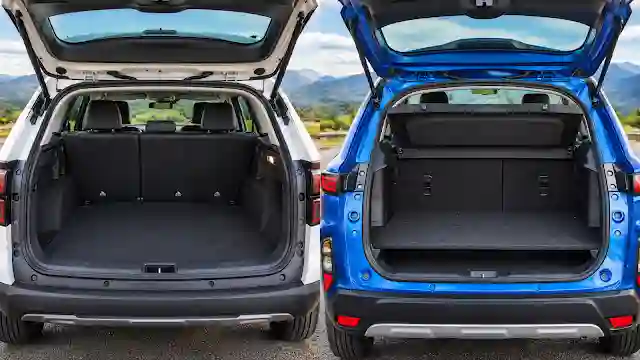
During initial test drives, the Duster Hybrid starts silently on pure electric power thanks to its larger battery pack, handling city crawl without waking the petrol motor. The multi-mode gearbox picks up speed smoothly without the whining rubber-band effect seen on traditional e-CVTs, while the rugged suspension flattens broken tarmac effortlessly. If you want high mileage and a flat luggage boot without spending hybrid money, check our breakdown on the Hyundai Bayon CNG boot space details.