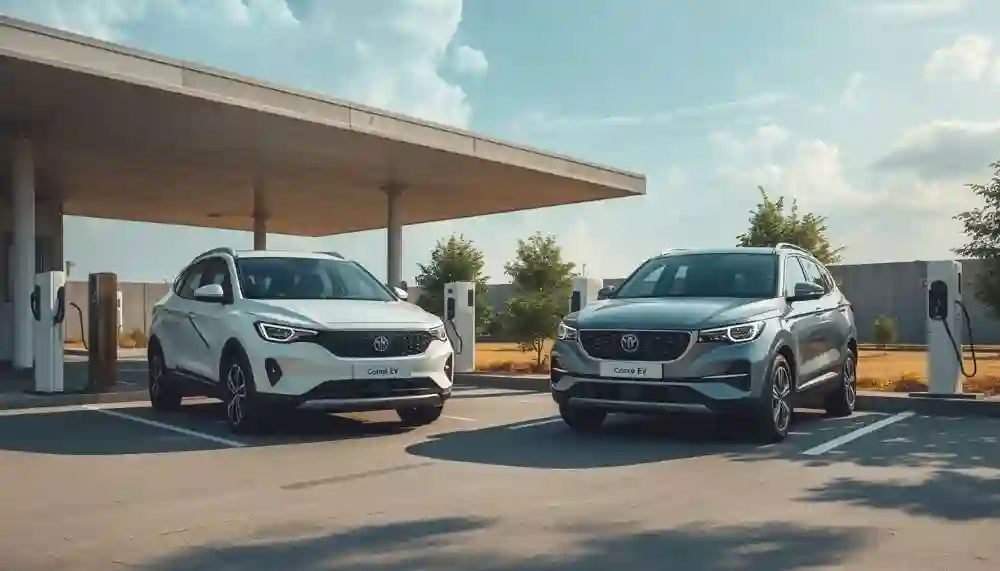
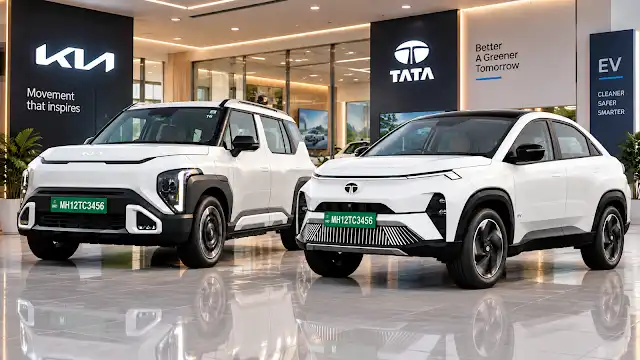
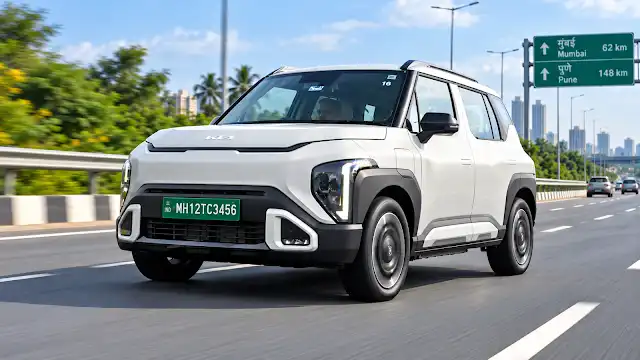
Comparing the Kia Syros EV vs Tata Curvv EV reveals just how quickly the sub-20 lakh electric car segment has evolved. Till last season, spending 20 lakh rupees on an electric car was easy. You simply went to a Tata showroom, took whatever Nexon was ready, and drove home. Now things are messy. Buyers are stuck choosing between two total opposites: Tata’s sharply cut Curvv EV and Kia’s boxy Syros EV.
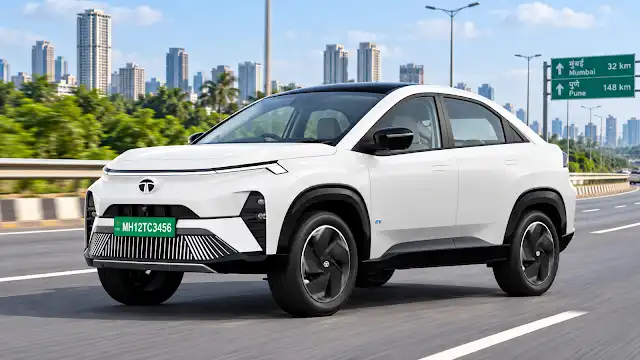
One is shaped like an aggressive sports coupe. The other looks almost like a tall minivan designed purely for family seating.
Dealership brochures will tell you both are perfect. On our roads, the actual battery tech, cargo space, and highway charging tell a completely different story.
The Battery Story: LFP vs NMC Reality
The real hardware fight sits under the carpet.
Tata puts a 55 kWh LFP pack inside the Curvv EV. Iron-phosphate chemistry is rugged. You plug it into your home wall-box every night, charge it to 100%, and sleep without worrying about cell wear. But iron cells are heavy, and they hate taking high charging currents once they get hot.
Kia went the other way, dropping a 51.4 kWh NMC pack into the Syros EV. Nickel cells pack much more juice into less weight, keeping the car agile. But there is a catch: for daily office runs, you must cap your home charger at 80% if you want the pack to survive ten years. If you want a complete look at how this battery performs on regular city streets, our standalone Kia Syros EV Review covers ownership realities in full detail.
Out on the open expressway at 90 km/h, both give you roughly 390 to 420 km of actual running before you hunt for a plug.
The Syros EV wins the highway argument at the charging station. The Curvv EV caps out around 70 kW on DC fast guns. The Syros EV swallows 100 kW without breaking a sweat, which cuts your highway tea break down by nearly twenty minutes.
Boot Storage and Back Seat Room
Open the tailgates, and you see where the design budgets went.
The Curvv EV owns the luggage test. Its liftback opens up a massive 500-litre boot. It easily eats four big airport bags. But that sloping glass roof hurts rear headroom. Taller adults will scrape the ceiling, and the high battery floor forces your knees up on long drives.
The Syros EV is built inside-out. The roof is flat and tall, so headroom is never tight. Kia also gave it sliding back seats, so you can push the bench forward to grab roughly 450 litres of cargo space. Plus, you get seat coolers in the second row, which is a blessing in May heat.
If you want to see how this sub-four-metre footprint compares to traditional crossovers, our breakdown on the Tata Nexon EV vs Kia Syros EV shows how clever the packaging really is.
City Traffic and Highway Manners
On the dynamometer, the motors are neck and neck:
- Tata Curvv EV: 167 bhp and 215 Nm of torque.
- Kia Syros EV: 171 bhp and 255 Nm of torque.
Both hit 100 km/h in about 8.5 seconds. Still, the extra 40 Nm in the Syros makes quick highway passing moves feel punchier.
On straight highways, the Curvv EV feels planted because of its wide tyres and low stance. But in jammed city lanes, the boxy Syros EV is way easier to turn, see out of, and squeeze into tight parking spots. It also gives you proper one-pedal driving, meaning you barely need the brake pedal in crawling traffic.
If you are sorting through Tata’s trim list to see what features actually matter, our guide on the Tata Curvv Pure X+ vs Creative X+ breaks down the exact variant math.
Kia Syros EV vs Tata Curvv EV: Which One Deserves Your Money?
Pick the Tata Curvv EV if you love sharp exterior looks, want a huge boot for holiday luggage, and want a tough LFP battery you can charge to 100% daily without stress.
Buy the Kia Syros EV if you deal with tight city lanes, carry elderly family members who need upright seating and legroom, and want 100 kW fast charging on interstate trips.
Frequently Asked Questions
Which EV has more boot space?
The Tata Curvv EV wins with 500 litres of luggage volume. The Kia Syros EV offers up to 450 litres, but only when you slide the rear seat forward.
Does the Kia Syros charge faster on highways?
Yes. The Syros EV supports 100 kW DC charging, while the Curvv EV tops out around 70 kW.
Can I charge the Curvv EV to 100% every day?
Yes, the Curvv EV uses an LFP battery that handles 100% daily charging without rapid degradation.
Which car is more comfortable in the back seat?
The Kia Syros EV offers much better rear headroom, sliding seats, and second-row seat ventilation.