EV Dealership Insurance Tricks and PDI Traps: How to Save ₹50,000
Picking up an electric car from the showroom ought to feel like a big day out. But right when you sit down for the paperwork, things start getting messy. Sales staff push massive insurance bills across the desk, add silly handling costs out of nowhere, and try to get your sign-off before you even glance at the bodywork. Indian car dealers love making this a headache. If you want to keep fifty thousand rupees in your pocket and dodge getting stuck with a battered floor model, here is how to handle them.
Before getting into showroom rows, it helps to know your regular numbers. Have a quick look through our home EV charging guide to see what running battery power actually looks like next to petrol. Now, let us pull apart the games dealers play.
The Big Dealership Insurance Markup
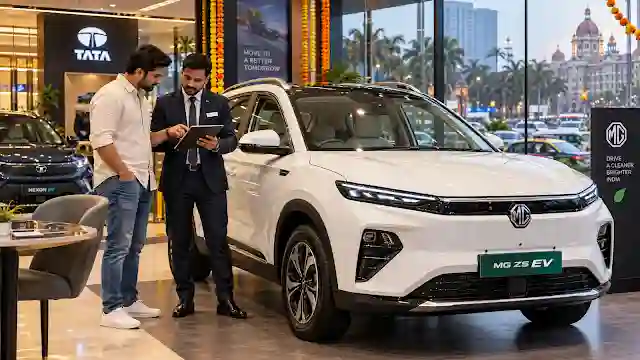
There’s barely any profit in the sticker price of a new car for dealerships—even during big festive pushes like the recent Diwali EV discounts across dealer lots. Their main money comes from loan kickbacks and inflated insurance papers. For a car like a Nexon EV or Curvv, their in-house sheet will casually ask for 75,000 or 85,000 rupees. Open your mobile right at their desk, check Policybazaar or Acko, and the exact same zero-dep policy sits around forty-two thousand.
That is roughly thirty to forty thousand rupees extra, straight out of your pocket. They will tell you it is a “special brand cover.” Do not believe them. It is simply heavy dealer commission. Never take their first printed sheet without pulling up live quotes on your own phone.
The Old Myth: “Outside Cover? There Goes Your Warranty“
This is hands down the biggest fib floating around Indian car showrooms. The second you mention buying your policy outside, the salesperson puts on a grim face. They warn you that buying online kills your eight-year battery guarantee, or that their workshop will not do cashless repairs if you bump the car.
It is complete nonsense. IRDAI rules are clear: nobody can force showroom insurance on you. A brand like Tata or MG cannot touch your battery warranty just because you bought cover online. So long as the insurer you pick has a cashless tie-up with the workshop network, your claims go through identically.
Three EV Covers You Actually Need
Battery cars are not built like old petrol hatchbacks. Denting a bumper is cheap enough. But dragging the battery pack over a broken road divider will ruin your bank balance. If you are picking an outside policy, insist on having these three add-ons on the paper:
- Battery and Motor Protection: The traction battery costs nearly sixty percent of the entire car. If rainwater gets inside or a flying stone hits the bottom shell, normal insurance throws your claim out, saying it is your fault. Dedicated battery cover stops this nightmare.
- Zero Depreciation (Bumper to Bumper): Without zero-dep, insurers cut off money for fiber bumpers, rubber mounts, and paintwork. On an EV covered in plastic trims, skipping this is just asking for trouble.
- Return to Invoice (RTI): If the car gets stolen or an electrical fire writes off the whole chassis in year one or two, RTI gets your full on-road price back, tax and all.
Pre-Delivery Inspection Traps: What Showrooms Try to Hide
PDI is your legal right before your car goes to the RTO for registration. Read that twice. The moment an RTO registration number gets stamped against your name, that car belongs to you forever. If you spot a dented sill or repainted wing after that, the dealer will shrug and tell you to ring your insurance company. They will never swap the car.
Staff will try every trick to skip this. They will claim the stockyard is forty kilometres away, or make up stories about security not allowing customers past the gate. Do not buy it. If they will not let you see the exact chassis in broad daylight, do not wire them the balance amount. Festive seasons are famous for dealers dumping tired demo cars and transit-scratched models onto polite buyers. You can also pull up our step-by-step electric car PDI checklist guide directly on your phone while walking the yard.
The Simple 10-Minute PDI Walkaround
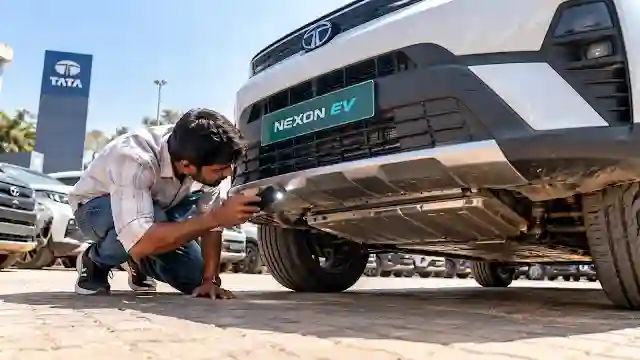
Head down to the yard around midday so sunlight shows up any dodgy paintwork. Run through this quick list:
- Check the VIN Plate: Find the seventeen-digit chassis code at the bottom of the windscreen and under the driver’s seat. Decode the month and year letter. Never accept a car built five months ago when you paid for fresh stock.
- Look at the Odometer: A brand new EV straight from Pune or Halol should have twenty to fifty kilometres on the clock. If it reads one hundred and fifty, someone has been running quick test drives in it.
- Crawl Under the Battery Pack—Phone Torch in Hand. Run your eyes along the big metal casing under the floor. Look out for scrape marks, crushed edges, or fresh underbody spray hiding scratches.
- Test the Charging Cable: Pop the flap, plug the home charger into a socket. Make sure the charging icon pops up on the digital dash without warning lights flashing.
- Check the Tyre Stamps: Find the small four-number oval on each sidewall. That’s the week and year of manufacture—it should match the car’s build month.
How to Kill the Dealer Markup
When they hand you the final cost sheet, pull out a pen. Cross off “handling charges”, “logistics fees”, and “dealer incidental costs.” Both consumer courts and the transport department have ruled these illegal multiple times.
Then slap your phone on the desk, online quote open—battery cover included. Tell the manager straight: “Match this price with your policy, or I am buying online this afternoon.” Most of the time, they miraculously cut thirty thousand rupees off their price right then and there. Keep your head cool, do not transfer money without seeing the car, and you will drive off with a brilliant deal.
Honest Answers for EV Buyers
Bought insurance elsewhere? Can the dealer refuse delivery?
No chance. You can legally accept delivery with any valid IRDAI policy in place. If an executive claims it is a showroom policy, ask them to write that on official letterhead. They will drop the act instantly.
What if I spot a scratch during my stockyard PDI?
Refuse the gate pass and do not pay the balance. Tell them to either repair the scratch to factory standards or allocate another VIN from the next transit batch.
Why do normal policies decline battery floor hits?
Standard policies cover accidents, but claim underbody scraping is regular road wear or neglect. That is why having explicit battery shield cover is essential for any Indian road condition.
How much can you genuinely knock off showroom quotes?
On cars sitting between fifteen and twenty-five lakh, matching insurance online and cutting out silly dealer fees saves thirty-five to fifty-five thousand rupees without breaking a sweat.