BMW 7 Series India: The Luxury Saloon Now Built in India
A car costing nearly ₹2 crore is never going to be an ordinary purchase. For a long time, buyers looking at this part of the market also had to deal with the high cost of importing large luxury cars into India. BMW has now taken a different route with the latest 7 Series.
The company is assembling the new 7 Series in India, with the 740i petrol and i7 xDrive50 being produced locally. India is the second country after Germany to build this generation of the car. Prices for both versions start at about ₹1.95 crore, ex-showroom.
There’s no getting around the fact that it’s still a lot of money. But for a flagship BMW, local production makes a noticeable difference.
 It is a very large BMW
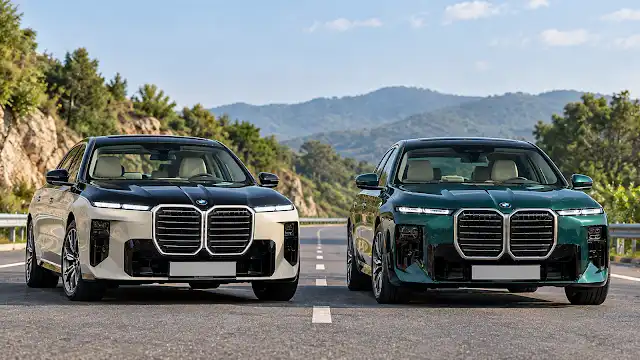
The first thing you notice about the 7 Series is its size. At roughly 5.3 metres long, it is a proper full-size luxury saloon.
BMW has given the front a fairly bold look. The large kidney grille is illuminated and sits between split LED headlights that feature Swarovski crystal glass elements. The lighting system can project a beam up to around 600 metres down the road.
There is some clever engineering behind the shape as well. Active grille flaps open or close when required, while air curtains around the front wheels help guide the airflow. Smooth panels underneath the car do their part too.
The i7 xDrive50 rides on 20-inch alloy wheels. The 740i gets 21-inch wheels and Bridgestone high-speed tyres. Sensors and radar used by the driver-assistance systems have been built into the exterior without making them too obvious.
BMW has also paid attention to the small details. The doors can be operated automatically using exterior sensors, and the 540-litre boot has a powered hands-free tailgate. There is even a washer jet for the reversing camera, which should come in handy when the lens gets covered in dust or mud.
Petrol or electric? You get both choices
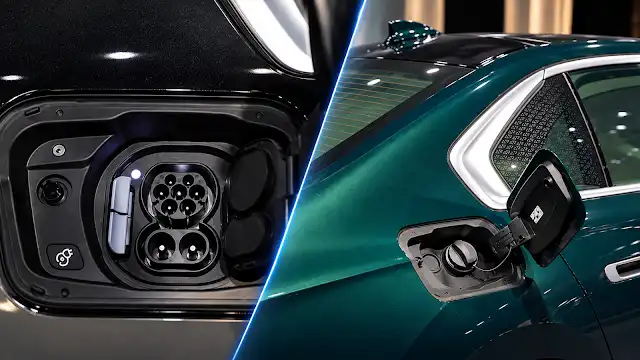
This is probably one of the biggest decisions for a 7 Series buyer.
The 740i uses a 3.0-litre turbocharged inline-six petrol engine. The i7 xDrive50 goes in the opposite direction, using two electric motors and a 112.5 kWh battery.
For those who want even more performance, BMW also offers the i7 M70. That car is much quicker than the other two, although it is imported into India rather than assembled here.
The petrol model has its own India-specific advantage. The 740i is designed to work with E25 petrol, which contains up to 25 per cent ethanol. This fuel compliance is crucial as fuel blends shift across the country, a topic we covered when looking at why petrol car sales are changing in India amidst shifting environmental mandates.
| Model | Powertrain | Power | Torque | 0–100 km/h | Range / Top Speed | Price (Ex-Showroom) |
|---|---|---|---|---|---|---|
| BMW i7 xDrive50 | Dual-motor electric | 440 PS | 660 Nm | Under 5.8 sec | Up to 728 km | ₹1.95 crore |
| BMW 740i | 3.0L turbo inline-six petrol | 400 hp | 540 Nm | 5.4 sec | 250 km/h | ₹1.95 crore |
| BMW i7 M70 | Dual-motor electric | 660 PS | 1,100 Nm | 3.4 sec | 250 km/h | ₹2.65 crore |
The i7’s battery can accept up to 250 kW of DC charging power. BMW quotes around 28 minutes for a 10–80 per cent charge when using a suitable charger.
The cabin is more about screens now
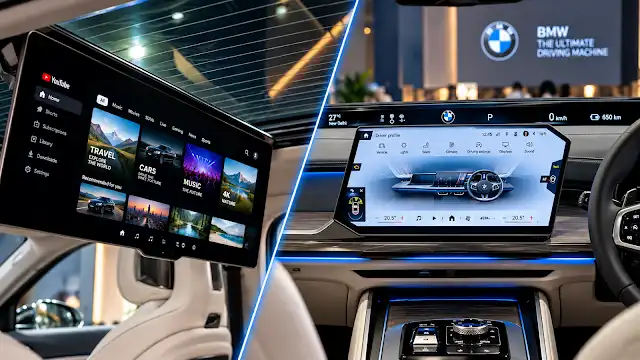
Step inside and the difference from an older 7 Series becomes obvious.
The dashboard is clean, and there are fewer conventional controls than you might expect in a large luxury car. The driver gets a two-spoke multifunction steering wheel, along with a head-up display.
A large curved glass panel stretches across the dashboard. The main touchscreen measures 17.9 inches, while the passenger has a separate 14.6-inch display.
BMW’s OS10 software handles the infotainment system. Navigation can show colour-coded routes and 3D views around junctions, while the passenger can use their own screen for entertainment.
The gear selector is also quite small. Rather than the familiar rotary controller found in some older BMWs, there is a crystal-style toggle on the centre console.
Wood, leather and ambient lighting give the cabin the expected luxury-car feel. The front seats have memory functions and multi-contour adjustment. They can also move slightly when someone gets in or out.
A Bowers & Wilkins sound system is available for those who want a more serious audio setup, and smartphone integration is included as well.
The rear seats are the real attraction
For a car like the 7 Series, the rear passengers are not an afterthought. In fact, much of the expensive technology is aimed at the people sitting in the back.
The feature that gets the most attention is the screen that comes down from the roof when needed and can be used for watching content. Dolby Atmos is part of the system, and an HDMI connection means passengers can connect another device.
The rear doors have their own 5.5-inch touchscreens. From these, passengers can change the temperature, operate the electric sun blinds and adjust the rear seats, including the massage functions.
Then there is the Executive Lounge setting. Select it, and the front passenger seat moves forward. The rear seat reclines and a powered footrest comes out. For someone travelling long distances in the back, that could make a much bigger difference than another screen or fancy trim.
The panoramic Sky Lounge roof adds to the atmosphere. It has illuminated patterns that work with the cabin lighting, particularly noticeable when travelling at night.
So, what makes the new 7 Series different?
The latest BMW 7 Series is trying to do several things at once. The 740i keeps the traditional petrol-powered luxury saloon alive, while the i7 gives buyers a fully electric alternative.
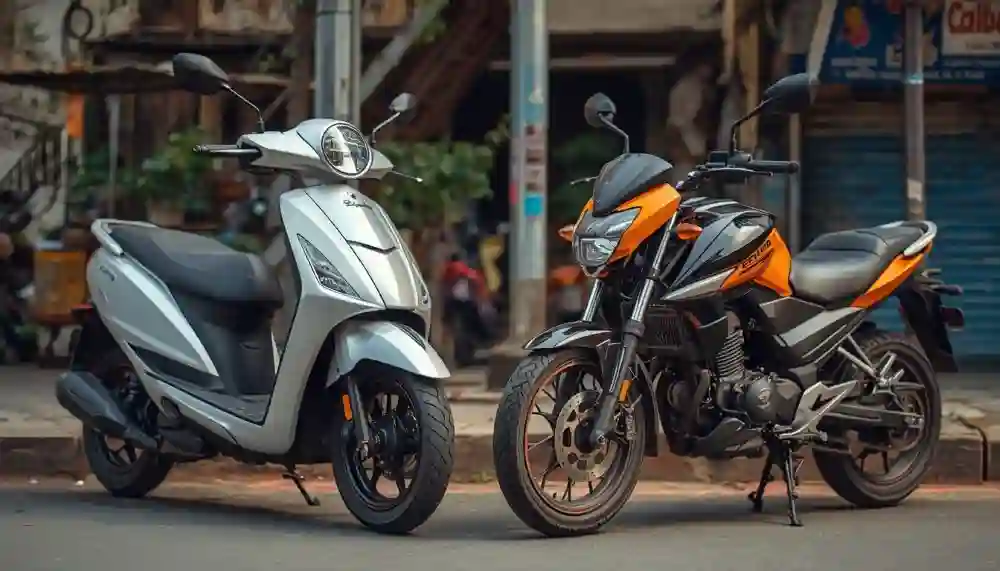
While luxury buyers are picking between a high-output petrol motor and pure battery power, the debate between conventional refuelling and charging infrastructure touches every segment, much like the questions commuters weigh in our electric scooter vs petrol bike guide.
But the biggest change for India may be happening away from the road. Local assembly means BMW does not have to rely entirely on importing the car as a finished unit.
At ₹1.95 crore, the 740i and i7 xDrive50 are still firmly in the ultra-luxury bracket. Even so, the combination of local production, electric power, a high-tech cabin and an extremely well-equipped rear seat makes the new 7 Series a rather different proposition for Indian buyers.
BMW 7 Series FAQs
How far can the BMW i7 travel on one charge? The i7 xDrive50 has an ARAI-certified range of up to 728 km. Its battery has a capacity of 112.5 kWh.
Is the new 7 Series made in India? Yes. BMW produces the latest 7 Series in India as well as Germany. The 740i and i7 xDrive50 are locally assembled.
How quickly can the i7 charge? Using a suitable 250 kW DC charger, BMW quotes roughly 28 minutes to go from 10 to 80 per cent.
What is the huge screen in the back? It is a 31.3-inch folding 8K display designed mainly for rear passengers. The system supports Dolby Atmos and has an HDMI connection.
Why does the i7 M70 cost so much more? Performance is one reason. The M70 produces 660 PS and 1,100 Nm and can reach 100 km/h in only 3.4 seconds. There is another important reason for the price difference. The M70 comes to India as a Completely Built Unit, or CBU, rather than being assembled locally. That means import duties add considerably to the final price, taking it to around ₹2.65 crore.