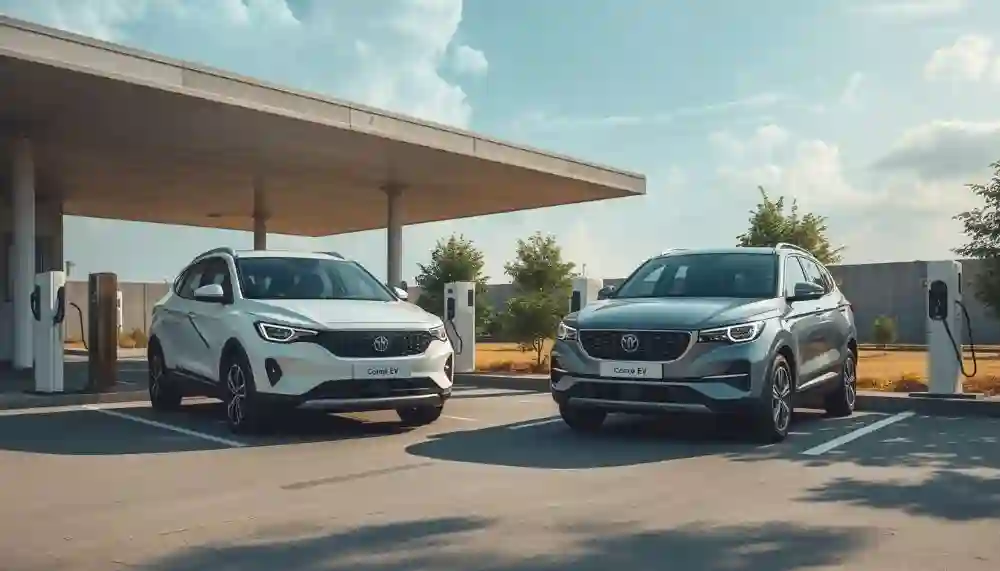
Tata Punch EV vs Kia Syros EV: Which one actually makes more sense?
Three years back, picking up a daily electric runner in India without stressing over range every single hour was quite an uphill task. Tata sorted out that headache for everyday buyers when they launched the Punch EV, and it quickly turned into the default first EV parked across apartment blocks.
Now Kia has thrown the Syros EV into the mix. Budget around 13 to 15 lakh? You’re looking at a fully loaded Punch EV with all the features, or spending a bit more on an entry-to-mid Syros that just feels bigger and more solid when you’re driving it.
We took both cars through heavy office traffic, and some longer highway runs to see what the real range, boot space, and charging were actually like.
Battery, Highway Range and Charging Speeds
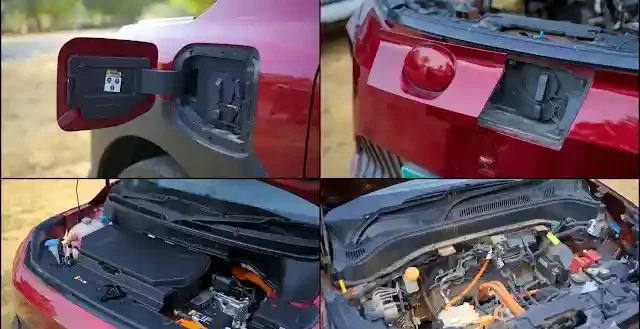
Punch EV Long Range comes with a 40 kWh LFP battery. Kia’s Syros EV (base/mid) uses a 42 kWh NMC pack. On paper, the capacities are close, but the character is different. At a steady 80 km/h on the highway, the Punch returned around 310–330 km in our runs. The Syros consistently managed 350–370 km under the same conditions. Power figures are 125 PS for the Punch (tuned more for efficiency) versus 135 PS and a healthier 255 Nm for the Syros.
Home charging is slower on the Tata. Using the 7.2 kW wall box at home takes nearly nine hours to fill the Tata completely. The Syros, on the other hand, has an 11 kW three-phase charger that can get you from 10 to 90 percent in about five hours if your home wiring can take it. On public DC chargers, the difference gets even bigger. The Punch tops out near 65 kW and needs close to 55 minutes for a 10–90 percent charge. The Syros takes up to 100 kW and finishes the same job in roughly 25 minutes.
If you want to see how Kia’s battery charging logic compares against Tata’s bigger electric coupe, check out our report on the Kia Syros EV vs Tata Curvv EV: 5 Real Differences Tested.
Braking, Dimensions and Exterior Design
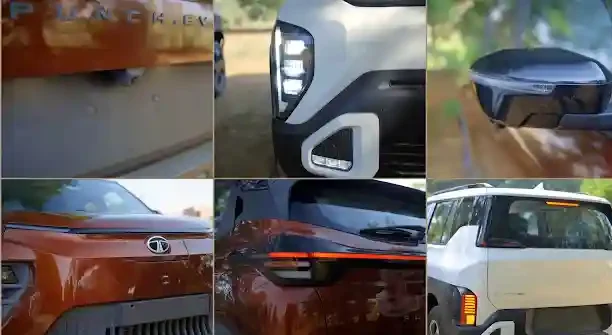
Braking is another small but noticeable difference. The braking setup remains unchanged, with front discs and rear drum brakes. The Syros gets discs all round. Storage is another area where the Syros comes out ahead. It offers approximately 466 litres of boot space against the Punch’s 366 litres, along with an additional 14-litre front storage compartment for charging cables. Ground clearance is almost identical at 195 mm and 197 mm.
Stand them side by side, and you can see the different approach straight away. The Punch still looks like the compact micro-SUV it is, with the full-width LED light bar, closed grille, and normal door handles. It’s easy to squeeze into tight city spots. The Syros is taller and boxier. It gets the three-tier vertical LED lights, flush pop-out handles, wider 205-section tyres and just feels more substantial. It’s longer and wider, and the rear lights stand out without copying the connected light-bar look everyone else is doing.
Cabin Space, Dash Screens and Features
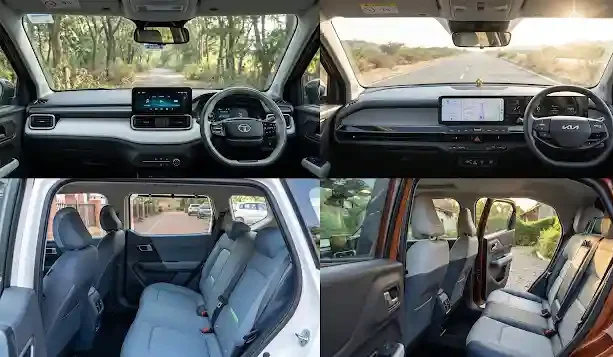
Inside, the top-spec Punch feels familiar but well equipped. Twin 10.25-inch screens, wireless Android Auto and Apple CarPlay, electronic parking brake with auto-hold and ventilated front seats are all there, along with a single-pane electric sunroof. The cabin is airy in the usual Tata two-tone style.
The Syros feels a half-size larger. Up front you spot two massive 12.3-inch glass panels flanked by an extra 5-inch screen just for air conditioning dials. The flat-bottom rim sits comfortably in your palms, outward road view is wide, and dash surfaces feel slightly more upmarket to the touch. Skip to the lower Syros trims, and you drop features like the sunroof or front seat cooling, but what you gain instead is plain, honest cabin room.
Rear Row Legroom and Practical Space
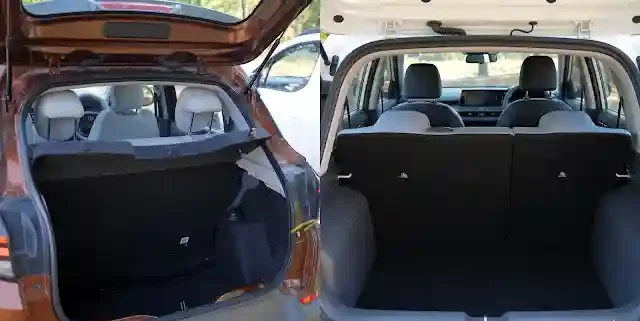
That extra space shows most clearly in the rear. Knee room and foot clearance under the front seats are better in the Syros. It also gets side-window sunshades from the base version and dual Type-C ports for the rear passengers. The seats fold flat when you need the full load bay. The Punch is fine for four adults with decent under-thigh support and a rear armrest, but the bench doesn’t split. Luggage space is the clearest gap—the Syros’s extra 100 litres is noticeable if you regularly carry bags or a pram.
Low Battery Turtle Mode and Air Conditioning
One real-world detail that really matters on daily runs is the car’s behaviour once battery reserves drop down to the wire. Dip past ten percent in the Punch and Turtle Mode kicks in straight away. That clamps your pace to 50 km/h, softens the throttle completely, and cuts off the cooling compressor just to get you to an outlet. The Syros keeps normal performance and cabin cooling right down to 1 percent. You still shouldn’t run any EV that low, but having the AC still working in a summer traffic jam near an empty charger is a genuine relief.
On the air-conditioning side itself, the Syros cools the cabin faster after the car has been sitting in the sun. Punch has a good multi-mode regen system, but once the car’s been parked in the sun, the AC and cabin insulation don’t quite keep up on those really hot, sticky afternoons.
City Driving and Highway Ride Quality
City duties are where the Punch truly shines. Light steering, compact size and a tight turning circle make it simple to cut through busy markets and park in tight spots. Bad roads and high speed breakers are taken in its stride without much fuss. On the highway, the Syros feels more composed. The lower battery placement, firmer dampers and four-wheel discs keep it settled at higher speeds, and road noise is better controlled.
Still curious how these two stack up against the bigger Nexon? We’ve covered this comparison in more detail in our dedicated article, Tata Nexon EV vs Kia Syros EV: Which Electric SUV Is Right for You?
Final Buying Verdict: Which One Should You Buy?
Both cars have 5-star safety ratings, so structural protection isn’t the deciding factor. What matters more is how you actually use the car day to day.
Mostly city runs and short trips, and you want the higher-spec bits like the 360-degree camera, ventilated seats, and sunroof without crossing roughly ₹14 lakh? Fully loaded Punch EV still makes a lot of sense. Tata’s service network is also denser in smaller towns.
If you do regular inter-city runs, value the extra real-world range and much faster DC charging, need more rear legroom and boot space, and prefer stronger cooling in peak summer, the Syros EV is the more capable package—even if the lower trims skip a few of the comfort toys.
Punch is still the smarter, better-equipped city option for the money. Syros makes more sense when the highway miles and extra space start mattering more than the feature list.
FAQ – Tata Punch EV vs Kia Syros EV
1. Punch EV or Syros EV: which actually makes more sense?
Think about where you drive daily. If 90% of your runs are local city traffic and supermarket parking, the top Punch EV gives you more gadgets without spending extra. If your weekends involve long highway trips with family and you hate waiting around at public chargers, go for the Syros.
2. What range do you actually get at 80 km/h?
Cruising at 80 km/h with the air con running, expect 310 to 330 km from the 40 kWh Punch EV Long Range. The 42 kWh Syros EV easily does 350 to 370 km in the exact same weather.
3. Is the charging gap really that massive?
Yes, especially on expressways. The Syros EV supports 100 kW DC fast chargers, taking roughly 25 minutes for a 10–90% fill. The Punch EV tops out around 65 kW, taking close to 55 minutes. At home, Syros accepts 11 kW AC power (around 5 hours) while Punch caps at 7.2 kW (near 9 hours).
4. Which cabin has more room in the back?
The Syros wins hands down. Tall passengers get proper knee clearance, feet tuck easily beneath the front bases, and there is no awkward hump. Two adults can travel comfortably in the Punch back seat, but stepping into the Syros feels like stepping into a noticeably bigger segment.
5. How big are the boots?
The Punch EV offers 366 litres behind the rear bench. The Syros gives you around 466 litres of boot space, and Kia also tucked a separate 14-litre plastic tub under the bonnet for your charging cables.
6. What happens when the battery drops under 10%?
Tata drops the car into Turtle Mode once you cross below ten percent. Speed gets capped right at 50 km/h, pedal response feels sluggish, and the air compressor cuts out to milk every last volt. Kia lets you keep ordinary driving speeds alongside chilled air until the meter hits 1%.
7. Which car is simpler to park and thread through jams?
The Punch EV, without question. Feather-light steering and tiny overhangs make slipping through narrow market choke-points dead simple.
8. Which one feels more stable on open expressways?
The Syros EV feels far more planted. It has rear disc brakes, firmer damping, and wider tyres that track straight over bridge joints with far less cabin noise.
9. Sticking to a ₹13–15 lakh budget: which trim should I pick?
If things like cooled seats, a 360-degree parking view, and a glass roof matter day to day, the top-spec Punch EV is the sensible buy. If your priority is quick DC top-ups, extra boot volume, and relaxed motorway cruising, pick the entry Syros EV.
10. Who has the better EV service support right now?
Tata has a huge head start here. Their EV sales and service network covers almost every tier-2 and tier-3 city in India. Kia is expanding fast, but Tata’s technician network is far more widespread today.