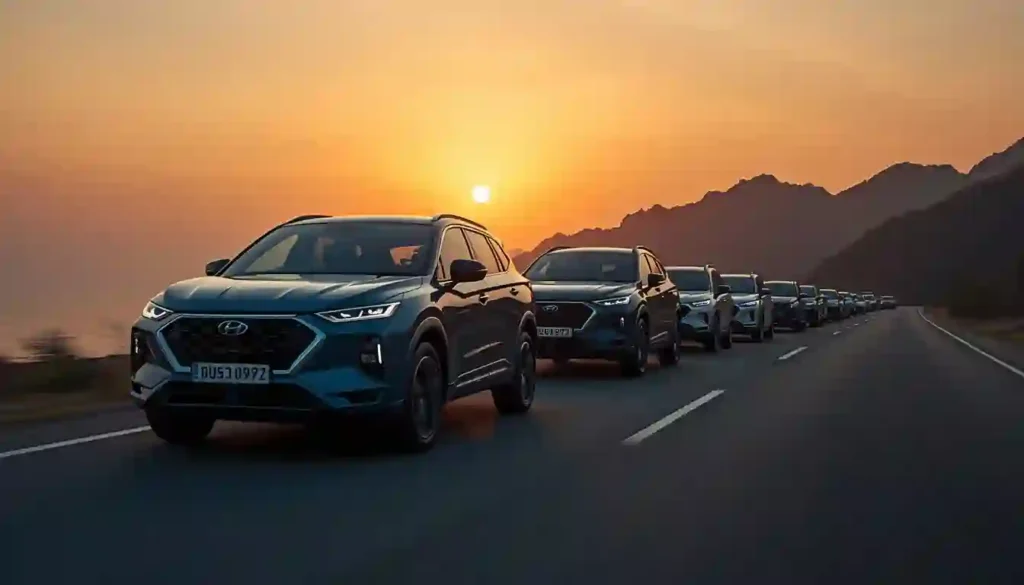
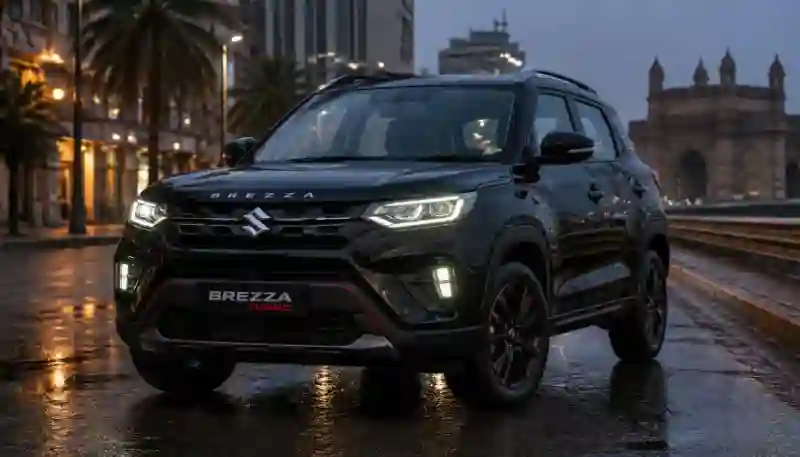
Look, if you’ve ever owned a Nissan Terrano or spent time in the older Kicks, you already know the drill. Ride comfort was mint, but petrol vanished the second you hit peak traffic. You’d be lucky to scrape even single digits from that old 1.5-litre motor in morning office jams.
Real-World Mileage: What The Numbers Actually Show
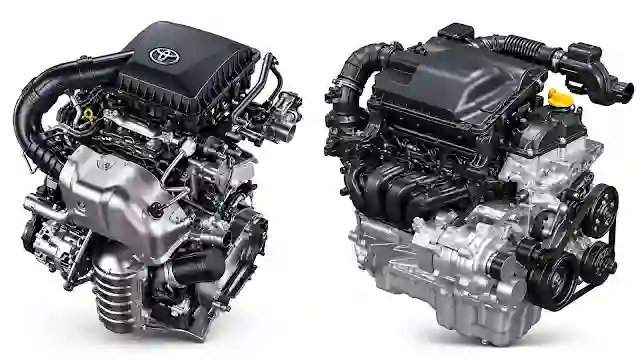
Older Kicks and Terrano with the 1.5-litre petrol rarely saw 10 km/l in stop-go city traffic. On the highway, they would top out around 14.5 km/l.
With the Tekton’s 1.0-litre turbo manual, morning crawl with the air-con blasting hard still returned 11.2 to 12.1 km/l on the trip computer. On open four-lane stretches holding roughly 85 km/h, fuel efficiency easily jumped to 16.8 and touched 17.4 km/l.
Town driving drinks more with the 1.3-litre turbo if you work the throttle, dropping numbers near 10 km/l, yet cruising easily gives 15.6 km/l alongside serious overtaking reserve. The new engines definitely help on longer runs. Don’t expect miracles, though, if you keep thrashing first and second gear in traffic.
| Specification / Feature | Nissan Tekton (1.0L Turbo) | Old Nissan Kicks / Terrano (1.5L) |
|---|---|---|
| Engine Setup | 1.0L 3-Cylinder Turbo Petrol (6-Speed MT) | 1.5L 4-Cylinder Naturally Aspirated Petrol |
| Real City Mileage | 11.2 – 12.1 km/l (AC ON) | 9.2 – 10.0 km/l |
| Highway Mileage (85-90 km/h) | 16.8 – 17.4 km/l | 13.8 – 14.5 km/l |
| Boot Space Capacity | 580 Litres (Tray) / ~690 Litres (Roof) | ~400 – 475 Litres |
| Low-End Response | Lag below 1,900 rpm (requires 1st gear on speed humps) | Linear crawl, sluggish mid-range overtaking |
| Night Driving Score | 8.5 / 10 (Wide LED spread, poor 360-cam) | 7.0 / 10 (Standard Halogen/LED setup) |
| Price Bracket (Ex-Showroom) | ₹10.8 Lakh – ₹16.5 Lakh | Discontinued (~₹9.5L – ₹14.5L legacy) |
City Traffic, Turbo Lag And Highway Behaviour
In the slow morning crawl, you notice the usual small turbo lag. Below about 1,900 rpm, the engine feels sleepy. Drop too low for a tall speed breaker and try to pull away in second, and it judders. You really do need to drop into first properly. Give it past 2,000 revs, though, and boost arrives without fuss.
Out on the open expressway the chassis shows its European Duster roots. At 100 km/h it stays flat, with none of that floaty vertical movement over flyover joints. The helm feels properly planted in hand, and high-speed stability inspires real confidence. The suspension setup leans slightly stiff, meaning broken asphalt does thud through into the cabin, but it never feels unsettled.
On steep ghat roads or high-altitude mountain drives with a full boot, older naturally aspirated engines genuinely struggled for breath due to thinner air. The Tekton’s turbo avoids that suffocating feel completely by shoving forced air into the cylinders, making overtakes effortless even when loaded to the brim.”
Cabin Practicality And The Compromises
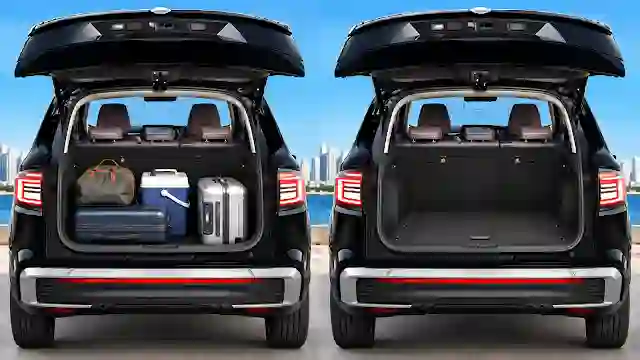
Nissan has given the Tekton a genuinely big boot — around 580 litres up to the parcel shelf, and you can push it close to 690 litres if you stack bags to the roof. We easily fitted four full-size suitcases without folding any seats.
That space comes at a cost. Rear passenger foot room is tighter than most rivals, and the rear door windows don’t drop fully because of the wheel-arch curve.
Night Driving And The Camera Problem
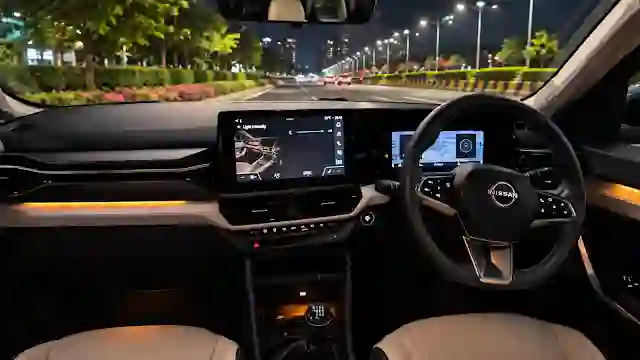
On unlit roads after midnight, the LED reflector headlights throw a wide, useful carpet of white light that makes it easy to spot cows and broken road edges. The high beam feels a touch conservative — you keep wishing for a bit more reach on completely black stretches. Fog lamps sit low enough to cut under mist instead of bouncing glare back at you. The reversing light is high in the tail-lamp cluster, so people behind actually see you in dark parking lots.
Inside, the roof lights respond to a hand wave, the USB-C ports stay illuminated at night, and there’s a proper physical button to switch off the intrusive emergency braking when you’re stuck in chaotic city traffic.
Night-time parking reveals the real stinker here: the 360-degree display is fuzzy, heavily pixelated, and struggles to deserve even a 5 out of 10.

Nissan Tekton Review: Final Verdict
All told, the Tekton earns a respectable 8.5 out of 10. It cures the terrible long-distance thirst of older Nissan models, handles motorways like a proper European crossover, and swallows heaps of luggage. Give that reversing camera a decent sensor upgrade, and Nissan has built an exceptionally sensible family tourer.
Quick Answers To Common Questions
What sort of mileage does it actually deliver?
Sitting in crawling morning traffic with the blower on chilled, the 1.0-litre manual returns roughly 11.2 to 12.1 km/l. Take it out onto open four-lane bypasses around 85 km/h, and it comfortably stretches past 16.8, often nudging 17.4 km/l.
Does it feel underpowered next to old Kicks and Terrano models?
Not a chance. Those older 1.5-litre blocks felt lazy until revved hard. The Tekton’s turbo spools early and shoves forced air right in, giving far better overtaking grunt when climbing steep hill roads with four passengers on board.
Is turbo lag an issue around town?
A little bit under 1,900 rpm. If you brake hard for a road dip, shifting into second leaves it bogging down, so you just flick into first gear to get rolling cleanly again.
How big is the boot space in the Nissan Tekton?
It offers roughly 580 litres of cargo volume up to the parcel shelf, and well over 690 litres if you load bags right up to the roof fabric. You can easily swallow four full-size suitcases without folding down the rear backrests.
How reliable is the Level-2 ADAS at night?
The active lane-keeping and proximity warnings work smoothly in low light. Even better, Nissan provides a dedicated physical button on the console to shut off aggressive emergency braking in messy bumper-to-bumper city traffic without digging through touchscreen menus.
What is the biggest downside of the Nissan Tekton?
The 360-degree parking camera is easily the weakest link. In the dark, the feed on the central screen appears grainy, over-sharpened, and barely rates a 5 out of 10 for low-light clarity.