Renault Triber Turbo vs Ertiga – Is the ₹9 Lakh Seven-Seater Worth Considering?
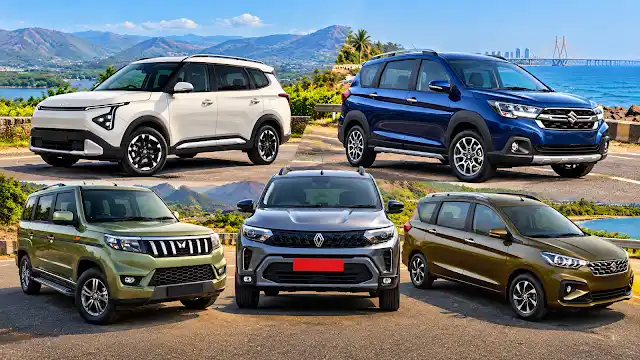
Look, finding a proper seven-seater in India without blowing your life savings has always been a proper headache. For years, most families simply stretched their pockets, stood in a dealership queue for four months, and brought home a Maruti Ertiga.
With the new Triber Turbo, Renault is trying to shake off that old perception.
They finally bolted a turbocharger to that tiny 1.0-litre petrol engine. Honestly, that one change fixes what made owners mad about the original model — it completely ran out of breath whenever seven people climbed inside. But does extra pulling power make it a genuine rival to India’s favourite family MPV?
How It Actually Drives
The old non-turbo Triber was painful on steep highway flyovers or family holidays to Nainital. You were constantly shifting gears just to keep up the momentum.
With the turbo, things feel completely different behind the wheel. The car now puts out 100 PS of power and 160 Nm of torque. That translates to around 28 PS more power and almost double the torque compared with the old engine. The difference slaps you in the face the second you step on the gas. Overtaking slow trucks on narrow state roads doesn’t leave your hands sweating anymore.
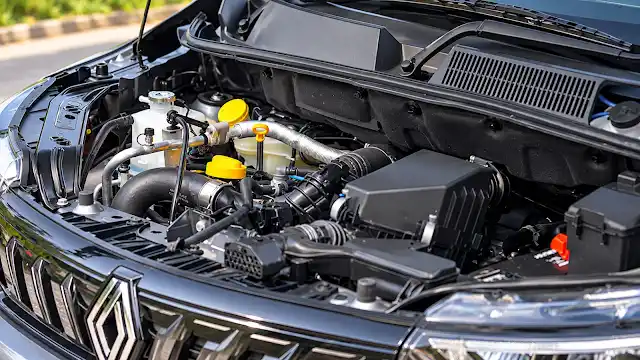
The Ertiga takes a totally different route with its tried-and-tested 1.5-litre petrol engine. On a spec sheet, their power numbers look almost identical. But out on the tarmac, the Triber Turbo gives you that sudden mid-range punch when the turbo wakes up, while the Ertiga builds speed quietly without any drama.
The Price Reality
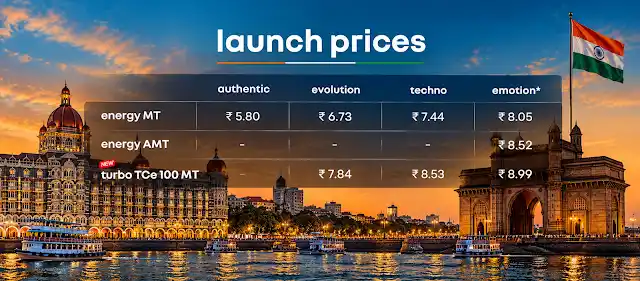
This is where Renault gets really smart with the Triber. The Triber Turbo starts at ₹7.84 lakh for the Evolution trim, moves to ₹8.53 lakh for the Techno, and tops out at ₹8.99 lakh for the Emotion model. Even if you want the non-turbo automatic, it sits around ₹8.52 lakh.
Now look at the Maruti Ertiga. A decent mid-to-top spec Ertiga easily touches ₹11 to ₹13.50 lakh once you pay road tax and insurance. If you want an XL6 or Kia Carens, you’ll have to spend around ₹14 lakh.
That three to four lakh rupee gap is massive money for an ordinary Indian household. It covers your family’s petrol bills and routine garage services for three straight years.
Where Did The Spare Tyre Go?
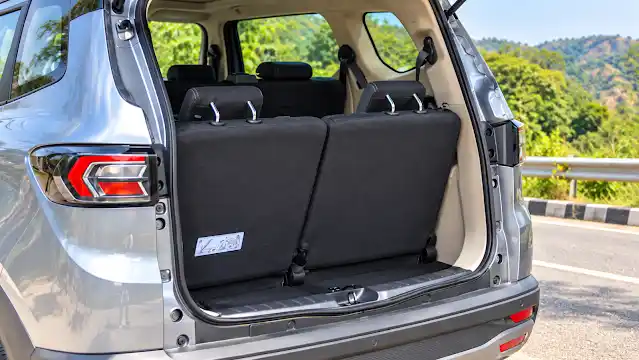
Peek under the luggage floor and you will notice something missing straight away: there is no spare tyre anywhere.
Modern tubeless tyres are fairly resistant to small punctures, but if you’re planning long highway trips on rough village roads, carrying a puncture kit and 12V tyre inflator can save you a lot of hassle.
Cabin Room and Delhi Heat
Can adults actually survive in the third row? Yes, surprisingly well.
The Ertiga has broader shoulders and feels wider inside, but the Triber fights back with brilliant seating tricks. You can slide the second row forward or literally unclip and take out the rearmost seats to create an estate-sized cargo van. We’ve already covered this clever layout in our Renault Triber vs Maruti Brezza comparison.
What about peak summer heat? The dedicated dual air-con unit with roof blowers does a solid job. Because the cabin has huge glass windows, cooling seven hot passengers takes five minutes initially. Once the rear fan starts working, passengers in the back can stay cool while those up front remain comfortable.
Fuel Bills and Upkeep
Renault claims between 20 to 21 km/l. In messy daily city traffic with seven people aboard and air-con running full blast, expect realistic returns around 11 to 12.5 km/l. Out on open toll roads, it settles around 15 to 16 km/l.
The Ertiga’ bigger 4-cylinder motor is slightly easier on fuel in bumper-to-bumper city jams, usually returning 12 to 14 km/l.
Modern turbo units are reliable and don’t need fancy servicing anymore. Even so, Maruti’s massive service network in small towns still gives the Ertiga unmatched peace of mind.
The Final Call
To be fair, you’re looking at two cars aimed at different kinds of buyers.
Pick the Maruti Ertiga if you carry passengers every single day, drive high commercial miles, or want the strongest resale value after five years.
Pick the Renault Triber Turbo if your total on-road budget cannot cross ₹10 lakh, you only need seven seats for weekend family dinners, and you refuse to drive a sluggish car.
The Triber won’t kill Ertiga sales overnight. But at ₹8.99 lakh for the top Emotion trim, it stands out as one of the best value options among upcoming family cars in India.
Common Questions
How does it pull on steep hill roads?
Much better than before. The 160 Nm torque kicks in very low down, so the car climbs without screaming in first gear.
Can I get an automatic gearbox with the turbo?
Not yet. It comes with a 5-speed manual for now, with a Nissan-sourced CVT automatic coming in a few months.
Is a factory CNG model planned?
Yes. The underbody floor was specially altered so gas cylinders fit underneath without killing the third-row seating space.
Why Pay More for the Ertiga?
The Ertiga is longer than four metres and uses a 1.5-litre engine, which puts it into a much higher government tax bracket.