Why Volvo Cars Are Losing Their Grip in India and Across the Globe
The recent Volvo Cars India sales drop has caught the luxury auto sector off guard. Look, bring up Volvo with any traditional motoring fan, and the first word you hear is safety. This is the very brand that invented the three-point seatbelt back in 1959 and gave the patent away for free so every carmaker could keep motorists alive. For decades, owning a Volvo meant you valued solid steel, unshakeable Swedish build quality, and sensible understated luxury.

Fast forward to today, and the mood has flipped completely.
Sales numbers are tumbling, long-standing dealership partners are quietly walking away, and buyers shopping in the ₹60 lakh to ₹1 crore bracket barely keep Volvo on their shortlist. Behind the clean Scandinavian branding lies a harsh reality: a storied European name struggling under Chinese ownership, factory compromises, and an identity crisis it cannot seem to shake off.
Volvo Cars India Sales Drop: From Peak to Under 1,000 Units?
The numbers tell an uncomfortable story. While German rivals like Mercedes-Benz and BMW have posted record-breaking delivery figures across Indian metros, Volvo’s showroom momentum has ground to a painful crawl.
Here is how their annual retail tally looks in India over recent years:
- 2020: 1,361 units
- 2021: 1,724 units
- 2022: 1,851 units
- 2023: 2,423 units (the absolute high-water mark)
- 2024: 1,861 units
- 2025: 1,630 units
Industry projections for 2026 suggest their annual registrations could slide well under the 1,000-unit mark. Selling barely 80 to 90 cars a month nationwide is dangerous territory for any premium player trying to sustain a viable dealer network.
The Factory Catch: Assembled Alongside Commercial Trucks
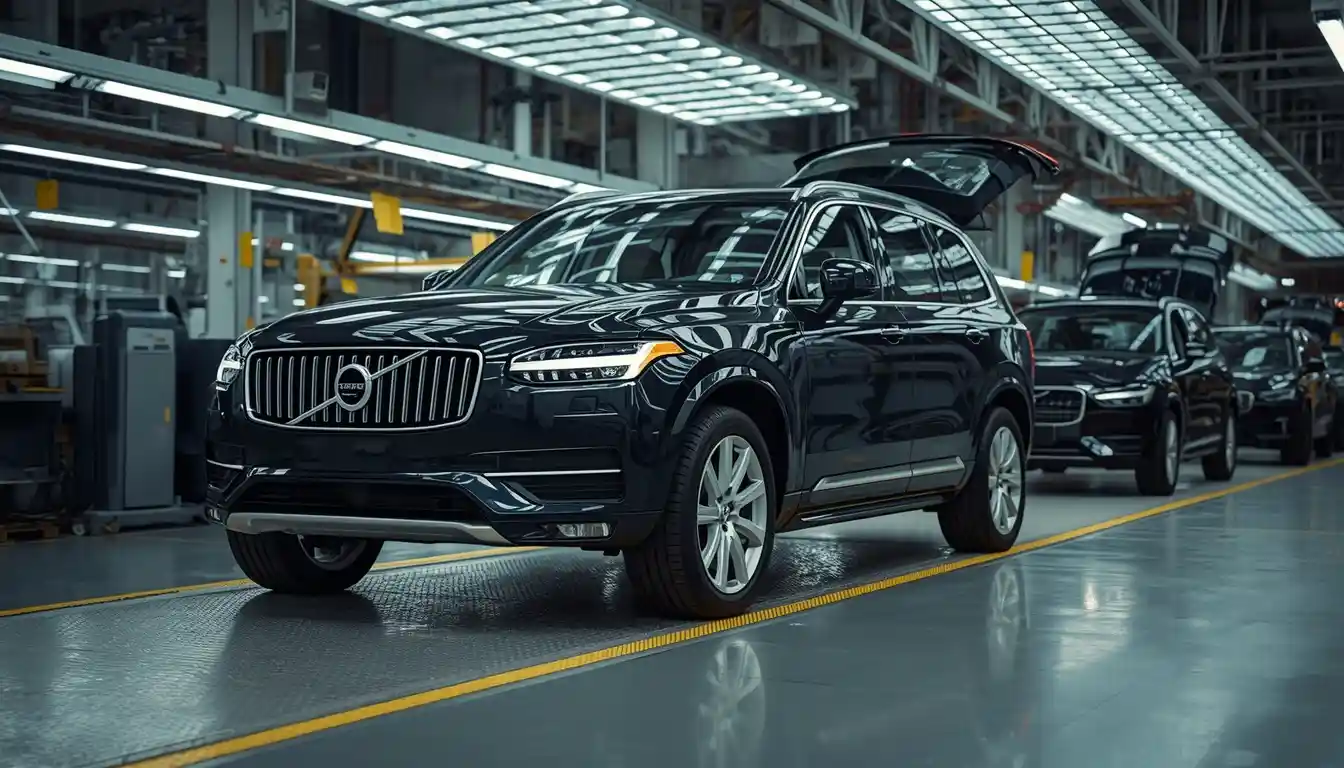
Here is a fact that catches most prospective luxury buyers off guard: Volvo does not have a dedicated passenger car manufacturing plant in India.
Instead, their passenger cars are locally assembled inside the commercial vehicle facility that puts together heavy Volvo buses and trucks. Assembling a complex modern luxury sedan or crossover on the edge of a heavy-vehicle assembly line naturally limits flexibility, speed, and precision tuning.
Worse still is the street perception. If you buy a Mercedes-Benz, people assume you have arrived in life. If you buy a BMW, people brand you a driving enthusiast. Tell someone you’ve bought a Volvo, and the immediate response might be, “Wait, don’t Volvo make intercity buses?” In a market that places so much importance on the badge, that perception can be hard to overcome.
The Chinese Ownership Shift and Feature Starvation
Much of Volvo’s modern identity struggle stems from the corporate takeovers that reshaped the company. The Swedish company ran independently until 1999, when Ford stepped in. That tenure proved turbulent, and in 2010, Chinese automotive giant Zhejiang Geely Holding Group bought Volvo Cars outright.
While Geely pumped in cash to refresh models like the XC90 and XC60, parts sharing and cost-cutting gradually crept in.
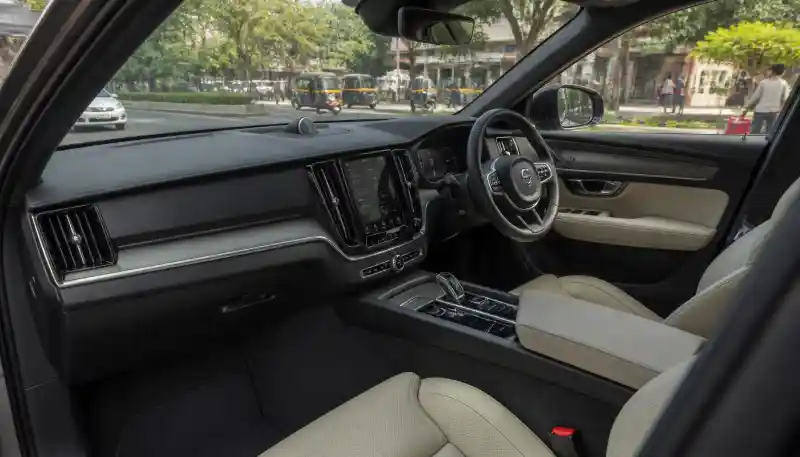
Climb inside a modern Volvo today, and the cabin feels sparse. Beyond a clean Google-integrated infotainment screen, the feature list feels stripped out compared to rivals. Rear-seat legroom and plush recline angles—the exact things Indian chauffeur-driven owners demand—lag well behind comparable German sedans.
Buyers wanting practical space and high-tech cabin features without paying astronomical badge premiums are increasingly exploring modern electric alternatives—take a look at our breakdown of the Tata Sierra Pure L vs Pure Plus L comparison to see how fast homegrown mass-market platforms are catching up.
Global Struggles and Dealership Closures
This slump is not confined to India alone. Across global markets, the brand’s volume has hit a plateau:
- 2020: 661,000 cars worldwide
- 2023: 708,716 cars
- 2024: 763,389 cars
- 2025: Dropped back down to 714,000 cars
Current forecasts suggest their global delivery run rate is fighting hard just to touch the 600,000 mark.
In India, the fallout is visible on high streets. Independent franchise dealers have faced shrinking footfalls, leading many to surrender their Volvo showroom flags in favour of fast-moving luxury brands. An evaporating service network makes buyers even more hesitant about long-term maintenance and spare parts availability.
The Tech Trust Deficit
Safety used to be the bulletproof armour that protected Volvo from criticism. But as radar-based ADAS setups became mainstream across everyday cars from Tata, Mahindra, and Hyundai, Volvo lost its unique selling proposition.
Public confidence took a direct hit after widely shared showroom mishaps where automated braking demonstrations failed in front of customers. When the radar safety tech starts behaving unpredictably, it can undermine one of the brand’s biggest strengths.
Running Costs: Electric vs Premium Petrol
With Volvo phasing out diesel entirely and pushing hard into petrol mild-hybrids and premium electric platforms, everyday running costs have become another major talking point for urban owners.
Before committing heavy capital to a petrol luxury crossover in crawling city traffic, run your numbers on our interactive EV vs Petrol Savings Calculator to weigh monthly fuel expenses against modern electric alternatives.
Thinking of making the switch to electric? Use our live EV Charging Stations Near Me directory to check for fast chargers along your usual routes.
The Road Ahead
Volvo builds handsome, clean-looking machines, but nostalgia alone cannot sustain a luxury brand in a ruthlessly competitive market. Without dedicated car assembly lines, generous rear-seat luxury, and a revitalised dealership footprint, the Swedish badge risks becoming a footnote on Indian roads.
Quick Answers: Volvo Cars in India
Why are Volvo car sales falling in India? A combination of small dealership networks, lack of rear-seat luxury features, zero diesel options, and the absence of a dedicated car factory has pushed luxury buyers towards Mercedes-Benz and BMW.
Who currently owns Volvo Cars? Volvo Cars is owned by Chinese automotive group Zhejiang Geely Holding, which acquired the passenger car brand from Ford back in 2010.
Are Volvo cars manufactured in India? No, they are locally assembled at the commercial truck and bus plant near Bengaluru from completely knocked-down (CKD) kits, rather than built in a dedicated passenger car manufacturing plant.