7-seater buying guide India: Avoid these huge car buying mistakes
I’ll be honest – it actually irritates me how most Indian families walk into a showroom and buy a 7-seater like it’s the only logical choice. Ask your friends, and they’ll rattle off the same two or three names. But here’s the thing: there are easily a dozen decent people-movers on sale right now, yet nobody bothers to dig deeper.
The real problem? People tend to forget their original motivation for buying an oversized car. They get hypnotised by the sales guy’s smooth talk, mirror their neighbour’s purchase, or simply want to feel taller on the road. But let’s cut the crap – most so‑called 7‑seaters are just 4‑seaters with a couple of foldable jump seats shoved into the boot. Calling that a family car is generous; it’s really just a compromise with four wheels and a cup holder.
Unless you’re actually ferrying seven people every other weekend, a 7‑seater is overkill. A good 5‑seater will save you a fortune on fuel, cost peanuts to maintain, and leave your bank account breathing easy. So before you swipe that card, let’s walk through what you should be thinking about – your real budget, your daily commute, and how you actually use the car.
Three Blunders That Almost Everyone Makes
First: fuel bills. Nobody calculates what happens when you pack the car full. Petrol, diesel, CNG – prices aren’t falling. Add seven bodies and luggage, and your mileage takes a nosedive. You need a car that gives decent efficiency when loaded, not just when the brochure says so.
Second: test drives are a joke. Never go alone or with just one buddy. Drag your entire family – especially the elders – and make them sit in the third row. Drive over speed breakers and potholes, then ask them how their backs feel. Kids will adjust anywhere, but adults will give you the unfiltered truth about knee room and ride quality. Third: don’t fall for the first car you drive. This critical step is where most attempts go off track. They research online, visit one dealer, take a 5‑minute spin, and sign the cheque. That’s a shortcut to regret. Test every rival in your price band, go home, sleep on it, talk it over with your family, and then decide.
What Your Money Really Gets You
Under ₹10 lakh – your options are almost zero, except the Renault Traber. It’s a decent budget pick if you need seven seats once in a while. Cabin space surprises you, but the little engine struggles badly on hills or highways when full. Headlights are basic, so night drives on unlit roads aren’t fun. If you can stretch your EMI a bit, do it.
₹10–15 lakh – now we’re talking. The Kia Caren’s is a solid all‑rounder with petrol, turbo, diesel, and EV options. City commuter? Petrol is fine. Highway warrior doing 2,500+ km a month? Diesel all the way. Home charging available? The EV will slash your running costs. The Kia Caren’s is a solid all-rounder with petrol, turbo, diesel, and EV options. If you want to check what new models are coming next, read about upcoming SUVs in India launching soon.
Then there’s the Maruti Artigas and Toyota Rum ion – they’re literally twins, built in the same factory. No quality difference. Taxi drivers love them because they’re cheap to run and reliable. If you drive over 1,800 km monthly and have CNG nearby, get the CNG version. Prefer captain chairs? Pick the XL6 instead.
₹15–25 lakh – this is where you choose between comfort and ruggedness. The Toyota Innova Crysta is only manual diesel now, no sunroof or flashy screens, but bulletproof reliability. If you’re clocking 2,500+ km, it’s the safest bet.

The Mahindra Scorpio‑N sells purely on its road presence – but honestly, the third row is useless for adults. It’s a 4‑seater with extra boot space for kids. Ride is bouncy, and finding a comfy driving position is a chore.
For real family comfort in an SUV, the XUV700 is hard to beat – great suspension, three screens even on base trims, and top variants get ADAS. The Tata Safari is also worth a look, especially the petrol automatic – it’s punchier and more fuel‑efficient than its Mahindra rivals.
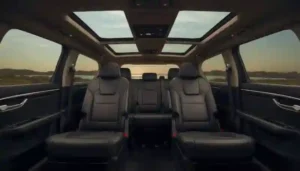
₹25–50 lakh – the Toyota Innova Hy cross is the gold standard. Seven adults can sit comfortably without knee‑jabbing. Hybrid gives 14‑16 km/l in city traffic, and if you’re light‑footed, you might touch 17‑18. The Fortuner and MG Glosser are ladder‑frame SUVs – but honestly, the Fortuner feels overpriced inside, while the Glister is a luxurious, feature‑packed machine that most buyers ignore unfairly.
Above ₹1 crore – if you want a first‑class lounge on wheels, skip SUVs and look at premium MPVs: Kia Carnival, MG M9, Toyota Vell fire, or Mercedes‑Benz V‑Class.
One Last Piece of Advice
Before you step into that dealership, take a breath. Don’t buy a car just because it looks imposing on Instagram. Bring your family, test every option, drive over rough patches, and calculate your real monthly running costs. A seven-seater is a major commitment—buy the one that fits your family’s daily life, not your neighbour’s driveway envy.
Frequently Asked Questions
Q1. Is a 7-seater really necessary for an Indian family?
A. Only if you actually carry 6–7 people together on most of your trips. Otherwise, it’s overkill. Most “7-seaters” are just 4-seaters with cramped jump seats in the boot. If you’re driving solo or with just 2–3 passengers 90% of the time, a comfortable 5-seater will save you fuel, maintenance, and EMI stress.
Q2. Why do people regret buying a 7-seater later?
A. Three main reasons:
· Fuel shock – Load it up, and mileage drops drastically.
· Useless third row – Adults don’t fit comfortably in most models.
· Impulsive buying – They test one car, sign the cheque, and later realise a rival would have suited them better.
Q3. What’s the biggest mistake to avoid during a test drive?
A. Never go alone. Take your entire family, force the adults to sit in the third row, and drive over rough roads. Ask them how their back and knees feel. Kids adjust anywhere – adults give you the real feedback. Also, don’t sign up after just one spin. Drive every competitor in your budget before deciding.
Q4. What should I buy if my budget is under ₹10 lakh?
A. Realistically, only the Renault Traber fits. It’s a decent budget option for occasional 7-seater use, but the engine struggles on steep hills or highways when fully packed. Night driving isn’t great either due to basic headlights. If you can stretch your EMI, go for a higher segment.
Q5. Which car gives you the most value in the ₹10–15 lakh bracket?
A. The Kia Carnes is a strong pick with multiple engine options… Home charging available? The EV will slash your running costs. To understand how electric savings compare to traditional fuel, check this electric vs petrol running cost comparison.
Q6. Are the Maruti Artigas and Toyota Rumi on really the same?
A. Yes. They’re built in the exact same factory with zero quality differences. Choose whichever offers a better waiting period, price, or dealer service in your city. If you prefer captain seats over a bench, pick the Maruti XL6 instead.
Q7. Should I go for the Mahindra Scorpio-N or the XUV700?
A. It depends. The Scorpio-N gives you road presence and a commanding view, but the third row is useless for adults, and the ride is bouncy. The XUV700 is far better for family comfort – great suspension, three screens even on base trims, and top variants get ADAS. For practical family use, XUV700 wins hands down.
Q8. What about the Toyota Innova Crista vs. Hy cross?
A. The Crista is a manual diesel only – rugged, reliable, but lacks fancy sunroofs and screens. Good if you’re doing 2,500+ km/month. The Hy cross (₹25–50 lakh) is the real 7-seater benchmark – seven adults fit without knee struggles, and the hybrid gives 14–16 km/l in city traffic (even 17–18 with a light foot).
Q9. Is the Toyota Fortuner worth the money?
A. Honestly, it feels overpriced for what you get inside. It’s a sturdy ladder-frame SUV, but the MG Gloater offers far more luxury, features, and space at a similar or lower price. Most buyers overlook the Gloater unfairly.
Q10. What if my budget is over ₹1 crore?
A. Don’t look at standard SUVs. Go for premium MPVs like the Kia Carnival, MG M9, Toyota Vell fire, or Mercedes-Benz V-Class – they offer first-class lounge comfort on wheels.
Q11. Any final advice before I visit a dealership?
A. Yes – stop buying for show. Take your family, test every rival in your price bracket, drive over potholes, calculate your actual monthly fuel consumption, and only then decide. A 7-seater is a long-term commitment – make sure it fits your life, not your neighbour’s expectations.