
Looking for EV charging stations near me? Finding an active, working electric vehicle charger on Indian roads can feel like a stressful guessing game. Between fragmented mobile apps, broken guns, and unverified pins, running low on battery in the middle of an interstate trip is every driver’s worst nightmare. According to official data tracked on the NITI Aayog e-AMRIT portal, public charging infrastructure across Indian expressways and metro corridors is scaling rapidly.
This live interactive station finder tracks verified AC slow plugs and high-speed DC fast chargers across all major network operators—including Tata Power EZ Charge, Static, Jio-BP Pulse, Zeon, and Charge Zone. Turn on your location or pan across your region to inspect power outputs, connector types, and real-time driving directions.
Live charging location data powered by the global Open Charge Map registry.
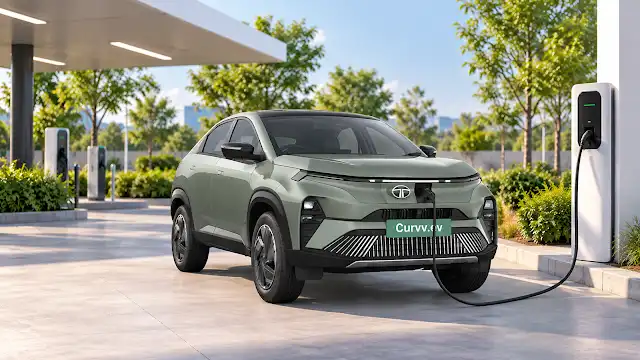
To spot the right charging socket within seconds without wasting precious battery juice:
- Allow GPS Access: Tap allow when your web browser requests device coordinates. The live map immediately centres on your position and highlights all public chargers sitting within a 15 km to 25 km circle.
- Filter by Charging Gun: Most modern passenger cars sold in India—from mass-market crossovers to premium models—use the European-standard CCS2 connector for fast DC charging. If you drive a battery-rental model, reading our MG Windsor EV BaaS Cost Analysis explains how charging tariffs interact with per-kilometre battery subscriptions.
- Verify Output Speeds: Avoid getting stranded at a slow 7.4 kW destination plug when you are rushing down the highway. Verify whether the station pin indicates a 30 kW, 60 kW, or 120 kW dual-gun fast DC dispenser to keep dwell times minimal.
- Hit Navigation: Select any charger card on the map to pull up real-time navigation directions directly inside Google Maps.
Understanding Public EV Charger Types in India
Not every public plug pushes power at the same rate. Understanding the hardware setup prevents unexpected delays during intercity runs:
- Regular AC Slow Points (3.3 kW to 7.4 kW): Best suited for overnight hotel stays, office parking lots, or residential basements. A standard 7.4 kW wall box typically needs 6 to 9 hours to replenish a mid-sized passenger battery pack.
- Fast AC Destination Chargers (11 kW to 22 kW): Commonly installed outside highway food plazas and shopping malls. They provide convenient opportunity top-ups while having lunch, adding 30 km to 50 km of driving range in about an hour.
- Commercial DC Fast Chargers (30 kW to 60 kW): The true backbone of Indian highway corridors. Connecting to a 50 kW or 60 kW CCS2 gun restores a typical passenger EV from 20% to 80% charge in roughly 45 to 55 minutes. If you want to see how fast charging and highway efficiency hold up during actual tarmac runs, check our hands-on MG Hector Tomahawk EV Review for real-world expressway telemetry.
- Ultra-Fast Highway Hubs (120 kW to 240 kW): Gradually expanding across priority expressways like the Delhi–Mumbai Expressway, Mumbai–Pune Expressway, and Bengaluru–Chennai corridors. Capable vehicles with high-voltage architectures can absorb 100 km of driving range in barely 10 to 15 minutes.
Real Charging Costs Across Indian Networks
- AC Slow Charging: Costs between ₹12 and ₹16 per unit (kWh). Fully charging a 30 kWh battery pack costs roughly ₹360 to ₹480.
- DC Fast Charging: Ranges between ₹18 and ₹24 per unit (kWh) depending on time-of-day tariffs and dispenser wattage. A typical 20% to 80% highway fast fill-up averages ₹500 to ₹750.
- Idle Parking Penalties: High-demand highway charging plazas now enforce an idle parking fee of ₹1 to ₹3 per minute if an electric car stays parked after hitting 100% capacity. Always disconnect your vehicle once the battery hits the 80% fast-charging plateau.
Frequently Asked Questions (FAQ)
How do I find EV charging stations near me in India? Enable location access on this page. The interactive map detects your live GPS coordinates and plots every working AC and DC fast charger in your vicinity, along with operator branding and navigation links.
Which connector type does my electric car use for DC fast charging? Virtually every modern electric car sold in India uses the standardised CCS2 (Combined Charging System 2) gun for DC fast charging, supported across all major networks.
Can I charge any electric car at Tata Power or Statiq stations? Yes. Public electric vehicle charging plazas across India operate as open-access infrastructure. Any EV equipped with matching CCS2 or Type-2 inlet ports can plug into chargers operated by Tata Power, Statiq, Jio-BP, Zeon, or Charge Zone using their mobile apps or RFID cards.
Why does fast charging speed drop after hitting 80%? To safeguard battery health, minimise heat buildup, and prevent cell degradation, the vehicle’s Battery Management System (BMS) intentionally tapers down incoming current past 80%. When travelling on expressways, it is significantly faster to unplug at 80% and resume driving.