The Silent CNG Revolution: Why Gas Cars Are Quietly Winning in India
Look, tracking new car launches lately feels like watching an endless parade of electric crossovers. Every single brand wants you to look at massive dashboard screens and battery range figures. But while everyone stays busy debating EV infrastructure, demand for CNG cars in India has exploded into a massive, quiet takeover across our roads.
CNG is not just for yellow-board commercial taxis anymore. You can now walk right into a showroom and drive home a family crossover or a turbo-petrol SUV running on gas. The sales numbers prove regular buyers are happily spending their money on them.
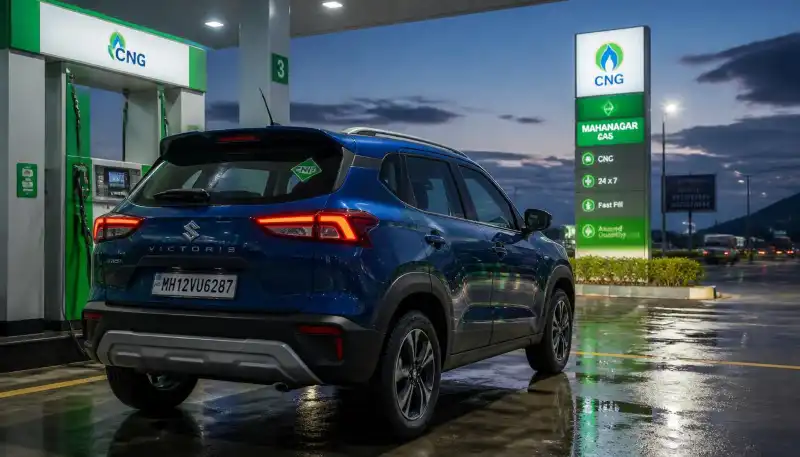
CNG Has Already Overtaken Diesel
If someone had told you five years back that natural gas would beat diesel sales in India, most people would have laughed.
- Let’s take a look at the current state of the market:
- CNG Segment: 21.98%
- Diesel Segment: 18.00%
- Battery EVs: 4.25%
Natural gas is now the clear number two choice after petrol.
Why? Petrol keeps getting pricier, and mandatory E20 blends are cutting into real-world mileage. Millions of flat owners cannot plug in an EV overnight, and broken highway chargers still give people cold feet. CNG just works without asking you to change how you live.
Why Carmakers Need CNG as Much as Buyers Do
It is not just about cheaper running costs for drivers. Tough government CAFE rules are pushing car companies hard.
Under CAFE rules, the government tracks the average carbon footprint across every single car an automaker sells. Overshoot that limit, and the fines hurt big time.
Because CNG is mostly methane, burning it releases mostly water vapour and cuts CO₂ output by 20% to 25% compared to petrol. With private buyers still slow to pick up EVs, selling heaps of CNG cars is the easiest way for brands to pull down their fleet emissions and avoid massive penalties.
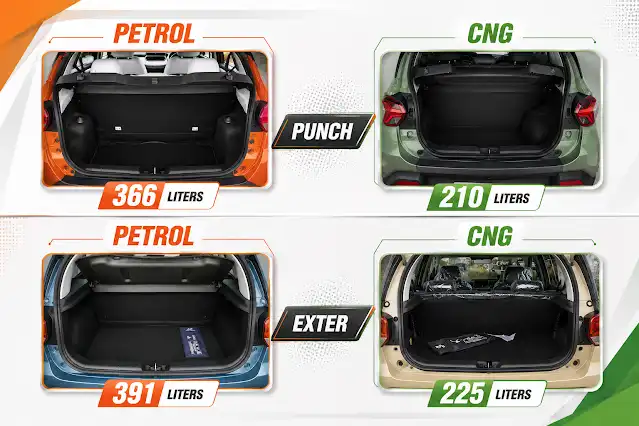
Engineering Solved the Dreaded Boot Space Problem
For years, the biggest dealbreaker was that bulky steel tank sitting smack in the middle of the boot, leaving zero room for luggage.
Car companies finally sorted out the layout:
- Tata’s Dual-Cylinder Fix: Tata split the big tank into two smaller cylinders under a raised floorboard. Cars like the Punch and Altroz still give you over 200 litres of usable boot space, and Hyundai now uses the exact same setup.
- Maruti’s Underbody Tank: Maruti went a step further with the Victoris. Thanks to an independent rear suspension, the gas cylinder sits under the car frame, leaving the entire boot wide open.
That clever packaging shows in the showroom numbers. The Maruti Suzuki Victoris sells between 10,000 and 13,000 units every month, sitting right next to the Creta. Nearly 38% of its early bookings came straight for the CNG trim.
Turbocharged Performance Meets Low Running Costs: Skoda’s Next Step
The most exciting move is coming from Skoda. In a chat with Business Standard, Ashish Gupta, Brand Director at Skoda Auto India, confirmed that they are actively working on factory CNG for the new Kylaq.
Almost every CNG car in India still uses old naturally aspirated engines. Skoda wants to change that by pairing gas with a direct-injection TSI turbo engine.
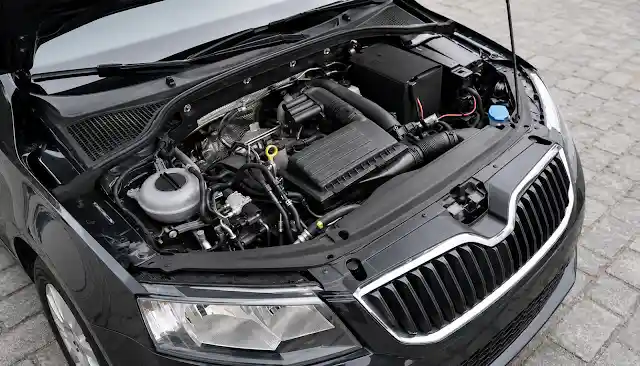
Skoda has sold this setup in Europe for years under the TGI badge:
- The Octavia G-TEC used a 1.5-litre turbo engine making 131 PS and 200 Nm on both fuels, returning around 27 km/kg with an underbody tank.
- Natural gas has an octane rating near 130 RON, compared to 92 RON for standard petrol. Turbo direct-injection motors love high octane because it stops engine knock and lets engineers tune for sharper response.
Even if a 1.0-litre TSI engine drops a few horses on gas, the strong turbo pull will easily beat any standard naturally aspirated CNG car in city traffic.
Where the Current CNG Market Still Falls Short
Even with record sales, a few things still bug buyers:
- Hardly Any Automatics: Most people buy CNG to dodge high fuel bills in stop-and-go city traffic, right where working a manual clutch wears you out. While Tata gives you AMT options on cars like the Tiago, Maruti and Hyundai still stick mostly to manual sticks.
- Dealer Kits vs Factory Systems: Brands like Honda offer dealer-level kits on the Elevate rather than building them at the plant. These lack neat digital dash gauges, clean wiring, and direct gas starting.
- Small Cars Still Lose Boot Room: While bigger crossovers get underbody tanks, smaller hatchbacks like the Fronx still rely on a single fat cylinder that wipes out luggage space.
Should You Buy a Factory CNG Car in 2026?
Straight up, picking up a factory CNG car makes total sense if:
- You have working gas pumps along your daily drive.
- You do not have an assigned parking spot to charge an EV at night.
- You want tiny fuel bills without paying a massive upfront price jump for a strong hybrid.
With underbody tanks and twin cylinders fixing the luggage headache, factory CNG has turned into the most sensible everyday pick for millions of Indian drivers.
Need Help Finding a Workshop?
Wondering if your city or town has an authorised EV service facility nearby? Use our free EV Service Centre Locator Tool to check verified workshop locations, distances, and contact details across Mumbai, Delhi-NCR, Pune, and smaller towns in India.
Frequently Asked Questions (FAQs)
Q1. Why are carmakers rolling out so many CNG models?
Mainly to meet strict CAFE emission targets. Lower CO₂ helps car companies avoid hefty government penalties while EV adoption catches up.
Q2. What is the difference between dual-cylinder and underbody tanks?
Dual-cylinder systems place two smaller tanks under the boot floor. Underbody setups tuck the cylinder under the chassis frame so the boot remains completely untouched.
Q3. Can turbo engines run cleanly on CNG?
Yes. Skoda and Volkswagen have built turbo direct-injection TGI gas engines in Europe for years. The high 130 RON octane rating of CNG handles turbo pressure smoothly.
Q4. Why are automatic CNG cars still rare?
Brands initially built CNG cars just for budget fleet buyers. Demand from private city commuters is growing now, and Tata is leading the way with AMT gearboxes.
Q5. Is factory CNG safer than aftermarket kits?
Yes. Factory setups go through full crash tests, have built-in leak sensors, show fuel levels on the main instrument cluster, and keep your full company warranty intact.