E85 Flex Fuel vs E20 vs CNG: Is Ethanol-Blended Petrol Worth Buying?
If you’ve been scrolling through automotive news or social media reels lately, you’ve probably noticed a wave of creators and outlets telling people to hold off on buying a new car. The pitch around E85 flex-fuel vehicles makes it sound like petrol prices are about to crash overnight and slash everyone’s fuel bills.
Sit down with actual market prices and run the per-kilometre numbers, though, and the story looks very different.
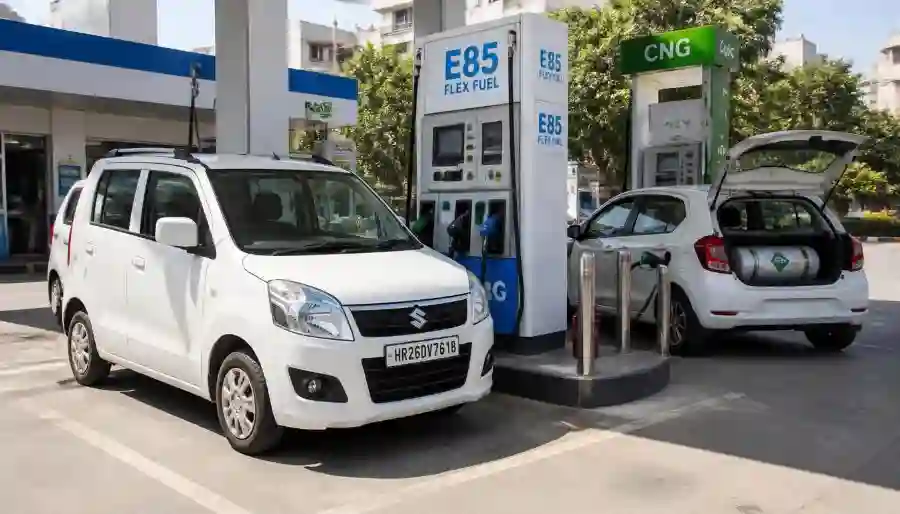
Maruti Suzuki is already showing vehicles like the Wagon R Bio flex (E85 compatible), and the first E85 dispensers have started appearing in Delhi and Mumbai. Buyers are understandably confused. Should you wait? Is diesel the safer bet? Or is flex-fuel just an expensive gimmick for regular car owners?
Here’s a straight look at the real-world maths behind ethanol blending in India.
Myth 1: Switching to Diesel to Escape E20 Petrol
Plenty of buyers spooked by the sudden push to E20 petrol are eyeing diesel cars as an escape route.
Jumping from E20 petrol to a modern diesel is a bad call for most everyday drivers.
Back in 2010, under older emission norms, diesels were simple, cheap to run, and almost bulletproof. Under today’s BS6 Phase-2 rules, they’re far more complicated. They need DPF (Diesel Particulate Filter) systems to catch soot, regular AdBlue top-ups, and a bunch of sensitive exhaust sensors.
If your daily drive is mostly short city trips, that DPF will clog more often than you’d like. Throw in the coming biodiesel mandates (B7, B20 and beyond), and modern diesels end up needing more maintenance attention than petrol cars ever did.
If E20 already makes you uneasy, a current diesel will probably give you bigger headaches later.
Myth 2: E85 Flex Fuel Will Save You Money
On paper, E85 looks attractive. In places like Delhi, it sits around ₹82–83 a litre while regular petrol is ₹94–103.
Ethanol simply carries less energy than petrol. Run an engine on E85 and mileage drops 20–25%.
Here’s what the real-world numbers actually show:
– Standard E20 Petrol: Around ₹103/litre, roughly 20 kmpl on open roads → about ₹5.15 per kilometre.
– E85 Flex-Fuel: Roughly ₹82.12/litre. After the mileage hit, it falls to around 16 kmpl → ₹5.13 to ₹5.18 per kilometre.
– CNG: Near ₹83.90/kg and about 28 km/kg in real driving → roughly ₹2.96 per kilometre.
Look closely: an E85 flex-fuel car costs almost the same per kilometre as ordinary E20 petrol. You’re paying an extra ₹77,000 to ₹1.30 lakh upfront for the flex-fuel version and saving virtually nothing on daily fills.
Also Read: Thinking of skipping petrol or flex-fuel altogether? Read our detailed Kia Syros EV Review to check out a modern electric alternative.
The Reality of E85 Conversion Kits and Upfront Prices
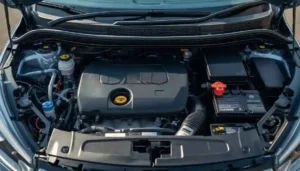
Aftermarket E85 conversion kits in international markets usually cost ₹35,000–55,000. They need upgraded injectors, ethanol content sensors, and a remapped ECU. If car makers or agencies like ARAI ever clear official kits in India, the total with installation, testing, and paperwork will easily land between ₹60,000 and ₹80,000.
Buying a brand-new flex-fuel car from the showroom carries its own premium—higher ex-showroom price, extra road tax, higher insurance. You’re laying out a solid chunk of money before you even start driving.
Unless you’re covering 20,000–25,000 km every year and ethanol somehow drops to ₹40–50 a litre, the extra cost for flex-fuel tech just doesn’t add up.
What About Your Current E20 Car?
Bought an E20-compliant car recently (Ertiga, Swift, Creta and the like)? You don’t need to panic if the ethanol percentage creeps up a bit over the next few years. Even though the badge says “E20 Ready,” the fuel system components—hoses, metal lines, injectors—are generally built to handle E35 to E45 blends without falling apart overnight.
One hard rule still applies: never put E85 into a regular E20 car. High ethanol concentrations will attack the seals and injectors that weren’t designed for it. For the normal blends that come out of regular petrol pumps, modern E20 cars are tougher than a lot of the online panic suggests.
FAQ – Practical Questions Buyers Are Asking
Is E85 flex-fuel actually cheaper to run than regular petrol?
No. Even though E85 is about ₹20 cheaper per litre, the 20–25% drop in mileage cancels out the saving. Cost per kilometre stays almost the same as E20 petrol.
Can I fill E85 fuel in my existing E20 petrol car?
Absolutely not. It will attack the rubber seals, clog injectors, and can seize the engine. E85 needs specialised sensors and much tougher fuel lines.
How much more expensive are E85 flex-fuel cars to buy?
Usually ₹77,000 to ₹1.30 lakh more than the equivalent petrol or CNG version, thanks to the extra sensors, injectors and ECU work.
Are CNG Cars Still the Best Commuter Option?
Yes, by a clear margin. CNG runs under ₹3 per kilometre while both E20 and E85 sit around ₹5.15. For pure monthly fuel savings, CNG is still hard to beat.
Will modern diesel cars be phased out soon?
They’re not banned, but the strict BS6 Phase-2 rules, DPF systems and AdBlue costs make them a risky choice for short city runs. Unless you’re doing serious highway kilometres, diesel is tough to justify.
The Final Verdict: What Should You Buy Right Now?
Looking at the numbers and real-world use:
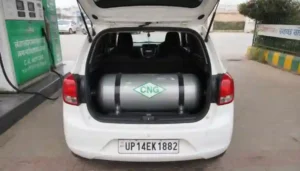
– Go for CNG if you drive a lot every day, want the lowest possible cost per kilometre (under ₹3/km), and want to recover the extra purchase cost quickly.
– No Price Advantage (Yet): Flex-fuel engines are designed to run on higher ethanol blends like E85 (85% ethanol), but until high-ethanol fuel is heavily subsidized or widely distributed at significantly lower price points per litter, the upfront premium for a flex-fuel vehicle offers virtually no return on investment.
– Avoid diesel for pure city use. Unless you’re regularly doing 80–100 km a day on open highways, the maintenance costs of modern BS6 diesels will outweigh any fuel advantage.
Also Read: Thinking of skipping petrol altogether? Take a look at our guide on Buying a Petrol Car in India. Go EV! to explore electric alternatives.