Electric Scooter vs Petrol Scooter – What’s Actually Worth Buying in 2026?
You walk into a scotty showroom or just start talking to people and immediately get two completely different stories. One friend swears electric is the only way to go – “I’m saving so much on petrol every month.” Then your dad or some uncle digs his heels in for an Activa or Jupiter. “Few drivers have the patience to sit around waiting for a battery to charge? Two minutes at the pump and you’re gone.”
If you just need something for daily office, college, or market runs, the whole thing gets confusing pretty fast. The ads don’t help. EV makers love touting massive touchscreens and negligible running costs, but they rarely mention the trade-offs in driver safety, software reliance, and upfront price tags. Petrol brands talk about reliability and filling up anywhere. Both are trying to sell their own product, so of course everything sounds one-sided.
The price difference hits first.
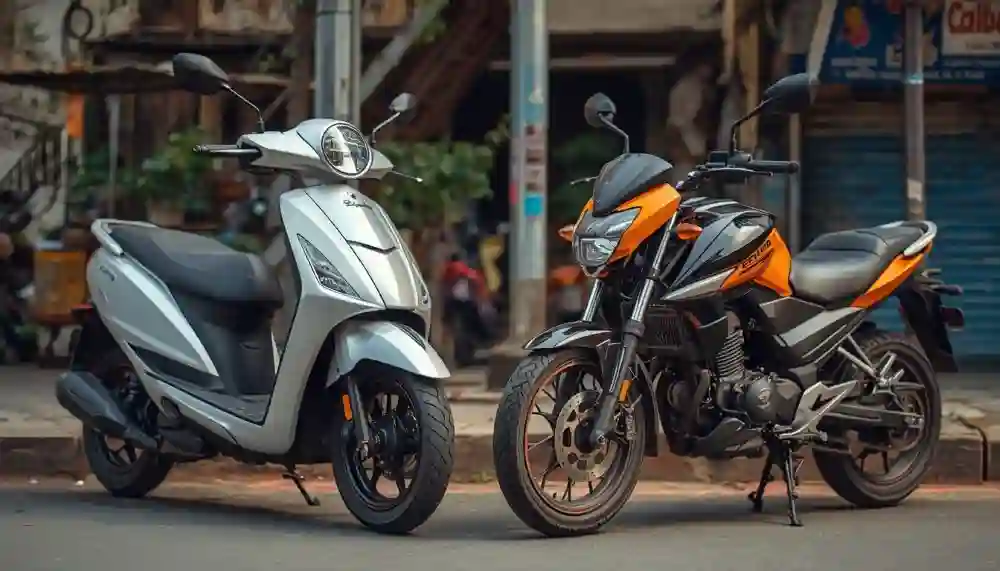
In India, popular —such as the Honda Activa 6G, TVS Jupiter, and Suzuki Access 125—typically carry an on-road price tag between ₹85,000 and ₹1.05 lakh, fluctuating based on local state taxes.
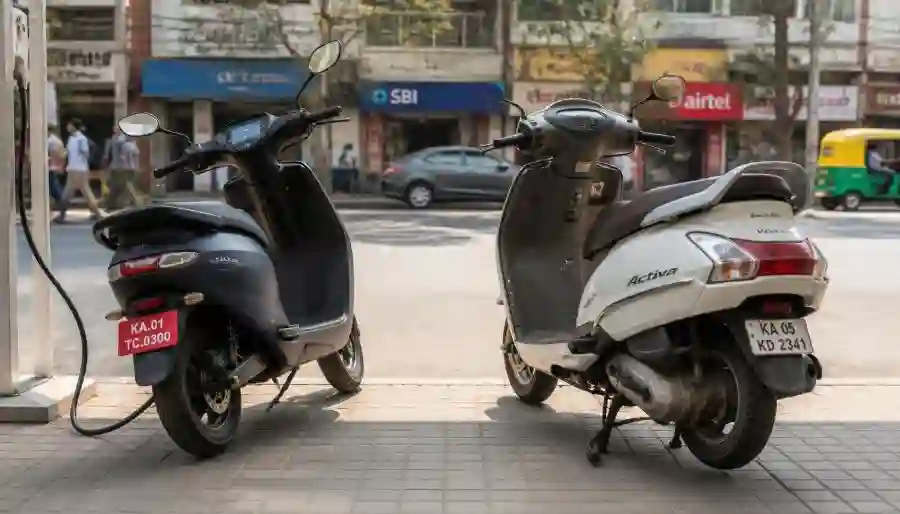
Electric ones like Ola S1 Air, TVS iQube, Ather 450S or Bajaj Chetak sit higher. Most of them land between ₹95,000 and ₹1.35 lakh. So you’re paying ₹15–25k extra right at the start.
Some states still give subsidies that can cut ₹7–15k off that gap. Without state incentives, you simply have to pay the higher sticker price.
Also Read: Still confused about choosing the right two-wheeler for your daily commute? Read our detailed comparison on Electric Scooter vs Petrol Bike to see if a motorcycle makes more sense for you.
Where the money actually goes every month
This part is hard to argue with. Electric wins on running cost, and it’s not close.
A regular 110 or 125cc petrol scooter does around 40–45 km per litre in real traffic. Petrol at roughly ₹100 means you’re spending ₹2.20–2.50 every kilometre. Electric uses about 25–30 Wh per km. Charged at home overnight, it comes down to 20–25 paise per km. Do 30 km a day and the petrol one costs ₹65–75 daily – close to ₹2,000 a month. Same distance on electric is maybe ₹6–8 a day. Around ₹200 a month. Ride every single day, and the difference becomes hard to ignore.
Space under the seat and how they handle Indian roads
Older petrol scooters were always tight under the seat. Full-face helmet plus laptop bag or a few grocery bags and you were fighting the latch.
Newer electric models (Ather Rizta, Ola S1, etc.) have proper 34–35 litre space. Under-seat capacity is generous, easily swallowing two full-face helmets or a week’s worth of groceries. Ground clearance still matters. Tall speed breakers with someone sitting behind can scrape the main stand on a lot of petrol scooters. Most modern EVs clear the same bumps without the battery pack kissing the road.
Servicing and the battery problem nobody likes talking about
Petrol scooters need regular oil, filters, belts, and spark plugs. Miss a few services, and things start going wrong. The yearly bill is usually ₹4,000–8,000.
Electric skips all the engine stuff. Your yearly garage visit shrinks to basic upkeep—brake pads, tires, and software updates—costing a pocket-friendly ₹1,500 to ₹2,500 a year. But the battery is the real issue. Lithium packs don’t stay good forever. After 3–5 years of daily charging, the range starts dropping. The ultimate catch to long-term EV ownership lies in the battery: an out-of-warranty replacement bill of ₹30,000 to ₹50,000 can take a massive bite out of your total operational savings.
Convenience and the range anxiety thing
Petrol is simple. The light comes on, you find a pump, fill up in two minutes and leave. No thinking required, even if plans change suddenly. Electric needs 4–6 hours on a normal home charger. Fast chargers are showing up in bigger cities, but they’re still rare in smaller towns and on highways. Run out of charge away from home, and you’re stuck looking for an open socket.
What happens when it breaks
Petrol scooter dies somewhere? Almost any local mechanic can usually sort it. Parts are everywhere.
Electric depends on sensors, controllers and battery software. Something electrical fails, and most roadside shops can’t do much. You end up at an authorised centre. If you don’t live in a big city, that can mean a long trip.
Also Read: Thinking of switching your family vehicle to electric as well? Check out our guide on Buying a Petrol Car in India? Go EV! to choose the right powertrain for your garage.
So what should you actually buy?
Go electric if:
– For city dwellers supported by a stable power grid
– Daily riding is roughly 20–50 km
– You have a proper place to plug in overnight
– You’re planning to keep it at least 3–4 years so the higher price can pay back through fuel savings
Stick with petrol if:
– Outside major metropolitan hubs, charging access drops off sharply
– You often do long or unplanned rides
– You just want two-minute fill-ups and repairs from any local shop
There’s no perfect answer that fits everyone. It really depends on where you live, how you ride, and how long you plan to keep the scooter.
FAQ – Electric vs Petrol Scooter (2026)
Is electric actually cheaper to run?
Yeah, quite a bit. If you’re doing around 30 km every day, petrol usually eats up close to ₹2,000 a month. Electric stays somewhere around ₹200. A quick breakdown of the numbers reveals a stark gap that is hard to overlook.
How much more do electric scooters cost at the start?
Most of the decent ones are ₹15–25k costlier than a regular Activa, Jupiter,r or Access. Some states still give subsidies that can cut ₹7–15k off that difference. If your state doesn’t offer anything, you just pay the higher price.
How long does the battery really last?
Lithium batteries start losing range after 3 to 5 years of daily use for most people. Changing the main battery later can cost anywhere from ₹30k to ₹50k. Most people completely miss this part—right up until it bites them.
Can I just charge it at home?
Most people do. Normal home charging takes 4–6 hours. You need a proper parking spot with a plug, though. Fast chargers are there in bigger cities, but still hard to find in smaller towns or on highways.
What if the battery dies far from home?
That’s the annoying part. You can’t just roll into any petrol pump. In the absence of dedicated public charging infrastructure, EV users are forced to rely on accessible standard wall outlets.
Are electric scooters easy to get repaired?
Not really. Once something electrical goes wrong — sensors, controllers, battery software — most local mechanics can’t do much. You usually have to take it to an authorised centre. Petrol scooters are way easier on that front. Almost any neighbourhood shop can sort them out.
Do they have enough space under the seat?
Newer ones like Ather Rizta or Ola S1 have decent 34–35 litre space. Two helmets or a couple of market bags fit without much struggle. Older petrol scooters used to feel pretty tight.
How do they handle Indian roads and speed breakers?
Most modern electric scooters clear tall speed breakers and rough patches better than people expect. A lot of petrol scooters still scrape the main stand when someone is sitting behind.
Who should actually go for electric?
If you’re in a Tier-1 or Tier-2 city, have stable electricity, ride about 20–50 km daily, have a place to charge overnight, and plan to keep the scooter for at least 3–4 years — then it starts making sense.
Who should just stick with petrol?
People in smaller towns or rural areas, anyone who does a lot of long or sudden trips, or those who simply want quick fill-ups and repairs from any local shop.
Is there a clear winner right now?
Not really. It depends on where you live, how much you ride, and how long you plan to keep the scooter. Both have their own strong points and their own headaches.